Russia continues the Soviet-era practice of destroying Ukrainian identity at the state level – human rights advocates
In modern Russia, the practices of torture and pressure against imprisoned Ukrainian citizens indicate that authorities at the state level seek to eradicate Ukrainian identity, mirroring the tactics of the Soviet era. This was the focus during the presentation of an analytical report by the Media Initiative for Human Rights (MIHR) titled “The Destruction of Ukrainian Identity as a State Policy of the USSR and Russia.”
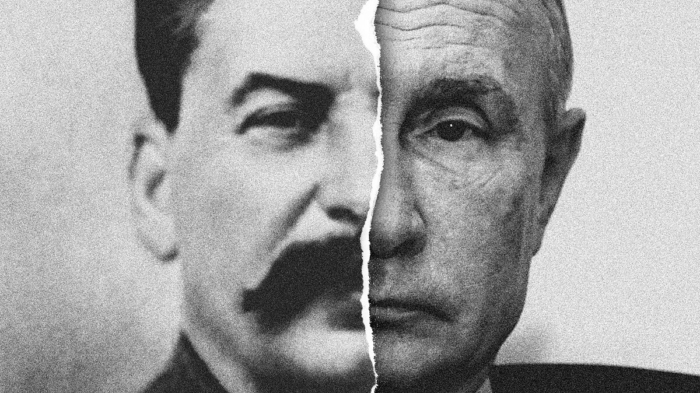 Illustrative image. Photo: JOSETXU PIÑEIRO
Ukrainian servicemen who were successfully returned from captivity recounted how, in places of confinement, they were forced to adopt a Russian identity and were forbidden from speaking Ukrainian.
In cells, the text of the Russian national anthem was typically hung on the wall, and opposite the toilet was a portrait of the Russian ruler, Vladimir Putin. Guards forced prisoners to memorise songs and repeat them during physical exercises. Those who refused were brutally beaten.
As an example of abuse in Russian places of detention, Tetiana Katrychenko, Executive Director of MIHR, cited the story of a prisoner she interviewed, a native from the Western part of Ukraine. Russian guards beat him because he did not understand or speak Russian.
“The Russians are convinced that absolutely everyone in Ukraine speaks and knows Russian. Perhaps this is partly true, but in reality, a new generation of children is now growing up who do not know or have not spoken Russian for a long time. But Russia believes this should not be the case. It constantly promotes narratives about a single people, common roots, about how brothers could go to war against each other, trying to change the consciousness of prisoners of war, to equalise everyone, to show that we are one,” says Katrychenko.
Human rights activists are certain that in this way, the Russian authorities are committing not only a war crime but also a crime against humanity with elements of genocide.
 Residents of occupied Crimea leave inscriptions on Russian banknotes to show their protest against the Russian temporary occupation of Ukrainian territories. Photo: Telegram channel “Yellow Ribbon”
Vladyslav Havrylov, an analyst at MIHR, explained that an analysis of Soviet and Russian practices showed how Ukrainians were systematically persecuted in the USSR and modern Russia, being singled out as a separate group. Members of this group have a distinct Ukrainian identity and the potential for resistance.
Neither the modern Russian nor the Soviet authorities recognised Ukraine’s subjectivity. During the formation of the USSR, members of the Ukrainian government, intellectuals, and participants in armed units were persecuted. Subsequently, during the Great Terror of 1937–1938, people began to be mass murdered. The show trials and repressions of the Stalinist era in the USSR began precisely with the hunt for “saboteurs.”
Researchers say they are seeing a similar situation now in the territories occupied by Russia, where everyone who may offer resistance is persecuted. Several years ago, Putin openly acknowledged a “tense situation” due to the partisan movement.
Read also: Crimean courage: risking freedom for Ukrainian identity – Tamila Tasheva
“We know about the tragic story of the writer Volodymyr Vakulenko, who was tortured to death in temporarily occupied Izium. The mayor of Dniprorudne, Yevhen Matveyev, also died in Russian captivity. Russians persecute and imprison civilians detained for their position and opinions, just as dissidents were persecuted in the USSR. And the cynicism of torture and the imposition of Russian ideology are drawn by prison staff from their Soviet inspirers. The torture methods they use – beatings, psychological pressure, humiliation of human dignity – have already happened and are happening now,” says Havrylov.
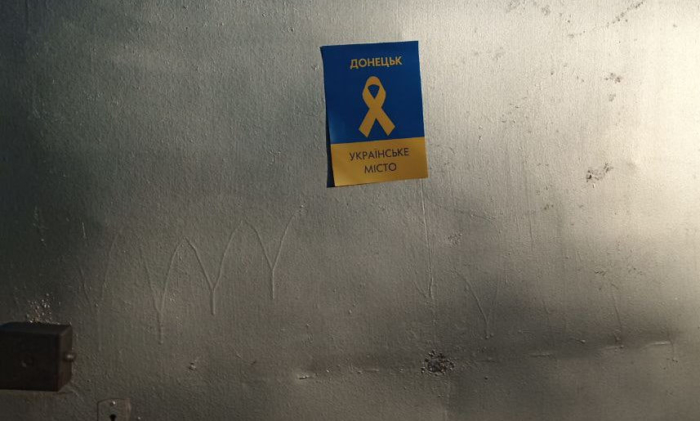 A sticker reading “Donetsk is a Ukrainian city,” left by partisans in Russian-occupied Donetsk. Photo: “Yellow Ribbon” Telegram channel
The opinion that Russian torture methods are the same as those used in the USSR was also confirmed by Dmytro Kanuper, a serviceman of the “Azov” brigade and former prisoner of war. He recalls beatings, electric shock torture, needles inserted under his fingernails during interrogations, scarring, psychological pressure, and threats of rape during his captivity.
“My first stage began in Taganrog. There, we had to learn and regularly sing their songs. In addition to the songs of the ‘Lyube’ group, we were forced to listen to songs from the ‘DPR,’ something like, ‘Rise up, Donbas.’ If you didn’t know the verses by heart, you were beaten and forced to start over until you sang correctly. At least twice a day, we had a check during which you ran completely bent over. The cell was ten to twelve square meters in size, housing eight people,” the former prisoner recounted.
During the next stage, the prisoner was held in a pre-trial detention centre in Donetsk, where a portrait of Putin hung opposite the toilet. In the penal colony in temporarily occupied Makiivka, where he was sent, Kanuper and other Ukrainian prisoners of war were forced to learn more than two dozen songs that played continuously from 6 PM to 10 PM.
The Media Initiative for Human Rights previously received testimonies from 72 released Ukrainian prisoners. They were illegally held in Russian pre-trial detention centres No. 1 in Kursk, No. 2 in Taganrog, and No. 2 in Novozybkov. The majority of those interviewed (80%) said they regularly experienced violence from prison staff.
By way of background, after more than two decades of Putin’s regime in Russia, repressions have reached the Soviet level, and some Soviet dissidents are being persecuted again. In 2023, almost every fifth person convicted of terrorism by a Russian court came from Ukraine.
In addition to fines and imprisonment, in Russia, one can end up in forced psychiatric treatment, much like the punishments in the USSR.
At the same time, high-ranking Russian officials openly call for the “extermination” of critics, and Ukrainians in the occupied territories are threatened with Siberian labour camps.