occupied territories

Over 60 delegations confirmed for Crimea Platform summit in London
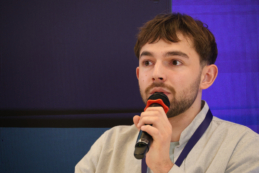
The parties discussed the course of the Russian-Ukrainian war, the human rights situation in occupied Crimea, and the status of Crimean Tatar political prisoners, some of whom have serious health problems and are held in Russian prisons
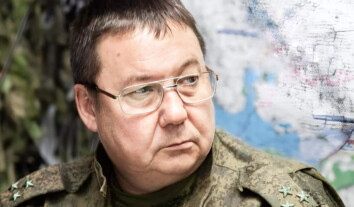
Former Sakhalin investigator Aleksandr Tsarakaev leads Russian Investigative Committee in occupied Melitopol
According to data from the Evocation platform, Tsarakaev was born in 1966 in Dolinsk on Sakhalin, Russia. He worked in investigative bodies in the Sakhalin and Amur regions, and after the start of the full-scale invasion, he was sent to temporarily occupied territory in Ukraine

Russian aerial bomb strike on Zaporizhzhia apartment block kills at least 24 civilians (updated)
A pre-trial investigation has been launched into a war crime resulting in casualties under Part 2 of Article 438 of the Criminal Code of Ukraine. Investigators from the Security Service of Ukraine in the Zaporizhzhia Oblast are conducting the inquiry
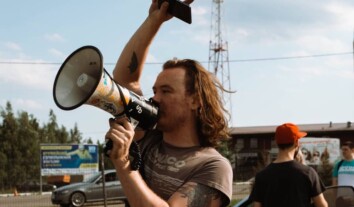
Russian occupying authorities reuse old footage of Yevhen Shved, twice convicted for pro-Ukrainian views, in ‘SBU agent’ detention video
The date of birth given for the detainee in the security forces’ video dated 2 October also matches Shved’s

Russia has opened criminal cases against 1,500 Ukrainian prisoners of war, rights group head says
International organisations, including the International Committee of the Red Cross, do not have regular access to places of detention, so no one can check regularly on conditions or whether prisoners’ rights are respected

September sanctions wave: US and Canada target individuals and legal entities involved in the deportation of Ukrainian children
The US law targets not only direct perpetrators but also those "indirectly" involved, effectively threatening sanctions against the vast network of Russian officials, guardianship structures, and transport operators facilitating child removals

UN coalition seeks to prosecute Russia’s militarisation of Ukrainian children as a crime against humanity
At the UN General Assembly, governments advanced a new international approach to accountability for the forced erasure of children’s identity and their militarisation
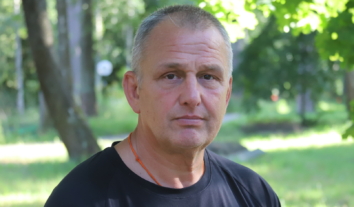
Ukrainian journalist and former political prisoner Vladyslav Yesypenko calls for coordinated support for Ukrainians in Russian captivity
The journalist met with Michal Geisler, a representative of the Czech president, and Karel Dvořák, a Czech parliamentarian. Their discussions covered, among other issues, the Czech Republic’s potential role in mediating the return of Ukrainian civilian hostages and access for the International Committee of the Red Cross to Russian detention facilities

Kyiv region opens specialised recovery centre for children affected by war and violence
Barnahus model centres are places where multidisciplinary teams operate, bringing together psychologists, medical professionals, social workers and law enforcement officers. In these centres, children who have witnessed or survived violence are interviewed only once to avoid re-traumatisation
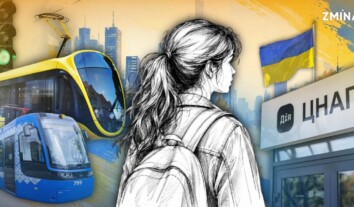
‘I’m not a spy – I just want to live here’: What children leaving occupied territories go through
ZMINA tells the story of Sofiia, whose name has been changed for security reasons. She left temporarily occupied Donetsk to enrol at a Ukrainian university. Sofiia's experience shows that reintegration is about more than documents, education and safety
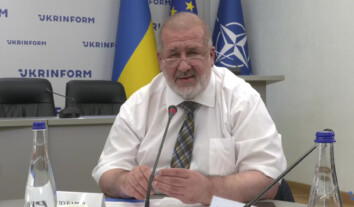
Ukraine’s indigenous peoples face repression and erasure of identity under Russian occupation, Mejlis chairman says
The Mejlis chairman Refat Chubarov noted that Ukraine's state policy must include assisting people living in the occupied territories and preparing for the de-occupation of the peninsula to integrate a liberated Crimea into Ukraine's legal and political space

Kherson region resident to stand trial in occupied Melitopol over Telegram comment
In occupied Melitopol, Zaporizhzhia Region (Oblast), Russian security officials have referred the case of a 43-year-old resident of Kherson Oblast to a Russian-controlled "court" over a comment posted on Telegram

Russia steps up pressure on exiled journalists: Reporters Without Borders condemns new repressive law
Russian authorities continue to expand the legal mechanisms they use to persecute independent journalists. Reporters Without Borders (RSF) has condemned a new law unanimously passed by the Russian State Duma on 24 July, 2026. The law imposes further restrictions on people designated as "foreign agents" in Russia or linked to so-called "undesirable organisations"

Four Ukrainian сhildren return from Russian-occupied territories with U.S. First Lady’s support
International humanitarian law prohibits the forcible transfer and deportation of children and any change to their personal status, and obliges parties to an armed conflict to facilitate the reunification of children with their families

Court in Moscow confiscates 123 real estate assets belonging to Jehovah’s Witnesses
A Moscow court has confiscated more than 123 properties belonging to Jehovah's Witnesses and transferred them to the Russian state on 31 July 2026

Russian appeal court upheld sentence against 66-year-old Melitopol resident Iryna Sukhovii
In May 2025, FSB officers detained pensioner Iryna Sukhovii. The illegitimate "Zaporizhzhia Regional Court" subsequently sentenced her to 12 years and six months in a general-regime penal colony for "high treason". The Russian occupying authorities accused her of providing financial support to the Armed Forces of Ukraine. In 2026, the First Court of Appeal of General Jurisdiction in Moscow upheld the sentence and dismissed Sukhovii’s appeal. Aleksandr Pushkin, a judge at the court, issued the ruling
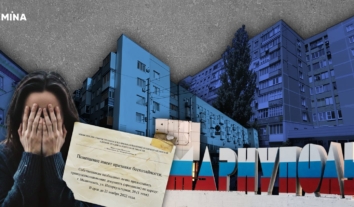
Losing home for a second time: How Russian occupiers are “nationalising” flats and houses in Mariupol
The article also explains how Ukrainians who have left the TOT can find out whether their homes have been "expropriated", and what steps they can take to document the loss of property and preserve the prospect of redress

Russian occupation forces detained man in Melitopol over online comments posted in 2022
Russian security forces claim that in September 2022, he posted messages in a public Telegram group for local residents. The occupation authorities classified them as "public calls to the performance of terrorist acts"

Columns

Fighting a ‘holy war’: Why a sacralised war resists Western strategy

“Reaching an agreement with the US on what we disagree on”: What the campaign against ICC means for Ukraine

ICC must remain free from political pressure to bring justice to victims of world’s gravest crimes
Only 5% of those responsible for deporting Ukrainian children face global sanctions