Russia steps up pressure on exiled journalists: Reporters Without Borders condemns new repressive law
Russian authorities continue to expand the legal mechanisms they use to persecute independent journalists. Reporters Without Borders (RSF) has condemned a new law unanimously passed by the Russian State Duma on 24 July, 2026. The law imposes further restrictions on people designated as “foreign agents” in Russia or linked to so-called “undesirable organisations”. Many of those affected are journalists.
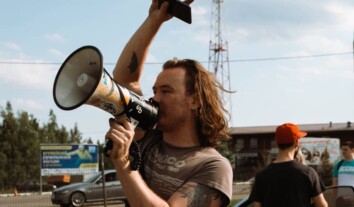
 Illustrative photo. Source: open sources
RSF stressed that the law marks another step in expanding its system of transnational repression targeting independent media. It will apply not only in Russia but also in the temporarily occupied territories of Ukraine, where the occupation authorities enforce Russian law and use the “foreign agent” and “undesirable organisation” designations to persecute journalists, human rights defenders and civil society activists.
The new law allows Russian authorities:
- to freeze bank accounts;
- block access to online banking and the Gosuslugi public services portal;
- prohibit the sale of property and vehicles;
- revoke driving licences;
- restrict consular services, including the issuance of passports;
- deduct money from income earned in Russia to pay fines and other penalties.
Since February 2022, more than 1,500 Russian journalists have been forced to leave the country because of the threat of criminal prosecution.
“This new law adds yet another layer to an already extensive legal arsenal aimed at crushing independent journalism. It targets journalists in exile, highlighting the Kremlin’s determination to intensify its transnational repression. By extending their crackdown beyond Russia’s borders, the authorities seek to make exile ever more precarious and to further silence independent reporting,” stated the RSF Eastern Europe and Central Asia Desk.
RSF pointed out that Russia’s laws on “foreign agents” and “undesirable organisations” have been in force since 2012 and 2015, respectively, and have been expanded repeatedly. After Russia launched its full-scale invasion of Ukraine, they were supplemented by laws on “fake news” and “discrediting the army“, which provide for prison sentences of up to 15 years for disseminating information that contradicts the Kremlin’s official narrative about the war against Ukraine.
You may also want to read: You sit like a potted plant: you may be watered, or you may not, and then you will wither – journalist Dmytro Khyliuk. A story of captivity and freedom
According to RSF, Russian authorities are also increasingly using “terrorism” and “extremism” legislation against independent media professionals. Around 60 journalists are currently on Russia’s list of “terrorists and extremists”. Russia ranks 172nd out of 180 countries and territories in RSF’s 2026 World Press Freedom Index.
As reported earlier, Ukraine improved its position in the World Press Freedom Index this year, ranking 55th out of 180 countries and territories in 2026 – seven places higher than the previous year.
Globally, press freedom is at its lowest point since the ranking began, with the average score across 180 countries and territories falling to a record low. More than half of all countries are now classified as having a “difficult” or “very serious” press freedom situation.
Global freedom declined for the 20th consecutive year in 2025: conditions deteriorated in 54 countries, while only 35 recorded improvements, according to Freedom House’s report “Freedom in the World 2026: The Growing Shadow of Autocracy”.
Stay connected with us via X, BlueSky, and LinkedIn – and while you’re here, please spare five minutes to fill out our survey and tell us what you’d like to see next.