freedom of speech
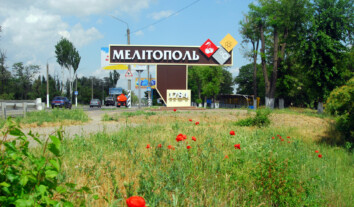
Woman in temporarily occupied Melitopol fined over Telegram comment from 2022
Russian occupation authorities regularly prosecute residents of the occupied part of the Zaporizhzhia Region (Oblast) over online statements, including comments posted several years earlier
Russia plans tougher penalties for ‘discrediting’ its occupation forces
Volodin justified the proposed changes by claiming that existing fines for certain offences fail to deter people from committing them and that many fines have not been revised in more than 10 years

Woman in temporarily occupied Sevastopol fined over online posts
These decisions were made by Russian occupation authorities, which apply Russian legislation on the temporarily occupied peninsula
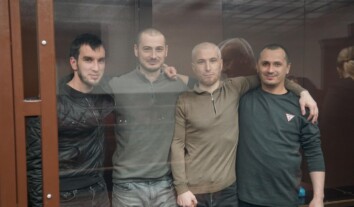
Russian prosecutor seeks 19 and 16 years in prison for Crimean journalists Rustem Osmanov and Aziz Azizov
Activists Memet Liumanov and Mustafa Abduramanov are also defendants in the case. The prosecutor has sought 19-year prison sentences for both men

Russian occupation authorities to try 71-year-old man over Ukrainian-language comment in the Zaporizhzhia Oblast
The Russian authorities have not disclosed the defendant’s name or the text of his comment
Resident of temporarily occupied Crimea Nestor Shtormovyi sentenced to 20 years in prison over filming a TikTok video
The Russian prosecution alleges that the video was intended to discredit the Russian authorities and their policies, challenge Russia’s claim to Crimea and portray the Russian army negatively
Imprisoned journalist Asan Akhtemov has no dental care or necessary medicines in Russian colony, human rights defenders say
Lately, Akhtemov has also been experiencing weakness, dizziness and low blood pressure. Getting to the colony’s medical unit is difficult, and the only medicines available there are paracetamol and metamizole (known as Analgin)
Deutsche Welle condemns Belarusian search for four female journalists
In April 2024, the Belarusian Interior Ministry designated as an "extremist formation" a group of creators, administrators and other contributors to the DW Belarus online platforms. The ministry’s list included the project’s website, its social media pages, and its YouTube and messaging channels
Freedom House calls for release of Crimean Tatar citizen journalist Server Mustafayev
Server Mustafayev is the coordinator of the Crimean Solidarity civic movement, which assisted the families of political prisoners in Crimea until it announced in July 2026 that it would cease its activities. From 2014, he documented human rights violations on the peninsula and covered politically motivated trials

Resident of occupied Molochansk sentenced to 15 years in prison over posts on X
The Russian occupying prosecution was based on seven social media posts Nykyforenko published in June and July 2025. The court linked the case to posts about the Atesh partisan movement, the destruction of the Kakhovka Hydroelectric Power Plant dam, attacks on police officers in Makhachkala, calls for donations to the Armed Forces of Ukraine and messages that the occupying authorities interpreted as calls to kill Russians
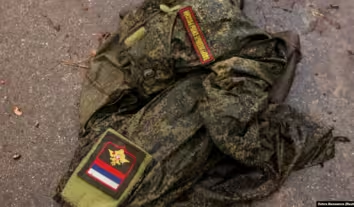
Ukrainian children in occupied Sevastopol tasked with designing Russian military patches
As part of the project, a so-called "Lesson of Courage" was held for young people, during which Mikhail Sukhenko, a participant in the illegitimate war against Ukraine, spoke to the children. He talked to them about the Russian Federation as the 'homeland', and emphasised duty and responsibility to it
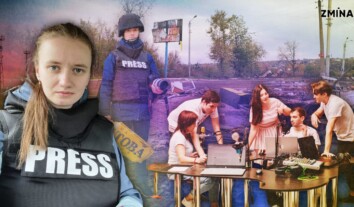
Jammed, then struck: how Bakhmut’s Free Radio reinvented itself as a watchdog
Anastasiia Shybiko, co-founder and director of Free Radio, told ZMINA how the outlet continues to operate without its radio broadcasts, how it prompts officials and government representatives to correct their mistakes, and how it pushes local authorities in Donetsk Oblast to become more transparent and responsive to residents

Russia’s campaign of intimidation against critics extends beyond its borders, says UN report
The special rapporteur also recommended that countries reject politically motivated extradition requests and requests for wanted notices through Interpol. At the same time, banks and companies that screen clients should assess the validity of Russian sanctions lists and other restrictive lists rather than automatically using them to block accounts

Crimean artist Bohdan Ziza placed in cell-type facility at Russian penal colony for six months
The initiative’s statement also addresses the responsibility of Sergey Baranov, head of Penal Colony No. 8 in Buryatia, for the conditions of Ziza’s detention. Tribunal. Crimean Episode considers the artist’s placement in the PKT a possible instance of inhuman treatment of a civilian in occupied territory and says Baranov’s role should be assessed by an international tribunal

RSF publishes 2026 ‘press freedom predators’ list featuring Putin and Trump
RSF has documented more than 230 attacks by Russian military personnel on journalists and media on Ukrainian territory, where 16 media workers have been killed and 53 injured

Human rights advocates call for increased pressure to free imprisoned Ukrainian journalists
ZMINA Human Rights Centre cooperates with Turkish government representatives. According to Nesterenko, work in this direction was intensified after the release of Nariman Dzhelial, which occurred through the mediation of Turkish President Recep Tayyip Erdogan
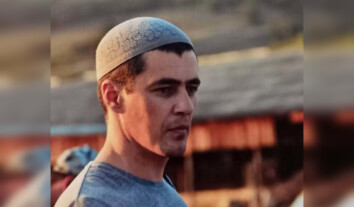
Italian political scientist Antonio Stang calls for release of jailed Crimean Tatar journalist Amet Suleimanov
Suleimanov was a video reporter for the Crimean Solidarity civic initiative in Bakhchysarai. Health problems meant he mostly documented court hearings, particularly trials of Crimean Tatars
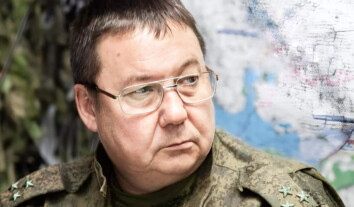
Former Sakhalin investigator Aleksandr Tsarakaev leads Russian Investigative Committee in occupied Melitopol
According to data from the Evocation platform, Tsarakaev was born in 1966 in Dolinsk on Sakhalin, Russia. He worked in investigative bodies in the Sakhalin and Amur regions, and after the start of the full-scale invasion, he was sent to temporarily occupied territory in Ukraine

Columns

Fighting a ‘holy war’: Why a sacralised war resists Western strategy
“Reaching an agreement with the US on what we disagree on”: What the campaign against ICC means for Ukraine
ICC must remain free from political pressure to bring justice to victims of world’s gravest crimes
Only 5% of those responsible for deporting Ukrainian children face global sanctions