“Reaching an agreement with the US on what we disagree on”: What the campaign against ICC means for Ukraine
U.S. Secretary of State Marco Rubio has announced a sweeping campaign aimed at eliminating what the U.S. considers a threat posed by the International Criminal Court to American sovereignty.
In this column, Kateryna Rashevska, expert at the Regional Centre for Human Rights, explains what consequences this decision will have for the U.S., the ICC and Ukraine.

The first point worth noting is the wording [of the U.S. Department’s statement]. The language itself places additional pressure on the ICC and those cooperating with it because of the ambiguity in the sentence’s structure:
“The campaign will feature a whole-of-government response to systematically disable the ICC’s ability to operate, target American servicemen or officials, or otherwise threaten American sovereignty.”
Is this a threat to dismantle the court’s operations altogether, or only those aspects that, in the U.S. view, threaten American sovereignty?
The ambiguity appears deliberate. It may serve as a warning ahead of possible new arrest warrants in the Palestine investigation or a potential ICC investigation into alleged crimes in Iran. Rubio himself referred to the latter after Democracy for the Arab World Now (DAWN) urged Gulf states to recognise the court’s jurisdiction.
The Context
In 2021, the Office of the Prosecutor of the ICC opened an investigation into alleged crimes committed in Palestine after Palestine accepted the court’s jurisdiction. As part of that investigation, the ICC issued arrest warrants in 2024 for Israeli Prime Minister Benjamin Netanyahu and [former] Defence Minister Yoav Gallant.
In response, U.S. President Donald Trump signed an executive order imposing sweeping sanctions on ICC officials, including Prosecutor Karim Khan, two deputy prosecutors and six, according to some reports 10, judges.
You may also want to read: Cutting US support for ICC because of Israel would hurt Ukrainian war victims
Throughout 2025, sanctions were also imposed on U.N. Special Rapporteur Francesca Albanese and three Palestinian human rights organisations that had collected evidence of alleged war crimes committed by Israeli representatives.
The U.S. position
From the U.S. perspective, the problem is threefold.
First, Washington argues that the ICC is prosecuting American service members and officials who acted in the interests of the United States while “defending their own country,” despite the fact that the United States has not accepted the court’s jurisdiction. This likely reflects a disagreement over the interpretation of the Court’s jurisdiction ratione personae: an attempt to exclude the Court’s jurisdiction over individuals solely on the basis of their nationality, contrary to the territorial principle of jurisdiction, particularly where the alleged crimes were committed on the territory of states parties to the Rome Statute.
Second, the ICC has not formally closed its Afghanistan investigation as it relates to U.S. nationals. Although the prosecutor shifted priorities in 2021, focusing primarily on alleged crimes committed by the Taliban and the former Afghan government.
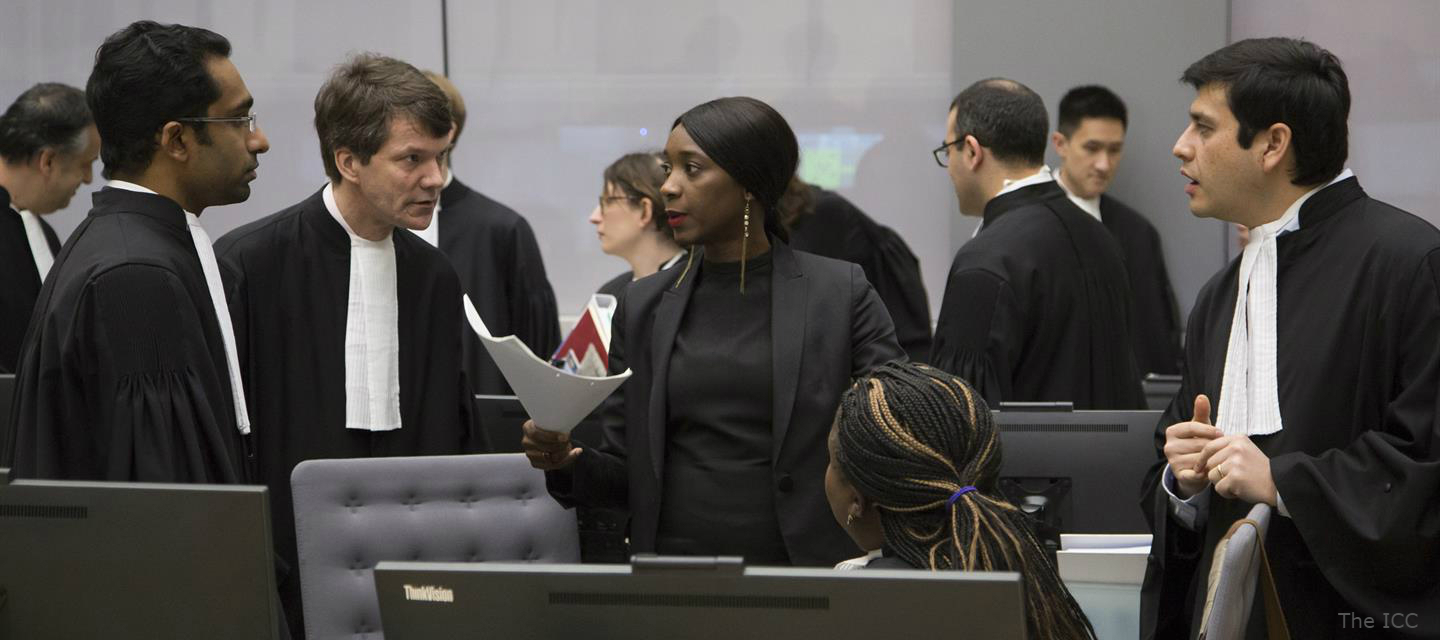
Third, many in Washington believe the ICC is evolving into an unaccountable global arbiter.
The court openly emphasises its reliance on cooperation with nongovernmental organisations. Critics in the United States argue that the ICC is influenced by an extensive network of left-leaning NGOs and by anti-Western sentiment among some countries of the so-called Global South.
What the campaign proposes
The campaign envisions diplomatic efforts to:
- encourage states to withdraw from the ICC, which currently has 125 member states, including Ukraine;
- pressure the court internally to abandon what Washington considers its unlawful jurisdiction over U.S. personnel; and
- coordinate economic measures against countries that continue supporting the ICC’s disputed jurisdictional claims.
You may also want to read: Law professor who helped draft Rome Statute accuses Washington of ICC double standard
The United States also plans to review its assistance to states that refuse to reject what it considers the ICC’s unlawful assertions of jurisdiction. These include countries that cooperate with U.S. law enforcement, host American military bases or rely on U.S. security guarantees.
Ukraine, which maintains close security cooperation with the United States and continues to rely on American assistance to strengthen its defence capabilities following previous agreements reached in Ankara, could potentially fall within this category.
The campaign also proposes:
- revoking visas and imposing travel bans on ICC personnel;
- expanding sanctions against the court and affiliated organisations; and
- encouraging ICC member states to reduce or terminate the court’s funding.
Domestic debate in the United States
The proposed measures do not enjoy unanimous support in the United States.
Rep. Ilhan Omar, D-Minn., described Rubio’s announcement as “reckless and dangerous,” arguing that it “undermines the rule of law, weakens the global accountability system and represents America’s abandonment of its stated values.”
At the same time, the American Service-Members’ Protection Act was adopted in 2002 with broad bipartisan support. The law authorises the U.S. president to take measures to protect American service members detained or imprisoned by the ICC. Consequently, any concrete ICC action against U.S. citizens could further strengthen bipartisan support for retaliatory measures.
What options does the ICC have?
One possible response would be to initiate proceedings under Article 70 of the Rome Statute, which criminalises offences against the administration of justice, including obstruction of the court.
Under the Rules of Procedure and Evidence, Article 70 applies regardless of the accused’s nationality because such offences threaten the integrity and proper functioning of the court itself, which the Assembly of States Parties has described as “one of humanity’s greatest achievements.”
However, the ICC has so far refrained from invoking Article 70 even after NGOs submitted a complaint against Italian Prime Minister Giorgia Meloni over Italy’s failure to surrender Libyan Gen. Najim Osem Almasri. Moreover, the court has not issued any official statement responding to recent U.S. announcements and has declined to comment to independent media.
You may also want to read: ICC must remain free from political pressure to bring justice to victims of world’s gravest crimes
What does this mean for Ukraine?
At least during this latest escalation between the United States and the ICC, Ukraine will have to navigate carefully between its own national interests and the court’s objectives. We must reach an understanding with the United States about the issues on which we disagree.
It is difficult to imagine Ukraine achieving a lasting peace without accountability for Russian perpetrators of international crimes. Ukraine, therefore, cannot distance itself from the ICC.
At the same time, the ICC remains only one, albeit essential, component of the broader international justice architecture. Although the United States has moved away from publicly emphasising Russian atrocities, it has not abandoned support for Ukraine’s efforts to document and investigate international crimes. Ultimately, the overwhelming majority of these crimes will still be prosecuted by Ukrainian national authorities.
As Yevhen Krapyvin [head of the Law and Order program at the Laboratory of Legislative Initiatives, Ukraine] has observed, the Republican Party’s position on international courts exercising jurisdiction over Americans has been remarkably consistent: such jurisdiction is considered unacceptable.
For Ukrainians, however, the ICC represents hope that those responsible for atrocities committed against our people at the highest levels will eventually be brought to justice.
Russian soldiers are not “defending their country.” They abduct children, rape civilians and torture prisoners of war and other detainees. It would be profoundly unjust to pressure Ukraine into abandoning the pursuit of accountability for any political objective.
You may also want to read: Russia sent 48 Ukrainian children to psychiatric hospitals in the occupied Donetsk region on extremism charges – human rights advocate
Nor should the United States be portrayed as inherently opposed to international justice. Washington played a leading role in establishing the international criminal tribunals for the former Yugoslavia and Rwanda during the Clinton administration. Under President George W. Bush, it supported referring the situation in Darfur to the ICC. During the Obama administration, the United States backed the Security Council’s referral of Libya to the ICC and expanded its War Crimes Rewards Program to include fugitives wanted by the court.
I believe that, despite the ambiguity of recent statements, they do not signal an end to continued U.S. support for Ukraine’s pursuit of a just and lasting peace, which cannot exist without accountability for international crimes.
Kateryna Rashevska, an expert, Regional Center for Human Rights
Liked this column? Follow ZMINA on X, BlueSky, and LinkedIn, and help shape our editorial focus by filling out our feedback form here.