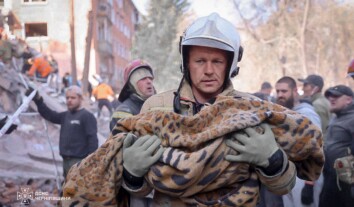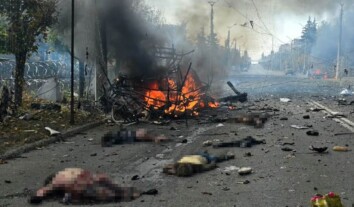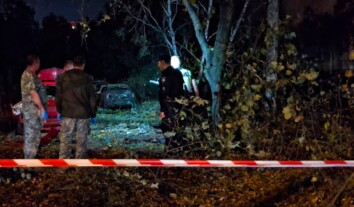
The human safari: How Russia weaponized precision against Ukrainian civilians
Small drones can be manufactured for 100 USD, operated in real time with pinpoint accuracy, and controlled until the moment of impact. The operator sees everything. Yet civilian casualties from these weapons are rising, not falling. This is the paradox that struck Vitalii Poberezhnyi, a researcher at the Truth Hounds, co-author of a study on the use of drones against civilians in Southern Ukraine, when he began documenting such attacks along the Dnipro River.
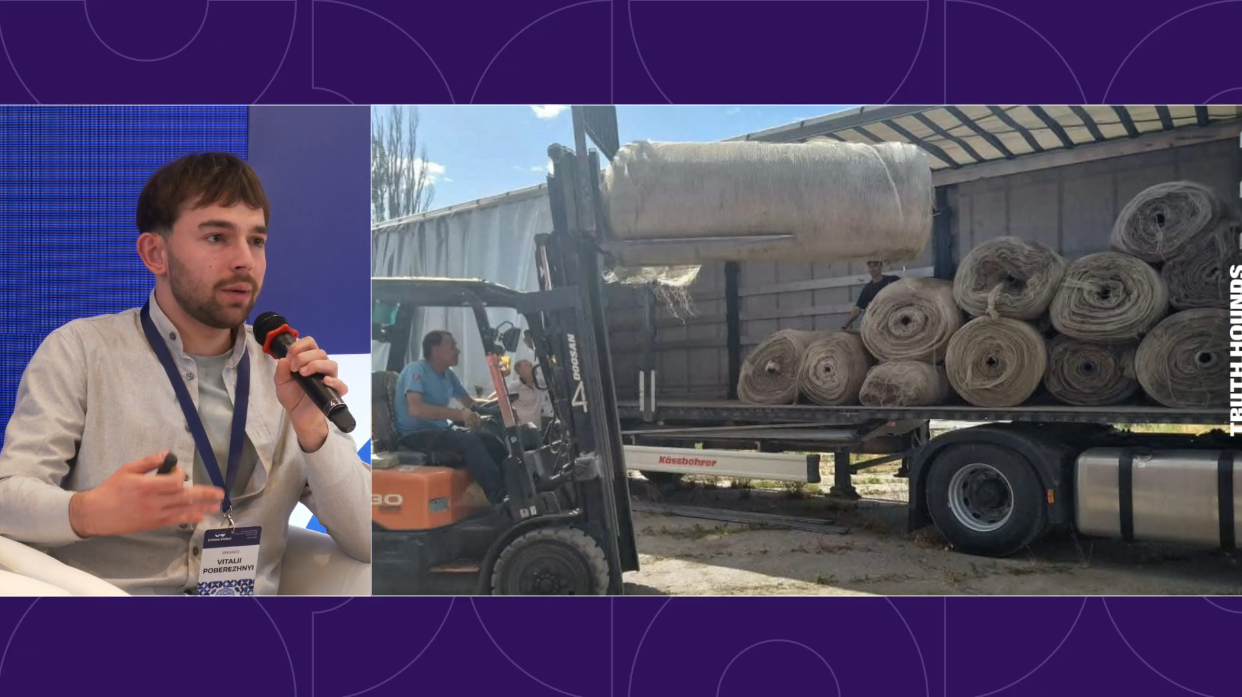
Speaking at the Third International Conference Crimea Global, Poberezhnyi pointed out that drone technology is precise enough to protect civilians, but instead, it is weaponized to hunt them. As this technology spreads globally – already used in Myanmar and certain to proliferate further – Ukraine’s frontline communities have developed survival patterns the world may soon need.
During a panel discussion on modern methods of warfare, a Truth Hounds researcher spoke about the organization’s new report, which is based on 39 in-depth interviews with victims and witnesses of drone attacks, three interviews with experts in unmanned aerial vehicle technologies and early-warning systems, as well as an analysis of open-source information and monitoring data.
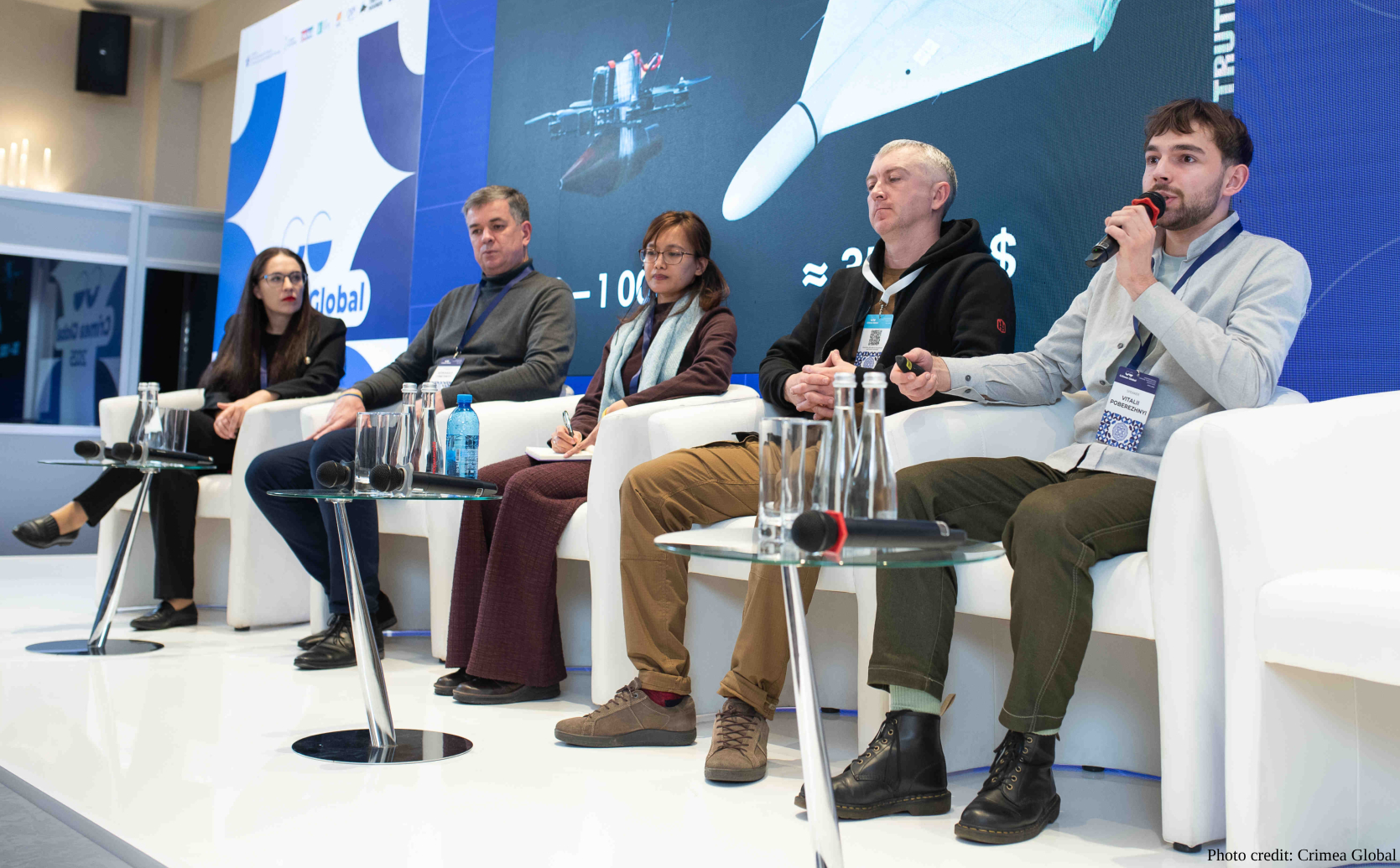
Drones are a technology that has proven efficient and will continue to be used in many countries around the world. The Myanmar case is quite telling. These small drones, FPV drones, and kamikaze drones are cheap, readily available, and can be very easily mass-produced. These are drones that can be manufactured for $100. Usually, they cost more, but it is rarely over $1,000. This is significantly cheaper than Shaheds, which cost $30,000-35,000.
Drone operators have access to video and the ability to operate them until the moment of attack. Accordingly, they have complete control over the situation and can understand in which environment the drone is flying and what the drone is attacking. On the one hand, we have come up with new technology that helps to monitor everything that is happening in combat; on the other hand, this technology does not aid civilians but harms them. As the war continues, the number of civilian casualties in Ukraine keeps growing.
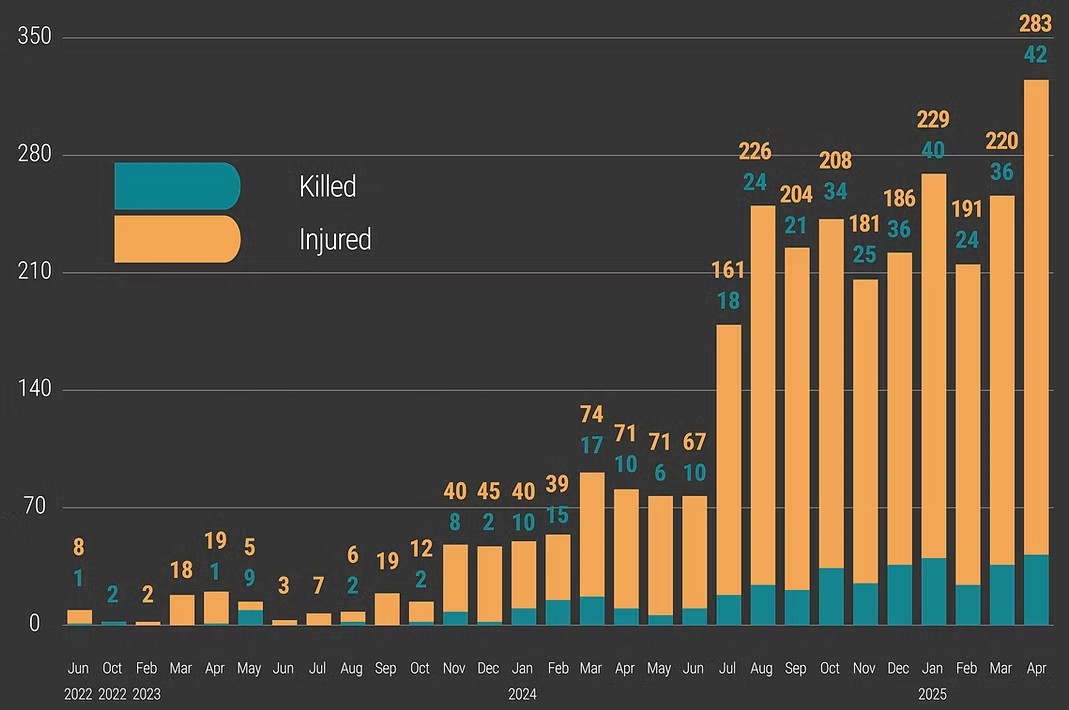 The statistics by the UN monitoring team show that the number of civilians attacked by drones has grown. From February 2022 to April 2025, drone attacks killed at least 395 civilians and injured 2,635, most of them in territory controlled by Ukraine. Casualties spiked in July 2024 and then continued to rise, according to the UN High Commissioner for Human Rights.
The Nikopol City Council in the Dnipropetrovsk region was the only one to share data with Truth Hounds, but I think this generally reflects the pattern: According to statistics from the Nikopol City Council, for instance, the number of drone strikes in June 2025 has increased, while the number of artillery strikes has decreased. The number of fatalities has increased proportionally.
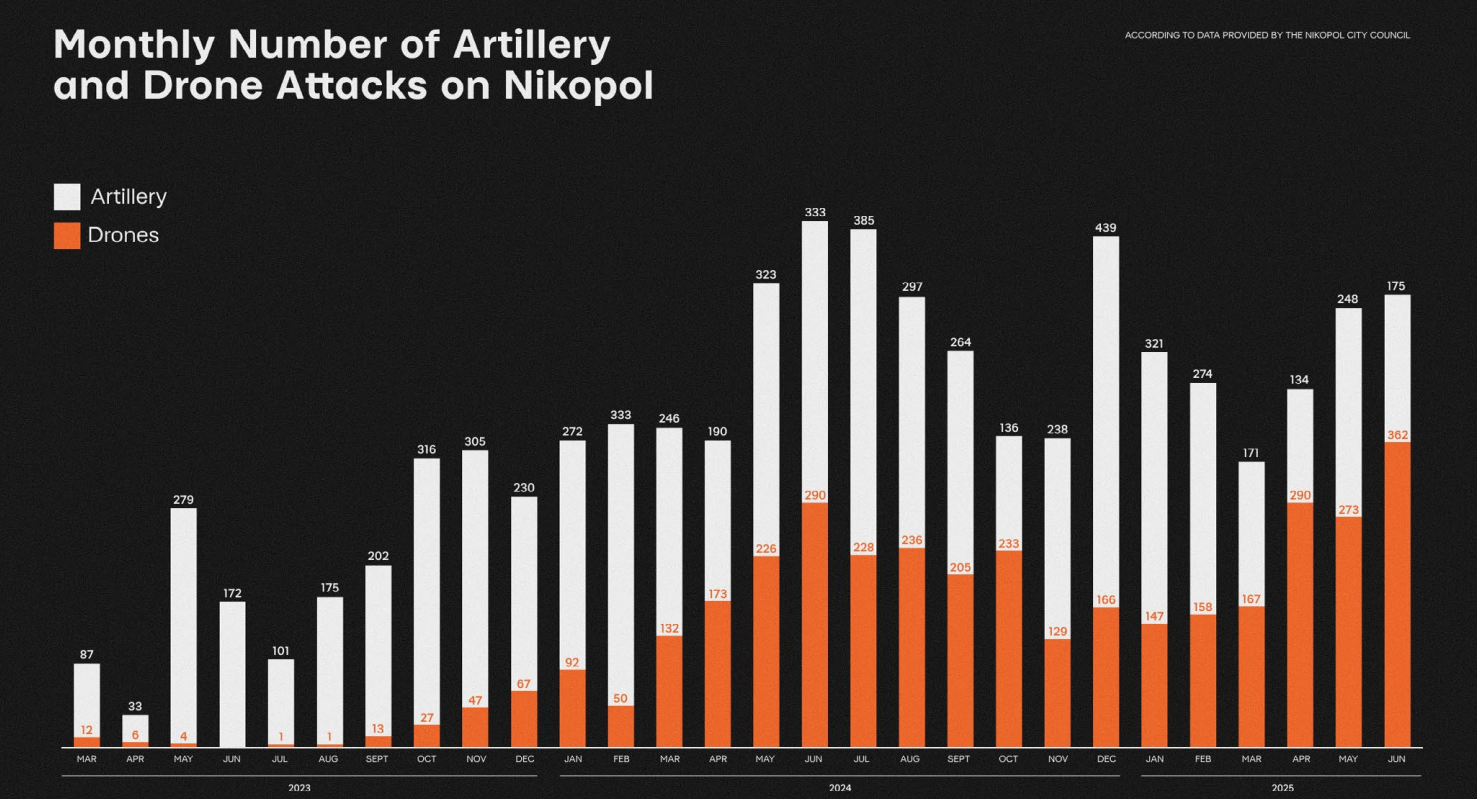 Monthly dynamics of artillery and drone attacks on Nikopol (2023–2025). Click on the infographic to enlarge it.
In our study, we focused on the lower Dnipro River region. Here, the country’s largest river – the Dnipro – separates Ukrainian and Russian forces, making this one of the least active sections of the front. All bridges in the area have been destroyed. The Dnipro serves as a natural barrier that is difficult to cross.
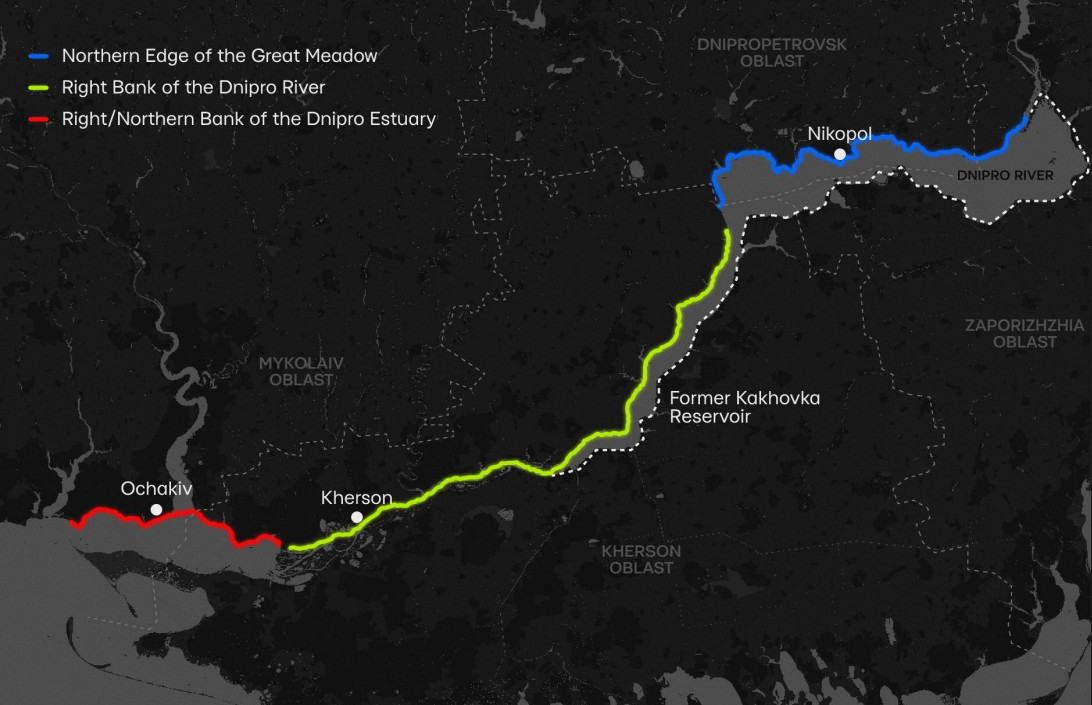
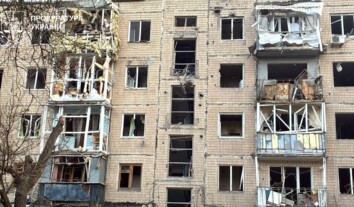
But at the same time, specifically along the Lower Dnipro – the territory of Dnipropetrovsk, Kherson, and Mykolaiv Oblasts – we see disproportionately high numbers of civilian casualties. This paradox is what interested us: Why are civilian casualties so high where combat intensity is so low
You may also want to read: Deadly Drones: Civilians at Risk from Short-Range Drones in Frontline Areas of Ukraine
The term “human safari” originated precisely in Kherson, when journalists began arriving and discovering what was happening. Because that’s what it looks like. Hunting civilians with attack drones.
This video is a vivid example of how the Russians themselves lie about these attacks, how they distort reality. They simply call everyone they attack military. Even if these are people in civilian clothing, they will push the narrative that military personnel change into civilian clothing. Hundreds of such videos on various Russian Telegram channels show people we see on the streets of Kherson, Antonivka, and Bilozerka who are supposedly military.
The case of drones is special because the cruelty strikes me – having a weapon that allows you to distinguish between civilians and military personnel. Plus, along the Dnipro River, it is important to keep in mind that this is the part of the front where you can plan an attack more carefully, as a drone operator has more time; there is no need to advance or hold the defense, because the war is positional.
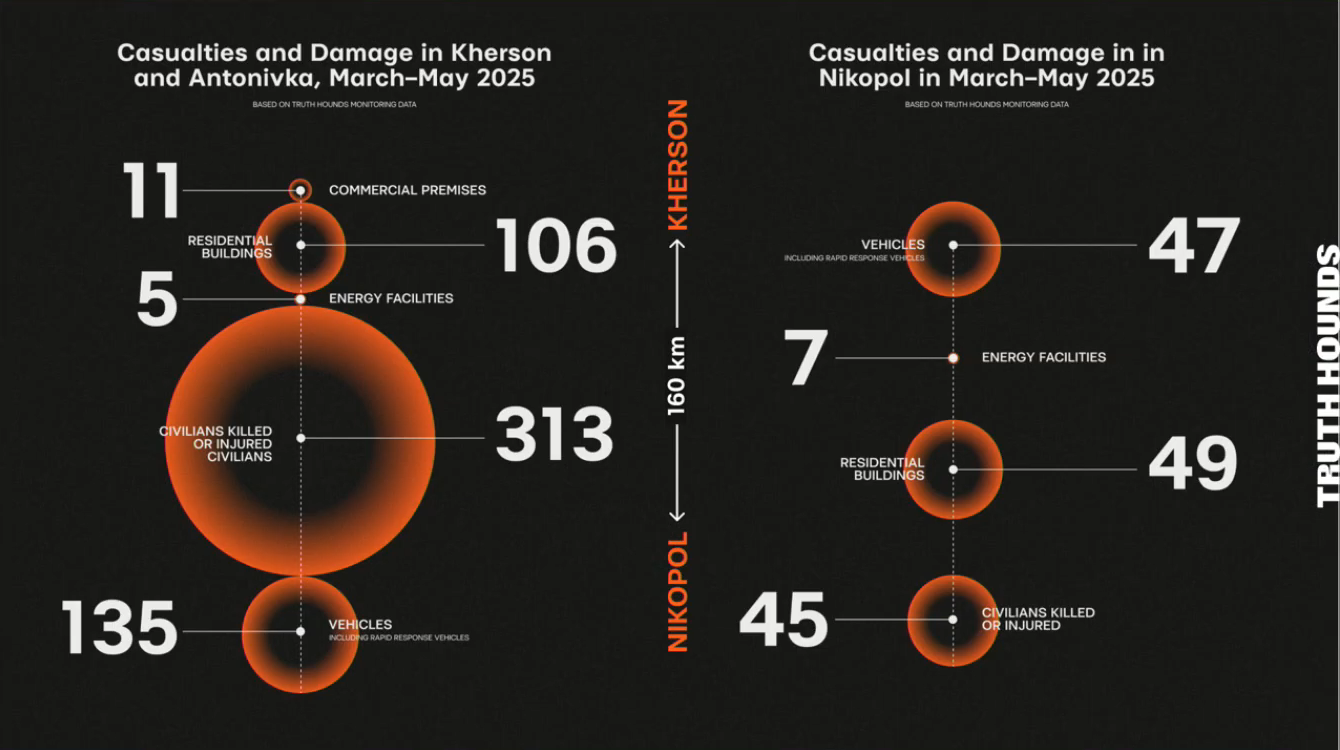 Click on the infographic to enlarge it.
We do not see any intention to be careful in their attacks or to verify who they are attacking. We see indifference and often intentionality.
For example, attacks on firefighters – there’s no way to explain them other than intentionality, because firefighters have unique identifying marks that you cannot confuse with anything. Similarly, attacks on police – these are attacks where the pilot clearly understands who they are attacking. Here, you cannot justify it by saying that someone changed clothes into something else.
The case of drones is special because it is particularly cruel, and this cruelty could have been avoided, as the technology allows for it. It is extremely precise, and this could have helped to protect civilians, but it is not happening. In this lies a great tragedy, and this is a missed opportunity to preserve human life.
Ukraine’s experience can be useful for other states. This is because these frontline hromadas – Kherson, Nikopol, other cities – these are territories where local communities have built patterns of countering drones. This is precisely what can be useful for other societies in other countries, because this weapon will, I am convinced, continue to be used en masse.
The use of anti-drone lights, detectors, Telegram channels as well, where they report on drone attacks – these are unique methods created by Ukrainians to protect themselves, to guard against drones.