Crimean Solidarity
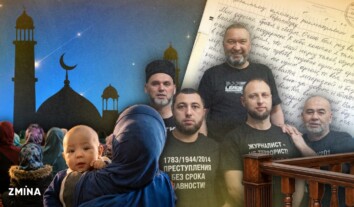
‘The most frightening moment is when you are left on your own’: How Crimean Solidarity supported people for 10 years
ZMINA article examines the movement’s importance both in resisting political repression in Crimea and in providing vital support to affected families, as well as the consequences of its closure that are already being felt
Russian Justice Ministry targets more activists of Crimean Solidarity grassroots movement
On 24 June 2026, the Russian Justice Ministry expanded the list of people it considers members of the Crimean Solidarity grassroots movement, which had previously been added to Russia’s register of foreign agents. The list now contains 137 names
Crimean Solidarity grass-roots initiative ceases operations
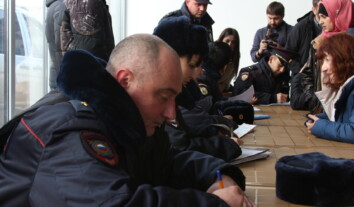
The movement stressed that many of its members who assisted victims of political repression had themselves faced fines, administrative detention and criminal prosecution. These activities were among the reasons why Crimean Solidarity was added to the register
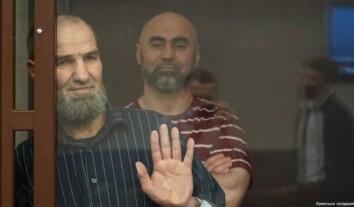
Crimean political prisoner Lenur Khalilov, who has cancer, is in critical condition
More than two months ago, Khalilov was transferred from a penal colony to a regional hospital run by Russia’s Federal Penitentiary Service in the Arkhangelsk Region (Oblast). However, the prescribed treatment has yielded no results, failing to halt the progression of the disease or alleviate his pain
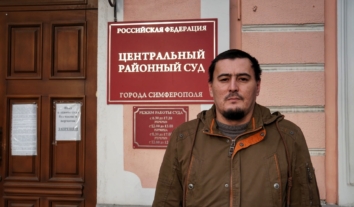
Citizen journalist Vilen Temerianov returned to Rostov pre-trial detention centre after a month in hospital
The journalist also needs to undergo a CT scan and is expected to be hospitalised again for this procedure
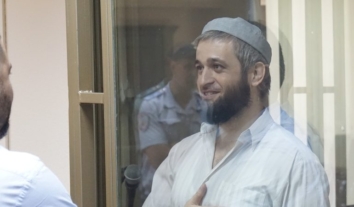
Quran confiscated from citizen journalist Seiran Saliiev in Russian penal colony
Alongside the confiscation of the Quran, Saliiev has been repeatedly placed in a punishment cell. According to his family, since 2024, he has effectively been held in continuous solitary confinement, where he is punished even for minor formal violations, including an unbuttoned uniform or an allegedly improperly made bed
Crimean political prisoner Tofik Abdulgaziev has begun losing consciousness due to significant deterioration of his health condition
The Crimean Tatar is being held in solitary confinement, so if he becomes unwell, there is no one to help him

Human rights activists have identified 25 individuals involved in the persecution of citizen journalist Remzi Bekirov
Those implicated in Bekirov’s persecution include Russian judges, prosecutors, and Federal Security Service (FSB) officers. A journalist and activist with the "Crimean Solidarity" movement, Bekirov has faced harassment since 2017. Following his arrest in 2019, he was held in Russian pretrial detention centers and penal colonies under inhumane conditions, subjected to forced transfers and psychiatric evaluations, and denied the full right to a legal defense
In Russia, parents of illegally arrested Crimean Tatars were detained five times on their way to the ombudsman
All the detentions occurred over two incomplete days
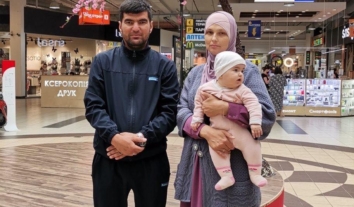
Russia detains four Crimean Tatar women after mass raids in occupied Crimea
Russian security forces raided the homes of Crimean Tatars and detained four women in temporarily occupied Crimea on the morning of October 15, 2025, Refat Chubarov, chair of the Mejlis of the Crimean Tatar People, stated

Crimean political prisoner Lenur Khalilov, who was released from a Russian penal colony due to his health condition, has been taken into custody again
The Crimean Muslim had been diagnosed with several illnesses, including primary liver cancer with metastases to the lymph nodes, chronic hepatitis C, Stage II hypertension, small liver cysts, a cyst on the left kidney, and kidney stones
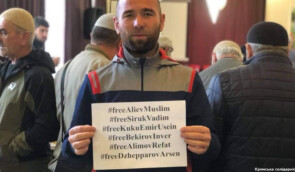
Crimean political prisoner Emil Ziyadinov has been held in AdSeg of a Russian colony for a year
Crimean Tatar activist and children's coach Emil Ziyadinov, who was illegally sentenced by the occupying authorities to 17 years in prison, has been held for one year in administrative segregation (AdSeg) at correctional colony No. 5 in Koryazhma, Arkhangelsk region, the Russian Federation
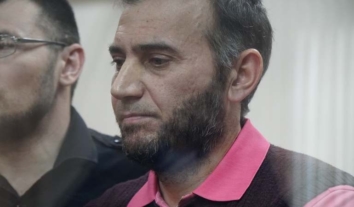
Crimean Muslim political prisoner endures harsh conditions for over three years in Russia’s Bashkortostan colony
One reason cited was that he did not interrupt his prayers when the colony chief entered the cell. Aliyev sent a complaint about his placement in solitary confinement to the Salavat City Court, but the situation did not change

Crimea Platform Expert Network warns against separate talks on Crimea, calls for Black Sea security measures
The statement, released during the Fifth Summit of the International Crimea Platform at U.N. headquarters, emphasized that all occupied Ukrainian regions -- including the Autonomous Republic of Crimea, Sevastopol, and parts of the Donetsk, Luhansk, Kherson, and Zaporizhzhia regions -- must be treated as "parts of a single space of armed aggression" by Russia
Kremlin’s prisoner, journalist Remzi Bekirov, reports violations of Muslims’ rights in Russian colony
For now, Bekirov manages to eat iftar during the general mealtime in the dining hall at 7:00 p.m. However, the lawyer noted that due to the increasing daylight hours, he will no longer be able to eat with the rest of the prisoners in the evening by the end of March
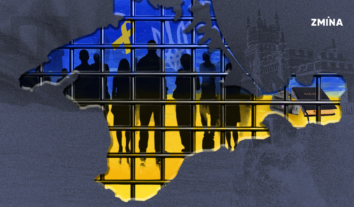
11 years of oppression and repression: how human rights in occupied Crimea are approaching zero
Read about the events, figures and trends in the field of human rights in the temporarily occupied territory in the overview material dedicated to the Day of Resistance to the Occupation of Crimea
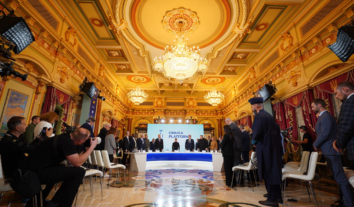
Kremlin’s forgotten political prisoners in Crimea: Human rights advocates urge global focus on Ukrainian hostages at the Crimea Platform
In this article, ZMINA reveals what was debated on the sidelines of the summit, the potential prerequisites for peace, the scale of the crisis involving Crimeans persecuted by Russia, and why raising awareness is crucial to achieving justice

Russian authorities intensify pressure on detained Crimean journalist Remzi Bekirov. Human rights defenders call for letter writing campaign
Since the citizen of Ukraine arrived in Abakan, wardens have repeatedly and unjustifiably placed Bekirov in a punishment cell

Columns

Fighting a ‘holy war’: Why a sacralised war resists Western strategy

“Reaching an agreement with the US on what we disagree on”: What the campaign against ICC means for Ukraine
ICC must remain free from political pressure to bring justice to victims of world’s gravest crimes
Only 5% of those responsible for deporting Ukrainian children face global sanctions