Quran confiscated from citizen journalist Seiran Saliiev in Russian penal colony
In Correctional Colony No. 1 in Russia’s Tula Region (Oblast), the Quran was confiscated from Crimean political prisoner and citizen journalist Seiran Saliiev immediately after his transfer. He has now been held for several months without the religious book, which bore the stamp and signature of the imam of the Tula Oblast, his wife, Mumine Saliieva, reported to the Crimean Solidarity grass-roots initiative.
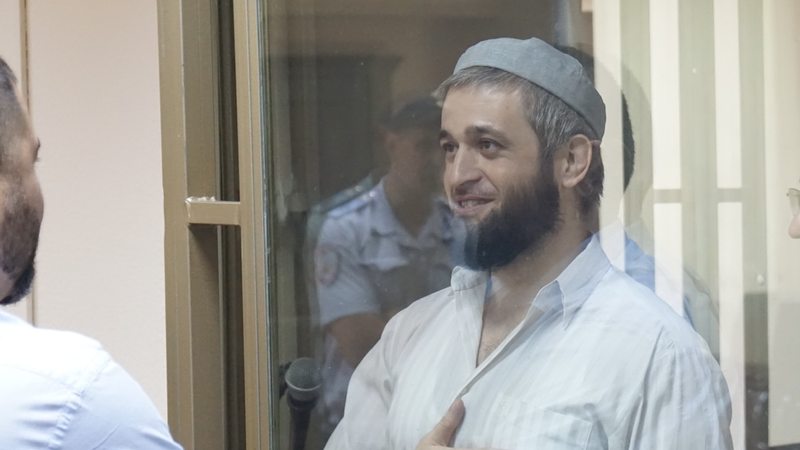 Seiran Saliiev. Photo: Crimean Solidarity
According to her, the prison administration continues to withhold the Quran despite the fact that it had already been inspected in the region.
“He was transferred from one colony to another, but within the same oblast… There is only one oblast and one imam here“, the political prisoner’s wife said.
Alongside the confiscation of the Quran, Saliiev has been repeatedly placed in a punishment cell. According to his family, since 2024, he has effectively been held in continuous solitary confinement, where he is punished even for minor formal violations, including an unbuttoned uniform or an allegedly improperly made bed.
“In total, he has spent a year continuously in the punishment cell”, his wife said.
Human rights defenders view these actions as part of a systematic campaign of pressure against Crimean political prisoners, particularly citizen journalists who documented human rights violations on the occupied Crimean peninsula. In Saliiev’s case, the concerns extend beyond detention conditions to include restrictions on religious rights and additional psychological pressure.
Seiran Saliiev is a Crimean Tatar linguist, tour guide and citizen journalist with Crimean Solidarity who reported on political persecution in Crimea. In 2017, he was detained by FSB officers in Bakhchysarai during mass raids targeting Crimean Tatars whom the Russian occupying authorities accused of having “links to the banned organisation Hizb ut-Tahrir”. In 2020, the Southern District Military Court in Rostov-on-Don sentenced him to 16 years in prison.
The religious party Hizb ut-Tahrir has been banned in Russia since 2003; however, it operates legally in all territories of Ukraine, including the Autonomous Republic of Crimea, as well as in many other countries. Russia, in violation of the Geneva Conventions, applies its own criminal legislation to the temporarily occupied territories of Ukraine.
Earlier, Freedom House pointed out that following the Russian annexation of Crimea in 2014, allegations of membership in Hizb ut-Tahrir have become a common pretext for criminal prosecutions there, and are one of many abuses of anti-extremism legislation against civic activists and others.
Previously, political prisoner and citizen journalist Seiran Saliiev from Crimea, which is occupied by Russian forces, was transferred from Correctional Colony No. 4 in the Tula Oblast to Correctional Colony No. 1 in the same oblast.
ZMINA reported that human rights defenders identified 26 people involved in the persecution of journalist Seiran Saliiev in temporarily occupied Crimea.
Also, take a look at this photo project: “I will always wait for you, my child!”
By way of background, in April 2023, Dunja Mijatović, the Council of Europe Commissioner for Human Rights, released report, “Crimean Tatars’ struggle for human rights.” Mijatović confirmed numerous serious human rights violations, namely persecution, discrimination, and stigmatization, by Russian occupying forces of representatives of the Crimean Tatar community and those who oppose the illegal occupation of Crimea.