Crimea liberation is question of survival for Crimean Tatars
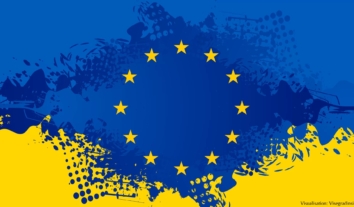
On September 24, 2025, the Fifth Summit of the Crimea Platform was held in New York, USA, bringing together a significant number of world leaders and senior officials. Representatives of 54 countries and seven international organizations, encompassing all continents and regions of the world, attended the event.
This year’s Summit took place within the framework of the United Nations General Assembly and coincided with the 80th anniversary of the signing of the UN Charter. One of the key speakers of the Summit was Mustafa Dzhemilev, the leader of the Crimean Tatar People.
Speaking at the Fifth Crimea Platform Summit, he cautioned that agreements made under military pressure are “legally null and void” and risk repeating the mistakes of 1938.
ZMINA publishes his speech fully.
Your Excellencies, Esteemed Ladies and Gentlemen!
There is a belief in the world that if a language is spoken at the UN tribune, then this language will never disappear. I will speak now in the Crimean Tatar language, which UNESCO included in the list of languages that are in danger of disappearing, although Ukraine and President Zelenskyy are making great efforts to preserve this language. My translator into English will be one of the patriarchs of the Crimean Tatar diaspora in the United States, Mübeyin Batu Altan.
I sincerely thank the leaders and representatives of the countries participating in the Fifth Summit of the Crimean Platform, the main goal of which is, as is known, to find ways to liberate Crimea from Russian occupation.
The fact that dozens of countries around the world are gathering together and firmly declaring that they do not and will never recognize the legality of the occupation of Crimea and will make every effort to liberate it is of great importance for Ukraine and especially its indigenous people.
Read also: “Not alone”: indigenous peoples unite in struggle against global conflicts – Binalakshmi Nepram
I am one of the few still surviving representatives of the generation of Crimean Tatars who survived the total deportation and genocide of their people in 1944, and then waged an almost half-century struggle against one of the most brutal regimes of the 20th century for the right to return to their homeland and their human rights.
Overcoming enormous difficulties, we began to return to our homeland and restore the remnants of our destroyed culture only in the last years of Gorbachev’s “perestroika”, and after the collapse of the USSR, already with the support of the independent Ukrainian state.
This process was interrupted in February 2014 by the invasion of Crimea by troops of the state that is the successor of the state that committed genocide against the indigenous people of the peninsula.
Russia began to rapidly transform the entire peninsula into a powerful military base with the clear goal of further expansion into mainland Ukraine. And since, in accordance with Russian logic, only people loyal to the occupiers were supposed to live on the territory of this base, then representatives of the indigenous people and ethnic Ukrainians were the first to be subjected to large-scale repressions.
It is enough to mention that the number of Crimean Tatars repressed for political or religious reasons, including kidnappings and murders, arbitrary arrests, searches, interrogations, torture, etc., is proportionally 52 times higher than the number of repressions in Russia as a whole.
According to various estimates, since the occupation to the present, about 50 thousand Crimean Tatars (i.e. about 15% of the entire population) and up to 100 thousand ethnic Ukrainians have left Crimea. And the number of Russian citizens resettled in Crimea already exceeds 1 million people.
Read also: Silent deportation: how the descendants of Crimean Tatars deported in 1944 are experiencing it again
The process of displacing the indigenous people continues, and if Crimea is not liberated, then in the foreseeable future, we can foresee the complete disappearance of the Crimean Tatar people as an original ethnic group.
Therefore, if for Ukraine in general the liberation of Crimea is primarily a question of restoring its territorial integrity and ensuring its security, then for the indigenous people of Crimea, it is also a question of survival and further development or complete disappearance as an original nation.
Today, Ukraine is bleeding, fighting off the aggressor and trying to liberate its occupied territories, to liberate millions of our fellow citizens who have fallen into the hands of cruel occupiers.
We are grateful to all the countries that, in these difficult times for us, provide significant support and assistance to our country, clearly realizing that this war of Russia is not only against Ukraine, but also against the entire world order, against civilization. But it is a great pity that such an understanding of the situation is not present in all countries of the world.
However, we are very concerned that in some of our allied states, the adherents of the so-called theory of “real politics” have begun to prevail. That is, a theory that, for the economic or other interests of their countries, allows them to ignore moral and ethical principles, human rights, and international law.
One can put forward a certain “peace plan” that largely coincides with the plans of the aggressor and provides for a ceasefire due to the recognition of Crimea and some other occupied territories of Ukraine as territories of Russia. Now imagine what kind of impression such “peace plans” will make on our fellow citizens in Crimea and other occupied territories, especially those who are behind the dungeons of the FSB and look with hope to their country and its allies.
In addition, it is absolutely clear to everyone that such a “peace agreement” will be a very short break before a new, even bloodier war, because any agreements signed under the threat of using military force and contradicting the norms of international law are legally null and void.
It is surprising that despite all the crimes of the Putin regime in front of the whole world, some of our allies have not yet understood that appeasing a bloodthirsty aggressor through some territorial concessions to the detriment of other countries and international law, to the detriment of the basic principles of the UN, is impossible and is fraught with grave consequences for all of humanity.
This tactic is very reminiscent of the attempt to appease Hitler in 1938 by handing over part of the territory of Czechoslovakia to him, which resulted in World War II. At least in memory of the more than 55 million people who died in that war, perhaps such mistakes should not be repeated.
I hope that representatives of all countries will support the proposed text of the final declaration of the Fifth Crimean Summit, which provides for the end of this bloody war that has lasted more than 11 years only under the conditions of compliance with the norms of international law and, first of all, ensuring the territorial integrity of Ukraine.
Thank you for your attention.