UN’s Independent Commission of Inquiry stated that Russia’s deportation of Ukrainian children amounts to crime against humanity
The Independent International Commission of Inquiry on Ukraine, established by the UN Human Rights Council, has determined that Russian authorities deported or forcibly displaced at least 1,205 Ukrainian children from occupied territories. Experts concluded that these actions constitute war crimes, crimes against humanity, and the enforced disappearance of children, as the Russian Federation failed to inform families of their whereabouts and obstructed their return home.
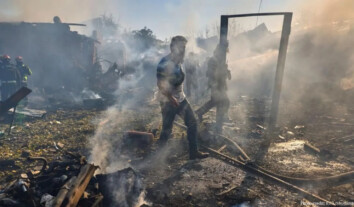
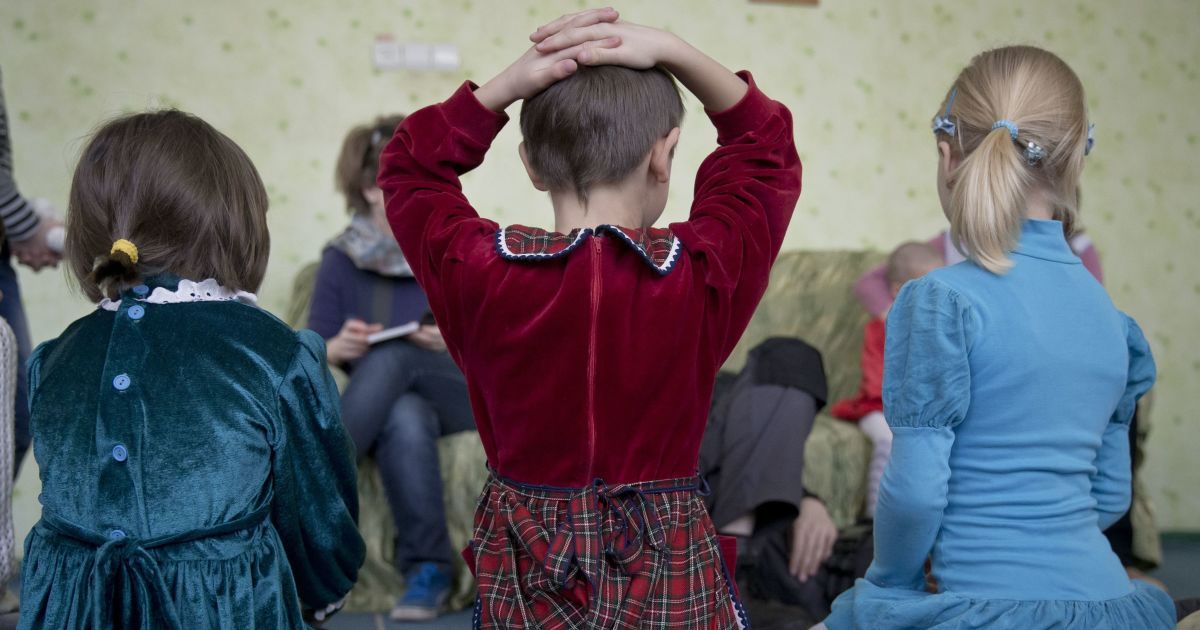 Illustrative image. Photo credit: Associated Press
During previous mandates, the Commission has already investigated cases where Russian authorities illegally removed children from occupied territories of Ukraine to Russia or transferred them to other occupied territories. At that time, experts established that such actions constitute war crimes, and Russian authorities violated international law norms that obligate states to facilitate, in every possible way, the reunification of families separated by war.
Under its current mandate, the Commission has investigated new cases of such deportations and transfers. This report provides a summary of its findings, with detailed conclusions set out in a separate document released in March 2026.
The Commission documented 1,205 cases of child deportation or transfer, including those previously reported. During new investigations, it confirmed the deportation of 995 children from 11 residential care institutions in the temporarily occupied Donetsk and Luhansk Oblasts. These transfers took place shortly before the start of the full-scale invasion in 2022. Russian authorities justified them as an “evacuation” due to an alleged threat from Ukraine. But it was during this period that Russian troops were massing personnel and military equipment near the Ukrainian border.
Most of these transfers were not temporary in nature, as required by international law during an evacuation. On the contrary, Russian authorities at the highest level coordinated actions to ensure the children’s long-term stay in Russia. Furthermore, Russia did not obtain the consent of parents, legal guardians, or Ukrainian authorities, as mandated by law. Therefore, these actions cannot be considered an evacuation within the meaning of international humanitarian law. The Commission reaffirmed its previous conclusion: the illegal deportation and transfer of Ukrainian children is a war crime.
Russian authorities at the highest level, including President Vladimir Putin and structures directly subordinate to him, coordinated the practical mechanisms for the deportations and subsequent placement of children in Russia. The Commission concluded that these actions were carried out according to a pre-prepared, consistently implemented plan that began even before the start of the full-scale invasion. This allowed experts to conclude that the deportations and forced displacement of children also constitute a crime against humanity.
You may also want to read: Greece urges Russia to immediately return forcibly “transferred Ukrainian children”
Initially, the children were transported to temporary transit centers in Russia or the occupied territories of Ukraine. Later, most of them were gradually moved to various settlements across 21 regions of Russia, where they were placed in families or residential institutions for an indefinite period. The children were granted Russian citizenship, and their information was entered into adoption or foster care databases.
You may also want to read: The Mission of the President of Ukraine in the Autonomous Republic of Crimea named the key Russian and occupation agencies responsible for the deportation of Ukrainian children
In public statements, Russian officials identified adoption as the priority for the placement of deported children and reported legislative and administrative changes designed to simplify this process. Some of the placements the Commission has
documented appear, indeed, to be adoptions. However, around the time warrants of arrest were issued by the International Criminal Court in March 2023, Russian authorities backtracked on these statements, denied that adoptions had been taking place, and instead emphasized foster placement in their public declarations. Long-term placements with families have continued.
Four years after these events began, the Commission found that 80% of children from documented cases have still not returned. Many parents and legal guardians remained unaware of their fate and whereabouts, months or years
after the initial deportations or transfers. This led to prolonged family separations.
Furthermore, Russian authorities have failed to create a mechanism for the return of children to their homes, and the majority remain displaced. Children, parents, and relatives made their own efforts to locate one another. The Commission classifies these actions as the war crime of unjustifiable delay in the repatriation of civilians. Returns that could be organized occurred after a series of obstacles, delays, and security risks. In this regard, children in institutions, and in particular
Younger children or those with disabilities have almost no chance of returning.
Deportations or transfers of children, their disappearance, and the ensuing prolonged separation from families have been highly traumatic for all those involved. A mother who did not manage to find her daughter, placed in an institution in the Russian Federation, stated, “[…] I am still looking for my daughter, and I am terribly afraid of what she might think of
me and how she survives there, where many people hate Ukrainians […].”
Experts also noted that the conditions in which the deported children are held bear the hallmarks of deprivation of liberty. Children were placed in an environment that complicates contact with their families and their return to Ukraine. Adoption, as discussed by Russian officials, could permanently cut a child off from the possibility of returning to their family. In light of this, the Commission concluded that Russian authorities are carrying out enforced disappearances of children, which are systemic in nature and constitute a crime against humanity, as well as a serious violation of human rights.
The Commission also determined that the actions of the Russian authorities described in the report contradict a number of other norms of international humanitarian law and international human rights law.
Previously, ZMINA reported that in October 2025, the President of the OSCE Parliamentary Assembly, Pere Joan Pons, appointed Swedish MP Carina Ödebrink as Special Representative on the Abduction and Deportation of Ukrainian Children by Russia. The decision was made following his visit to Kyiv, during which President Volodymyr Zelenskyy and other officials emphasized that the return of children is a top priority.
Carina Ödebrink has already worked on this issue as a special rapporteur for the OSCE Parliamentary Support Group for Ukraine and as a rapporteur for the Assembly’s Third General Committee. In July 2025, she presented a detailed report titled “The Abduction and Deportation of Ukrainian Children by Russia,” in which she called for increased international cooperation, specifically through the International Coalition for the Return of Ukrainian Children and President Zelenskyy’s Bring Kids Back UA initiative.
To provide background, in 2025, the network of institutions involved in transporting Ukrainian children to camps in temporarily occupied Crimea and the Russian Federation expanded across Russia and the temporarily occupied territories (TOT) of Ukraine. This year, Russia has moved nearly 11,000 Ukrainian children to 164 such institutions.
In October 2024, the ZMINA Human Rights Centre, together with its partners, prepared a report titled “Stolen Childhood: How the Belarusian Regime Erases the Identity of Ukrainian Children through Displacement, Re-education, and Militarization.” The report details how Belarus became complicit in Russian crimes, transferring at least 2,219 Ukrainian children from occupied territories to its own soil between 2021 and June 2024.
You may also want to read: Not just Ukraine — Russia is preparing Ukrainian children for future wars elsewhere
Currently, 1.6 million children remain in the temporarily occupied territories of Ukraine. While Ukraine has confirmed the deportation of over 19,000 children to Russia, the exact figure remains unknown due to the lack of humanitarian access to the occupied lands.