‘I’m not a spy – I just want to live here’: What children leaving occupied territories go through
Leaving a temporarily occupied territory is only the first step towards returning to Ukrainian society. After living under occupation, children and teenagers effectively have to rebuild their lives from scratch: obtain or restore their documents, enrol at a Ukrainian university, navigate government procedures, and, at the same time, adjust to an environment whose cultural and information landscape had been inaccessible to them for years.
ZMINA tells the story of Sofiia, whose name has been changed for security reasons. She left temporarily occupied Donetsk to enrol at a Ukrainian university.
Sofiia’s experience shows that reintegration is about more than documents, education and safety. People returning from occupied territories need support to feel part of Ukrainian society again – without constantly having to prove that they belong.
“I was afraid I wouldn’t be able to go back”
The decision to leave is rarely an easy one. Sofiia says she had doubts, primarily because she had no reliable contacts with people living in free Ukraine.
“I had no idea what would happen to me after I left. My greatest fear was that I wouldn’t get into university, meaning I would fail to achieve the very thing I had come here for, while no longer being able to go back either,” she says.
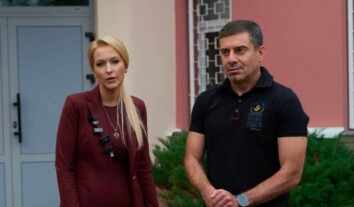
Living under occupation means being constantly surrounded by fear, isolation and propaganda. Without access to alternative sources of information, people may come to accept the narratives imposed by the occupation authorities as true, explains Dina Urikh, a human rights advocate and founder of NGO Kompas Mriiі .
According to Urikh, residents of the Russian-held areas are told that they will supposedly face persecution if they leave for Ukraine and that young men will be conscripted immediately. They are also led to believe that infrastructure has been destroyed in government-controlled areas, that there is no electricity or food and that they will have nowhere to live if they leave.
Sofiia first began thinking about applying to a Ukrainian university in the 10th grade, when her teachers started discussing the Unified State Exam (EGE), an exam required for admission to Russian higher education institutions. It was then that she realised staying under occupation would leave her with only two options: studying either in her occupied home city or in Russia.
“I knew I didn’t want to do either of those things. But I didn’t know what the right thing to do was: at the time, the idea of going to Ukraine felt like an impossible dream. Some people dream just as desperately of going to America, but I dreamt of Ukraine,” Sofiia says.
It was not until the 11th grade that a concrete plan began to take shape, and she was only able to make the final decision once her parents agreed to help her leave.
Sofiia says that while living under occupation, she did not know about the civil society organisations and government initiatives that help children leave, as information about support programmes is almost impossible to find.
“Information like that is heavily censored, so it is very difficult to find anything out or get in touch with volunteers from Save Ukraine or Bring Kids Back. When I was leaving, I didn’t expect anyone to help me. I genuinely thought that once I left, no one would know about me and no one would care,” she recalls.
She admits that she lived in constant fear for herself and her family.
“I was afraid that they [the occupying authorities] could see everything I typed into Google. Whenever I searched for information about Ukraine, I always thought: will the security forces come to our home tomorrow?” Sofiia says.
On 31 March 2025, Roskomnadzor, Russia’s state internet censor, decided to tighten its monitoring of the online activity of residents of Crimea and other Ukrainian territories occupied by Russia.
Order No. 51 requires internet service providers to collect and transmit the following data to Roskomnadzor:
- the IP addresses of all devices connected to the internet;
- geolocation data;
- the identifiers of all devices used to access the internet;
- information about software and internet traffic.
Sofiia learnt about Quota 2, a special admissions procedure for children escaping occupation, from a relative who was already living in government-controlled territory. Yet even with this information, navigating the procedure was far from straightforward.
“The official website could only be accessed through a VPN, and even then, not everything on it was clear. To get accurate information, I had to call the admissions offices of Ukrainian universities. It was only after I left the occupied territory that I was able to learn more about Quota 2”, Sofiia says.
Since 2017, VPN providers in Moscow have been prohibited from providing access to websites blocked by Russia. Providers that fail to comply face substantial fines and may be blocked themselves.
First impressions: flags, traffic lights and a sense of unreality
After arriving in government-controlled territory, what struck Sofiia most was how far her home city had regressed during the years of occupation compared with what she saw around her.
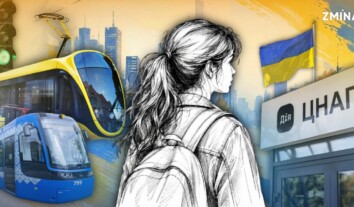
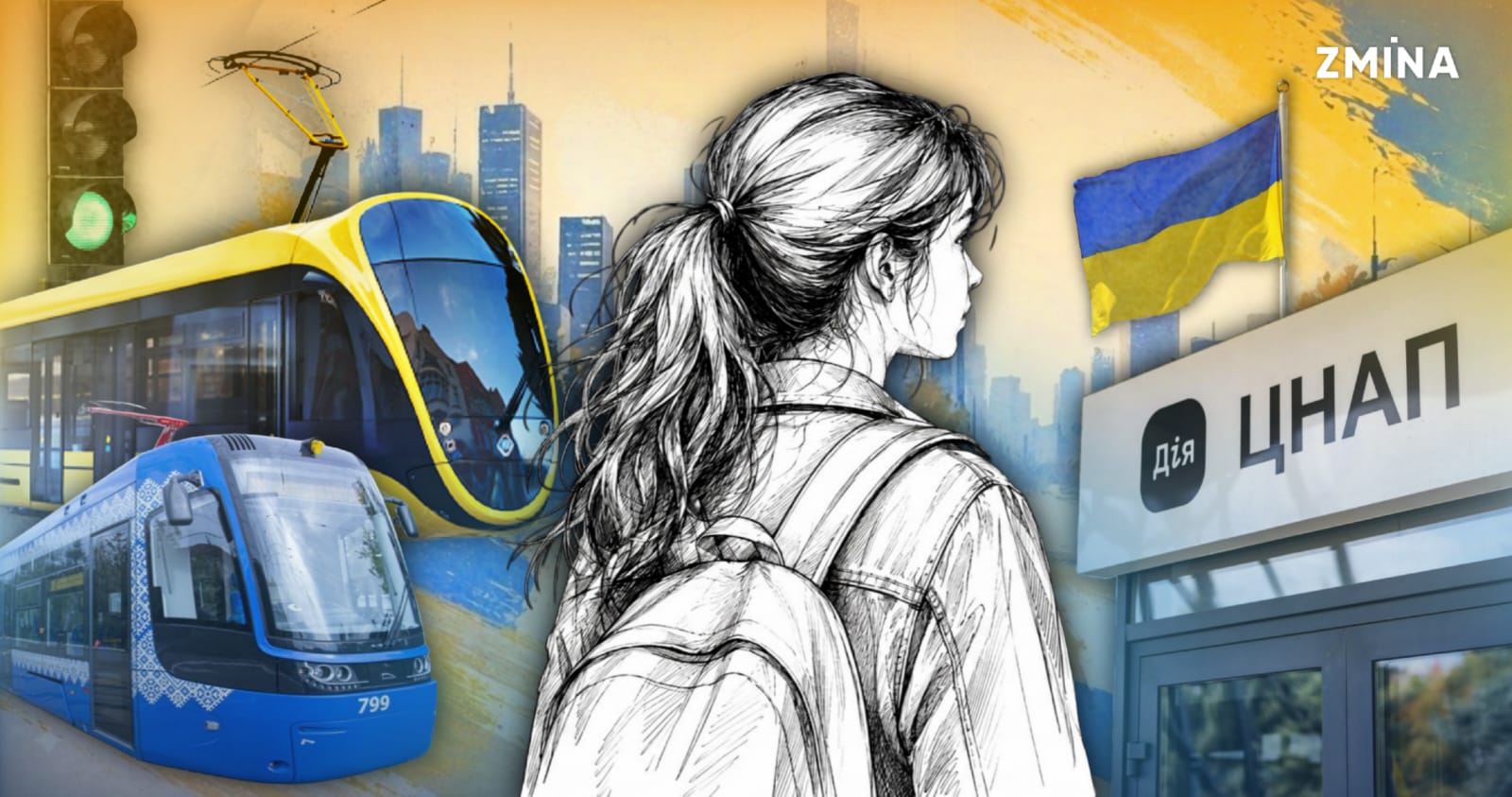
“Everything here feels like the civilised world: you can use bank cards, the traffic lights work, there are proper roads and modern public transport. There are Ukrainian flags, which I had never seen for as long as I could remember. Arriving here and realising that I was actually going to live here and that it wasn’t a dream felt very strange at first,” she says.
Bureaucracy became Sofiia’s greatest challenge during her first few months: she had none of the basic documents she needed and no idea what steps to take next.
“I didn’t know what I was supposed to do, even when it came to the documents. I was told: “To obtain a certificate of an internally displaced person, a passport and so on, you need to provide documents and proof of your registered address”, but I didn’t have a registered address. I effectively didn’t exist in Ukrainian registries because my place of residence in Donetsk had not been registered before 2014,” Sofiia explains.
At 17, Sofiia had no access to the Diia app, no ID card, no passport and no Ukrainian school-leaving certificate. She had to make repeated visits to an Administrative Services Centre, where she was sent from one official to another, none of whom “knew anything” either.
“It was extremely difficult, but I managed to get everything sorted out in about three months,” she says.
Human rights advocates have repeatedly criticised the state’s approach to documents issued under occupation. In particular, they have argued that the blanket refusal to recognise such documents, with the exception of birth, death, marriage and divorce certificates, no longer reflects the realities of the full-scale invasion and prevents citizens from fully exercising their rights after leaving the temporarily occupied territories.
Read more: How should Ukraine respond to court decisions issued during the occupation
In the document “17 priority steps in the field of human rights protection in the context of armed aggression against Ukraine in 2026”, human rights advocates from the Coalition of organisations dealing with the protection of the rights of victims of armed aggression against Ukraine recommended that the Ukrainian government change its approach to documents issued in the Russian-held areas.
The experts believe that the state should move away from its policy of blanket non-recognition and adopt a framework set out in law, with clear and transparent mechanisms for using information from certain categories of documents issued under occupation, while taking security considerations into account.
To obtain a Ukrainian school-leaving certificate, Sofiia sat examinations as an external student in subjects that had not been included in her curriculum in the occupied part of the Donetsk region.
“I brought in my school-leaving certificate from the so-called Donetsk People’s Republic (DPR), and my grades in some subjects were converted to Ukraine’s 12-point grading scale. I then sat the remaining examinations in Ukrainian, history and mathematics,” she explains.
By the time volunteer organisations began calling Sofiia and offering to help with her documents and university admission, she had already navigated the entire process on her own.
“Various volunteer organisations asked whether I needed help with my documents. I did need that help, but earlier. By the time they called, I had already obtained a Ukrainian school-leaving certificate on my own, worked out the Quota 2 procedure and enrolled at university,” Sofiia says.
“I feel out of the loop”
Another and perhaps one of the most difficult challenges Sofiia has faced is social isolation.
“It began once I became part of a community. During those first few months before university, I hadn’t met anyone new. It was when I started university that I began to feel isolated. My peers would usually form their own groups straight away, while I was often left out of the loop,” she says.
The problem was not merely a lack of mutual acquaintances, but an entire layer of cultural references she had never been exposed to: jokes dating back to school, shared memories and social media platforms, which Russia blocks in the temporarily occupied territories.
“I was gradually exposed to the cultural context shared by my peers in government-controlled territory. Under occupation, there was no unrestricted access to the internet or social media. So references that are commonplace in my peers’ jokes are new to me,” Sofiia says.
According to Volodymyr Yavorskyi, Programme Director at the Center for Civil Liberties, there is a gap between the reality of life under occupation and how it is perceived in government-controlled Ukraine.
Yavorskyi noted that state policy towards people from the Russian-held areas focuses largely on security risks – including the law on collaboration, which requires amendment, and proposals to subject everyone to polygraph testing – while lacking a humanitarian approach.
In his view, this fuels stereotypes that can lead to people living under occupation being regarded as potential supporters of Russia, creating additional barriers to their return and reintegration.
Read more: Polygraphs versus dignity: how a security tool can become a human rights concern
Kateryna Rashevska, a human rights defender, cited figures from Ukraine’s Security Service (SBU) and the National Police showing that only a tiny fraction of the more than 200 children used by Russia to carry out acts of sabotage against Ukraine came from occupied territories. Living under Russia’s control does not automatically make someone an enemy agent.
In government-controlled territory, Sofiia encountered prejudice against people from the temporarily occupied territories. She says suspicions of espionage arose almost every time she met someone new.
“Almost everyone in government-controlled territory has one thing in common: whenever I meet someone, they ask, “Are you a spy? Were you screened by the SBU? Are you sure you didn’t come here to pass information to the enemy?” I had to explain to every new person that no, I’m not a spy – I just want to live here,” she says.
People are also surprised by how well Sofiia speaks Ukrainian, despite the fact that she came from Donetsk.
“I’m applying for a job, and the employer says, “How come you speak Ukrainian so well? You’re from Donetsk?” But I’ve been living in government-controlled territory for two years – why wouldn’t I speak it? My question is: why doesn’t this employer speak Ukrainian, and why are they speaking Russian to me?” Sofiia says.
When asked what she believes society in government-controlled territory should understand first and foremost about children living under occupation, Sofiia gives an unequivocal answer:
“The main thing people need to understand is that the fact we came here [from an occupied territory to government-controlled territory] is our victory, and we want to build our lives here. No one brought us here by force, and we don’t want to go back.”
She also points to another issue: people are curious about life under occupation and want to ask questions about it, which she understands. But conversations with displaced people are often limited to this subject, while people show little interest in discussing ordinary, everyday matters.
“We just want people to see us as ordinary people and regard us as part of society,” she says.
Where the system falls short
Sofiia believes that for children leaving occupied territories, support should begin as soon as they arrive, not after they have already dealt with the main challenges on their own.
Asked what immediate measures the state could introduce for children leaving occupied territories, Sofiia stresses that the approach should depend on whether a child arrives alone or with their parents.
“If a child arrives entirely alone and has no one here, they should be registered and followed up, then provided with a mentor, ongoing support, accommodation, psychological support and guidance on what to do next,” she says.
If a child leaves with their parents and has relatives they can stay with, Sofiia believes they still need assistance, but in the form of a clear and straightforward step-by-step plan.
“People should immediately be given a standard procedure explaining what they need to do, which documents they need to obtain and how. That way, they can get everything done as soon as they arrive rather than three months later,” Sofiia explains.
Read more: Human rights defenders urge Zelenskyy to prioritize protection for war victims
She says that despite all the efforts of volunteer organisations, newly arrived children still lack clear and timely guidance.
Advice for those still living under occupation
Sofiia believes that children and teenagers who remain under occupation should find the courage to leave, even if they feel that no one is waiting for them in government-controlled territory.
“I would really like more children to leave. They need to look after themselves. It is important to understand that you can manage here even on your own. The main thing is to get out. It is difficult, and life here will sometimes be difficult too, but not as difficult as living under occupation,” she says.
When it comes to the journey itself, she stresses that safety comes first. This is particularly important for children whose home areas were occupied after 2022 and who have relatives in free Ukraine, especially relatives serving in the military, as there is a very high risk that they will not be allowed to leave.
“The main thing is not to wipe your phone completely or keep any suspicious contacts or messages. During the final month before leaving, it is better to write only in Russian and keep your messages neutral,” Sofiia advises based on her own experience. She warns that when passing through Russian checkpoints, young people are often asked provocative questions and those questioning them try to twist their words.
Despite all the difficulties – bureaucratic hurdles, the lack of a clear plan and social isolation – Sofiia has no doubts about the choice she made.
“I have no intention of moving abroad. I see my future only in Ukraine, and I would very much like to help develop my Donetsk after it is liberated,” she says.
If you or your loved ones are planning to leave a temporarily occupied territory, it is important to take safety precautions and find reliable information in advance.
Information on routes for leaving occupied territories, safety, admission to Ukrainian educational institutions and support after returning to government-controlled Ukraine is available at this link. It also provides contact details for organisations that help people leave the temporarily occupied territories.
Liked this article? Follow ZMINA on X, BlueSky, and LinkedIn, and help shape our editorial focus by filling out our feedback form here.