Forty-four cases of child recruitment by Russian special services uncovered in Kharkiv Oblast alone over four years
Ukrainian authorities have documented at least 44 cases of children being recruited by Russian intelligence services in the Kharkiv Region (Oblast) since the onset of Russia’s full-scale invasion, Yurii Papusha, head of the Kharkiv Oblast Prosecutor’s Office, disclosed in an interview with the news agency Ukrinform.
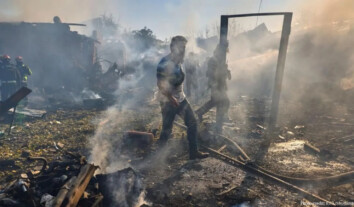
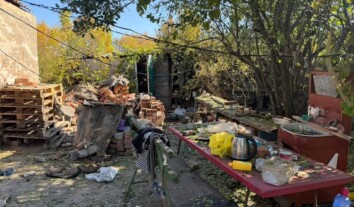
 Illustrative image via Artur Debat / Moment Mobil
In 2024, authorities recorded 19 cases involving 15 boys and four girls. Another 19 cases were documented in 2025, including 14 involving boys and five involving girls.
So far this year, six additional cases have been identified, involving three boys and three girls.
“Recruiters use fake accounts, pose as peers, and employ psychological manipulation and pro-Russian content. Most often, children are offered easy money to carry out seemingly simple tasks. At first, they may be asked to photograph designated locations, spray graffiti, put up leaflets or set fire to property. Gradually, the assignments become more complex and dangerous, drawing children into criminal activity,” Papusha said.
Of the cases that have reached court, 18 boys and three girls have been convicted.
Papusha said investigators are working to identify not only those carrying out the acts but also the organisers, namely operatives of the Russian intelligence services.
 Yurii Papusha
“These are complex investigations because recruitment is carried out through anonymous accounts, multi-layered communication channels and foreign digital platforms,” he said.
The recruitment of children by Russian intelligence services is one of the challenges Ukrainian children have faced since the start of the full-scale war. The United Nations has said that such cases could constitute another violation of international law by Russia.
In some cases, children are blackmailed into carrying out acts of sabotage or terrorism. In one incident in the Ternopil Oblast, a schoolgirl agreed to participate after being threatened with the publication of intimate photographs stolen from her phone. Russian recruiters target not only children but also older people, another group that continues to be disproportionately affected by the full-scale war.
In June 2026, the UN Secretary-General’s annual report Children and Armed Conflict, covering January–December 2025, lists Russia among parties responsible for grave violations against children. Twenty-four children (22 boys and 2 girls) were verified by the U.N. in 2025 as being used by Russian armed forces (4) and unidentified perpetrators (20) as informants to share information on Ukrainian military locations or movements, images of critical infrastructure or military equipment, or to make explosives or commit arson against railway infrastructure and vehicles.
UN Secretary-General António Guterres is concerned by the detention of children, including those related to online recruitment and use. He reminded both parties in his annual report that children actually or allegedly associated with parties to the conflict, including those who may have committed crimes, should be treated primarily as victims and in line with international juvenile justice standards, including detention as a last resort and for the shortest possible period of time.
As previously reported by ZMINA, more than 1,000 children have lost one or both parents as a result of Russia’s aggression against Ukraine, while more than a quarter of all children have been separated from their families.
Join us on X, BlueSky, and LinkedIn for daily human-rights updates – and help shape ZMINA’s English coverage by sharing your thoughts here.