Valve is still whitewashing Russia’s Kyiv offensive, international crimes in Russian game, profiting from it on Steam
Steam launched a 10% discount on the game Ukrainian Warfare: Gostomel Heroes, which contains Russian propaganda.
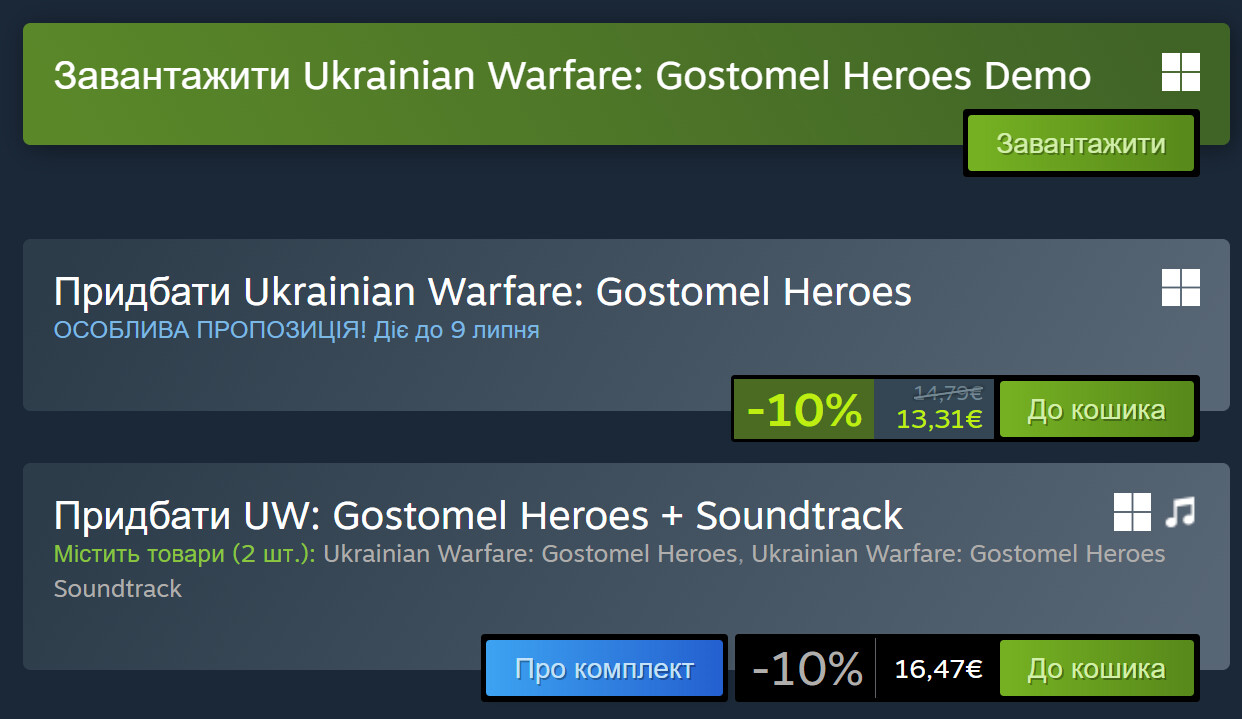
Ukrainian Warfare: Gostomel Heroes, a real-time strategy game produced by Cats Like To Play, was released on Steam on 24 March, 2026. In their own bio, they state that the goals of the game were to tell a story through the lens of a game, portraying events of the first days of the war with full seriousness from the moment of the “brilliant Russian airborne assault” on the outskirts of Kyiv. The Russian game creators claim that modern video games can serve as a way to convey information about world events.
The game features six missions detailing events from the initial paratrooper assault on the Antonov Airport to the subsequent withdrawal of Russian troops at the end of March 2022. Experts point out that the game’s attempts at historical revisionism and war crime denial. It glorifies Russia’s invasion of Ukraine as a battle against “nazis”, suggesting that the high number of civilian casualties in the opening stages of the war was due to the Ukrainian authorities deliberately leaving civilians in the city.
After the game appeared on the platform, users also began urging other gamers to submit complaints through the dedicated form on the project’s page.
Four gamers in Australia told to ZMINA that the Stream banned the game in this country.

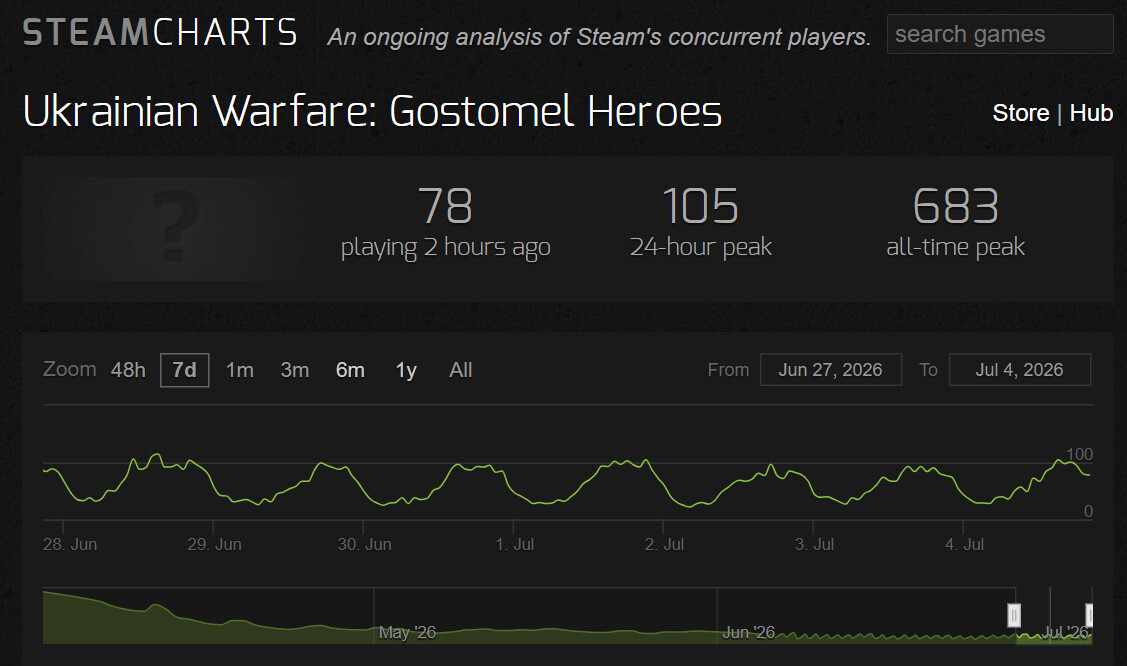
Valve, the U.S. company that owns and operates the Steam gaming platform, typically retains a 30% commission on games sold through Steam. However, the platform does not disclose sales figures for Ukrainian Warfare: Gostomel Heroes, and SteamCharts’ figure of 683 represents the game’s all-time peak concurrent players, not copies sold.
In May 2026, Steam released another game with Russian propaganda, “93, Kuindzhi, which is described by its developer, Nikita Igorevich Studio, as a first-person narrative vignette about an 18-year-old boy from Donbas. Set in March 2022, the story follows the protagonist. He leaves his studies behind to volunteer in temporarily occupied Mariupol. One of the game’s characters is voiced by Russian rapper Dima OM, who has publicly repeated Kremlin narratives about the war.
 By hosting games like ’93’ and ‘Kuindzhi,’ which present Russia’s staged 2014 ‘referendum’ as historical fact without context, Valve is giving a platform to content that whitewashes violations of international law and the illegal annexation of Ukrainian territory.
An analytical report by LingvaLexa, shows that the battle for human minds is taking place in the virtual world, where Russian propaganda operates subtly, to deny war crimes and to further push its narratives into the West. The developers have previously sold a game called Syrian warfare, which had portrayed the Russian forces as saviours and Bashar al-Assad Assadі as an anti-imperialist government, whitewashing Assad 14 years of brutal repression and crimes against his own people.
Stay connected with us via X, Bluesky and LinkedIn – and while you’re here, please spare five minutes to fill out our survey and tell us what you’d like to see next.