Russian overnight attack on Dnipro leaves 28 injured
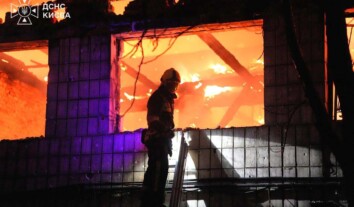
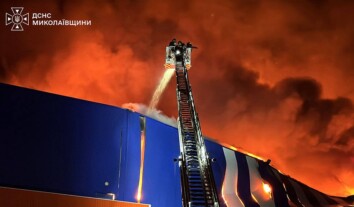
A Russian overnight attack on a residential area in Dnipro has left 28 people injured, eight of them hospitalized, Dnipropetrovsk Oblast head Oleksandr Hanzha said.
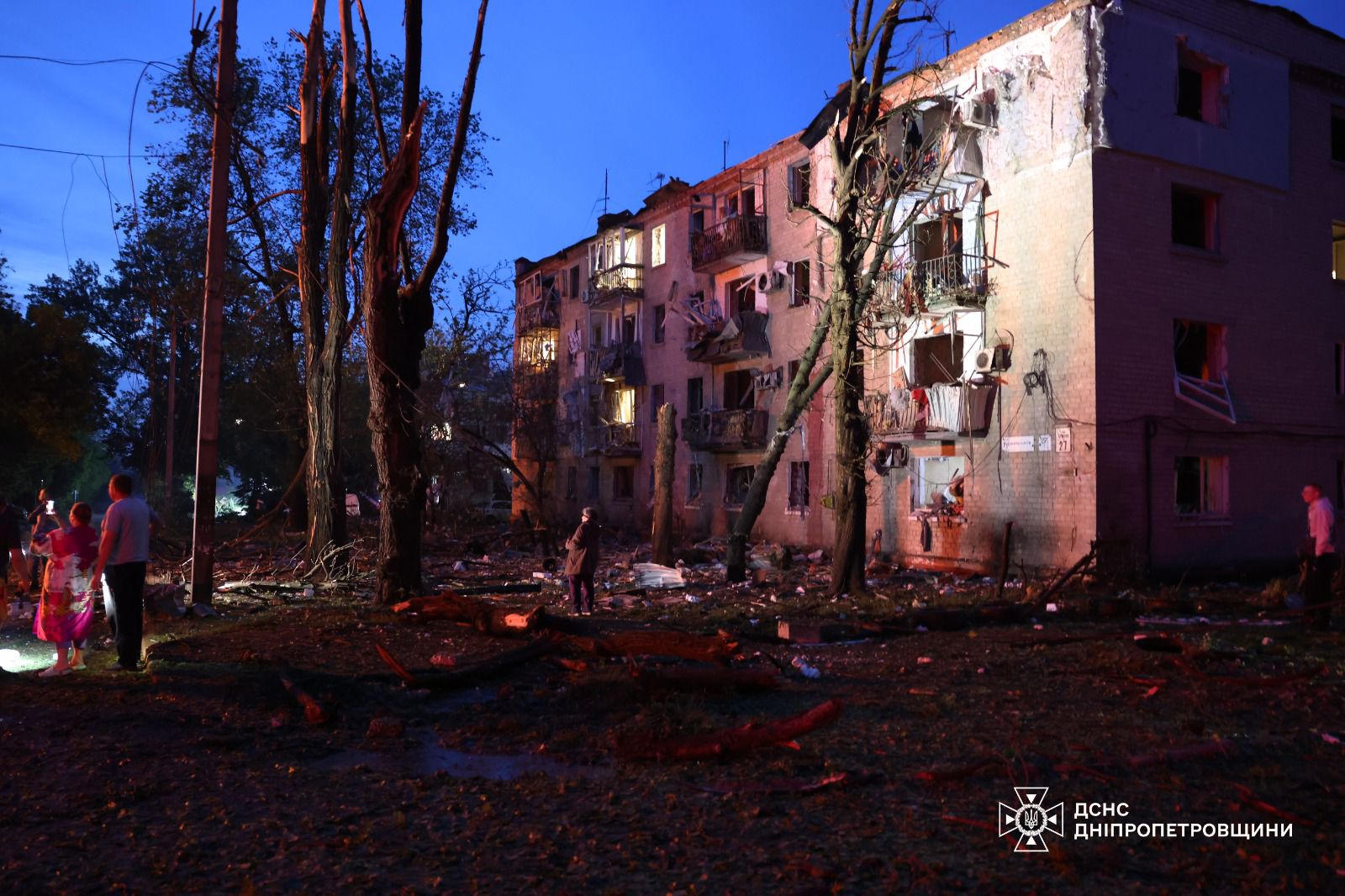
“In Dnipro, another five people have sought medical assistance after the overnight attack. All of them will receive outpatient treatment. So the number of those injured has now risen to 28, eight of them hospitalized,” Hanzha said.
Russian forces also attacked four districts in Dnipropetrovsk Oblast about 40 times.
In the Nikopol District, Russian forces struck the city of Nikopol and the Marhanets, Myrove, Pokrovske, and Chervonohryhorivka “hromadas,” local government areas that include one or more nearby settlements, damaging houses, a petrol station, and a car. A 51-year-old man was injured and is in the hospital in a moderate condition.
In the Samar District, Russian forces struck the Pereshchepyne hromada, damaging infrastructure. In the Synelnykove district, they attacked the Pokrovske hromada, damaging a disused building. Russian forces also struck the Zelenodolsk hromada in the Kryvyi Rih District, damaging houses.
Meanwhile, the U.S. Department of the Treasury has extended a temporary license that allows certain countries to purchase Russian oil already at sea for another month, U.S. Treasury Secretary Scott Bessent stated on X (Twitter).
He elaborated that the temporary 30-day general license will enable “the most vulnerable nations” to purchase Russian oil currently stranded at sea. He also said the measure will help stabilize global markets.
“This extension will provide additional flexibility, and we will work with these nations to provide specific licenses as needed. This general license will help stabilize the physical crude market and ensure oil reaches the most energy-vulnerable countries,” Bessent said.
Ukrainian experts point out that countries including China, the Unites States of America, North Korea, Hungary, Slovakia, Iran, and Brazil assist Moscow in killing Ukrainians in its war against Ukraine by funding the Russian budget through trade.
You may also want to read: European, Japanese, and U.S. parts helped Russia build missiles that killed 24, including three children, in Kyiv – Zelenskyy
Over the last three and a half years, China has become a critically important partner for the Russian Federation. While Beijing officially declares its neutrality, Western intelligence and analytical studies indicate otherwise. For instance, China does not supply weapons directly to Russia, but it provides critically important components, including machinery, microelectronics, specialized chemicals, optics, gunpowder, and ammunition components.
Donald Trump announced several days ago that the United States would lower tariffs on Indian goods in exchange for India halting its imports of Russian oil.
Indian Prime Minister Narendra Modi thanked Trump but did not explicitly confirm the deal or disclose further details.
According to energy data firm Kpler, purchases have declined in recent months but still averaged approximately 1.2 million barrels per day in January.
Meanwhile, the Center for Strategic and International Studies found that in 2024 China increased sales of ammonium perchlorate — a key ingredient used to produce solid propellant for Iskander missiles. This assistance enabled Russia to triple its ballistic missile production, the report stated. Beijing’s support has bolstered Russia’s defense industrial base, enabling Russian forces to launch salvos of 13 to 18 Iskander-M ballistic missiles in 2026.
Overall imports from China have grown to represent one-third of Russia’s total imports, while Russian oil exports now account for 75% of all oil purchased by Beijing. Analysts specifically highlighted defense-related imports, which provided the Russian military-industrial complex with machine tools, components, and raw materials for weapons manufacturing.
Furthermore, Russia’s defense industry also received computer chips, machine tools, radars, and sensors from China, according to CSIS. These goods are part of a list of 50 items aiding weapons production, effectively compensating for Russia’s limited manufacturing capacity in its defense sector. Other areas of support include the supply of drone hulls, lithium batteries, and fiber-optic cables. CSIS reported that Russian imports from China rose from $190 billion in 2022 to $250 billion in 2024.
In 2024, then-U.S. Secretary of State Antony Blinken stated that 70% of heavy industrial equipment and 90% of all microelectronics are sourced from China, which then flows into Russia.
Furthermore, according to recent NATO intelligence data, 80% of all Russian drones consist of Chinese parts.
According to The Telegraph newspaper, Chinese firms supplied sanctioned Russian companies with at least £47 million ($57.4 million USD) worth of parts between 2023 and 2024. Almost a quarter of the value of these supplies went to firms that produce Shahed-type drones.
Moreover, the Foreign Intelligence Service of Ukraine stated that China is also providing intelligence to Russia. The Kremlin used this data to prepare missile strikes, particularly against objects belonging to foreign investors, though the specific targets were not clarified. China denies these accusations.
Following the imposition of Western sanctions, Beijing has become a key supplier to Russia of cars, clothing, raw materials, and a range of other goods. In 2023, Russia-China trade turnover set a historic record, exceeding $240 billion, which is more than 60% higher than before Russia’s invasion of Ukraine, according to Chinese customs data.
Reuters also reported that China is buying oil and gas from Russia. The average daily volume of oil is more than two million barrels per day. During Vladimir Putin’s visit to Beijing, the countries signed a document for the supply of 106 billion cubic meters of gas per year to China.
Reuters also reported that tens of thousands of cars are being exported from China to Russia under gray-market schemes that often circumvent Western and Asian government sanctions and automakers’ commitments to exit the Russian market, according to registration data reviewed by Reuters and interviews with five people involved in the trade.
Keep up with ZMINA on X, BlueSky, and LinkedIn – and help us improve by answering a few quick questions here about our English-language coverage.