Ukraine’s anti-corruption chief calls for reform of prosecutors, state investigators and parts of security service over corruption
Law enforcement officers who receive a share of money for covering up corrupt or other illegal schemes appear in almost every systemic investigation by the National Anti-Corruption Bureau of Ukraine (NABU). As a result, corruption makes not only individual employees but also entire units ineffective, said Semen Kryvonos, director of the NABU, at an event marking the entry of new donors into the EU Anti-Corruption Initiative in Ukraine (EUACI), ZMINA reported.
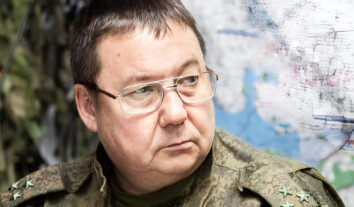
 Semen Kryvonos. Photo credit: NABU
According to Kryvonos, law enforcement officers regularly appear in systemic NABU investigations concerning money laundering or the embezzlement of funds from state enterprises. Detectives, in particular, find notes in rough records kept by people under investigation, setting out the shares
that officers from various agencies were due to receive. In some cases, for example, it was 4% or 5% of the scheme.
Kryvonos recalled that NABU had recorded such cases, in particular, during the “Clean City” operation. Earlier, he said that in this case, investigators identified people who did not work for the Kyiv City Council or the Kyiv City State Administration but, according to the investigation, effectively influenced decisions on municipal property and the city budget.
Separately, the NABU director drew attention to the situation on the western border, where corruption risks can simultaneously affect the work of customs and border guard structures.
Kryvonos said a corrupt officer who regularly takes money to cover up illegal activity cannot do their main job properly. The same goes for a whole unit of the Security Service of Ukraine (SBU) or the Office of the Prosecutor General if its staff cover up, for example, illegal call centres or smuggling.
Moreover, such corruption can also affect other criminal proceedings. Kryvonos explained that law enforcement officers involved in covering up a particular scheme simultaneously have access to investigative tools and case materials, and can use their powers to exert pressure or interfere with the work of other units.
Kryvonos stated the law enforcement system in Ukraine needs reform. He named changes at the Office of the Prosecutor General, the State Bureau of Investigation (SBI) and those SBU units that are not directly involved in defence and security as priorities.
He also said NABU cannot, by law, investigate every corruption crime committed by law enforcement officers on its own because of the limits of its jurisdiction. It can expose criminal organisations or organised groups, but possible illicit enrichment by individual heads of prosecutors’ or SBU units is for the SBI to investigate.
As one sign of the problem, Kryvonos cited cases in which some staff of law enforcement agencies and the prosecutor’s office bought expensive property, including in the United Arab Emirates and in upmarket residential complexes in Kyiv. He said this points to a need for the bodies meant to investigate possible illicit enrichment to work better.
Kryvonos sees problems not only in the law enforcement system but also in the judicial one. In his view, both should work to make corruption and abuse impossible rather than allow them to continue.
Kryvonos also drew attention to the scale of the shadow economy. He named the large number of currency and crypto exchange offices in Kyiv as one of its signs. According to the NABU director, his detectives increasingly encounter cases where large sums from various sources are built up in cash and then run through networks of currency and cryptocurrency exchange offices in an attempt to launder them.
At the same time, Russia’s war does not change NABU’s plans for corruption investigations. Kryvonos said the bureau cannot put off exposing people who keep stealing in the energy and defence sectors, during reconstruction and in
building protective structures. Some of those under investigation keep taking bribes regardless of air raid alerts, Russian attacks or the situation on the front line, he said.
The war directly affects NABU’s working conditions, the official said, because staff face a double burden: the complexity of the investigations and the general risks of wartime. Because of the security situation, the bureau sometimes moves some employees to remote work, and some tasks become harder.
Therefore, Kryvonos named the creation of conditions for NABU employees in which they can continuously exercise their powers as one of the immediate tasks for the winter period. The bureau does not intend to scale back the operations and investigations it has planned.
NABU’s strategic planning covers the period up to 2030. He named a situation in which corruption will no longer pose a threat to Ukraine’s national security as one of the key long-term goals.
Kryvonos emphasised that corruption currently directly weakens the state, renders its institutions ineffective, and remains, in his conviction, a direct threat to national security.
To provide background, Kryvonos has previously emphasised that criminal exposures alone are not enough to overcome corruption. In February 2026, he elaborated that NABU can detect a crime and send the case to court, but systemic changes are needed to reduce corruption:
- independent institutions;
- digitalisation;
- the elimination of political influence and bureaucratic obstacles.
The need to reform law enforcement agencies also remains part of Ukraine’s broader anti-corruption commitments. In the spring of 2026, the Ukrainian government submitted the Anti-Corruption Strategy for 2026–2030 to parliament, the Verkhovna Rada. At the same time, provisions regarding the reform of the procedure for selecting the SBI director and the competitive appointment of the Prosecutor General, in particular, were removed from the government’s version of the document. Some of these changes were part of the reforms agreed upon by Ukraine with the European Union.
The latest high-profile example of the possible involvement of law enforcement officers in corrupt schemes was the “Carthage” operation by NABU and the Specialised Anti-Corruption Prosecutor’s Office (SAPO). According to the investigation, one of the heads of a structural unit of the Office of the Prosecutor General created a criminal organisation whose members could systematically receive money for non-interference in the work of fraudulent call centres and legalise the funds obtained. Employees of the prosecutor’s office are involved in the case.
Stay connected with us via X, Bluesky and LinkedIn – and while you’re here, please spare five minutes to fill out our survey and tell us what you’d like to see next.