Save the Children warns of new AI and drone threats to children in conflict zones
Over 12,000 children – or more than five every day – were killed or injured by landmines, unexploded ordnance, improvised explosive devices and other explosive ordnance between 2020 and 2025, according to the Save the Children analysis.
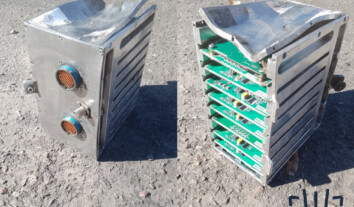
 Children hold parts of a drone near a hotel damaged during a Russian drone strike in the city of Chornomorsk, Odesa region, during Russia’s invasion of Ukraine
The research found that explosive ordnance was the largest single named weapon type category in UN reporting on child casualties, causing more recorded child casualties than air strikes or artillery shelling. Children accounted for nearly half (46%) of civilian casualties from landmines and explosive remnants of war, where age was known.
“Children are facing a new generation of explosive threats from the air, on the ground, and increasingly enabled by AI. As technologies transform conflict, with devastating consequences for children, both partnership and political action are urgently needed. Governments must ensure that the laws and protections designed to keep children safe evolve with changes to warfare. Children’s rights and safety must remain at the centre of decisions about how emerging technologies are developed and used,” Claire Sanford, conflict and humanitarian director at Save the Children UK, stated.
In 2025, air-launched explosive weapons, including drones, were involved in around two-thirds (67%) of incidents that harmed civilians worldwide. The growing use of AI and other technologies in warfare also raises concerns about how decisions to use force are being made, particularly when children and other civilians are present.
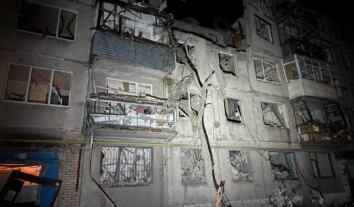
The report also highlights how the growing use of drones is changing children’s experience of conflict. In Ukraine, drone attacks on schools increased by 358% in 2025 compared with the previous year, forcing many children back into remote learning.
Save the Children warns that the international norms designed to protect children and their families are being weakened, while rapidly evolving military technology is exposing children to new explosive threats both during conflicts and long after they end.
“Against this backdrop, the need for innovation to support children affected by conflict is more critical than ever,” the organisation stated.
In Sudan, drone attacks accounted for 78% of reported child casualties between January and March 2026. Health professionals have reported carrying out medical procedures using only a phone light, to reduce the risk of detection and attack by drones. The true scale of harm remains largely unseen.
The report also highlights Gaza as an example of a new phase in modern warfare, in which drone surveillance, AI-supported targeting and other unmanned systems are being used at an alarming scale in densely populated areas.
Save the Children is calling on the international community to stop the use of explosive weapons in populated areas and enforce stronger political and military policies to protect children in conflict.
The organisation is also calling for the international community to invest in victim assistance, research, and rehabilitation for children affected by blast injuries, and establish international rules for AI technology that require meaningful human control and prohibit systems that can select and engage people to target without human oversight.
Stay connected with us via X, Bluesky and LinkedIn – and while you’re here, please spare five minutes to fill out our survey and tell us what you’d like to see next.