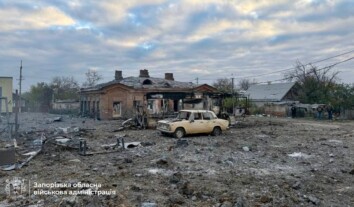
Russian strikes on aid distribution site and shelter in Komyshuvakha kill at least 26 (updated)
Russian forces hit a humanitarian aid distribution point in Komyshuvakha in the Zaporizhzhia Oblast, killing 26 civilians and leaving 27 others missing, regional authorities said.
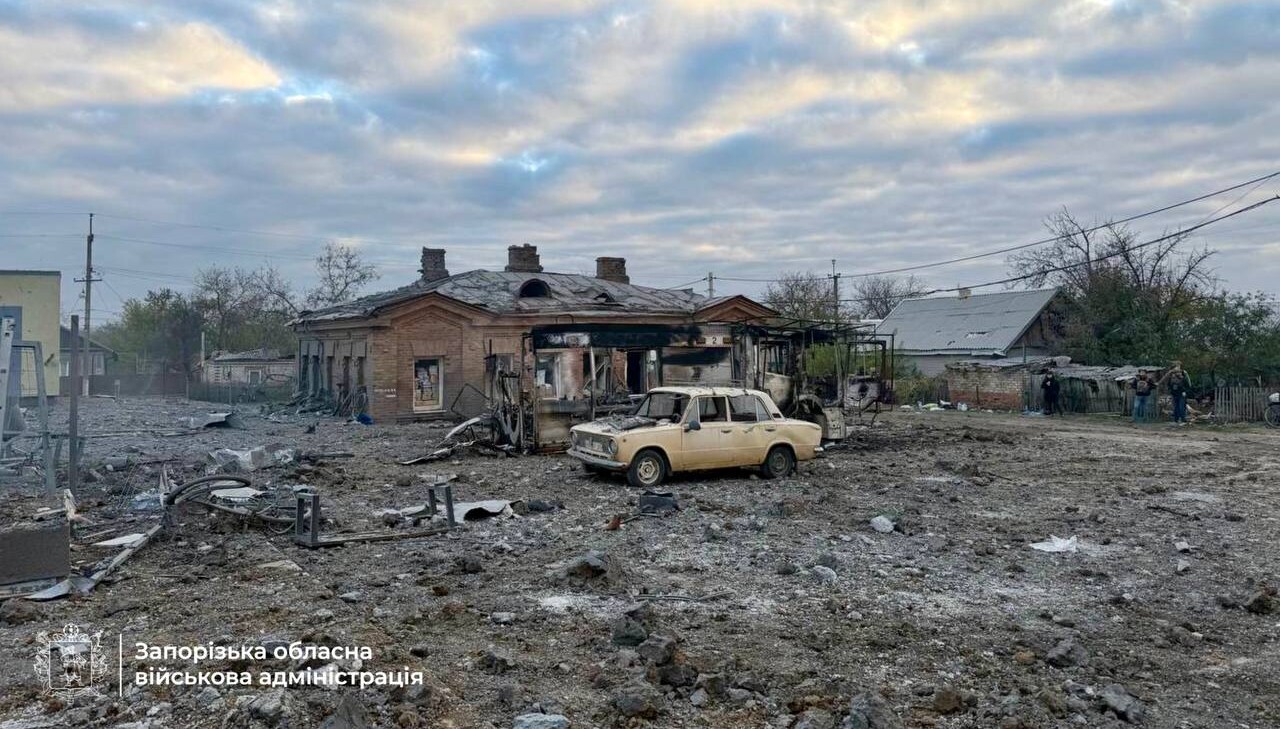
On 2 November 2026, Russian forces launched a series of airstrikes on the settlement of Komyshuvakha in the Zaporizhzhia Oblast. Initially, the occupiers hit a school where humanitarian aid was being distributed to local residents, and subsequently attacked a shelter where people had taken cover. According to regional authorities, 24 civilians were killed, including two emergency responders and a police officer. Another five people sustained injuries, and 27 are considered missing.
The acting head of the Zaporizhzhia Oblast Military Administration, Mykhailo Semikin, reported this.
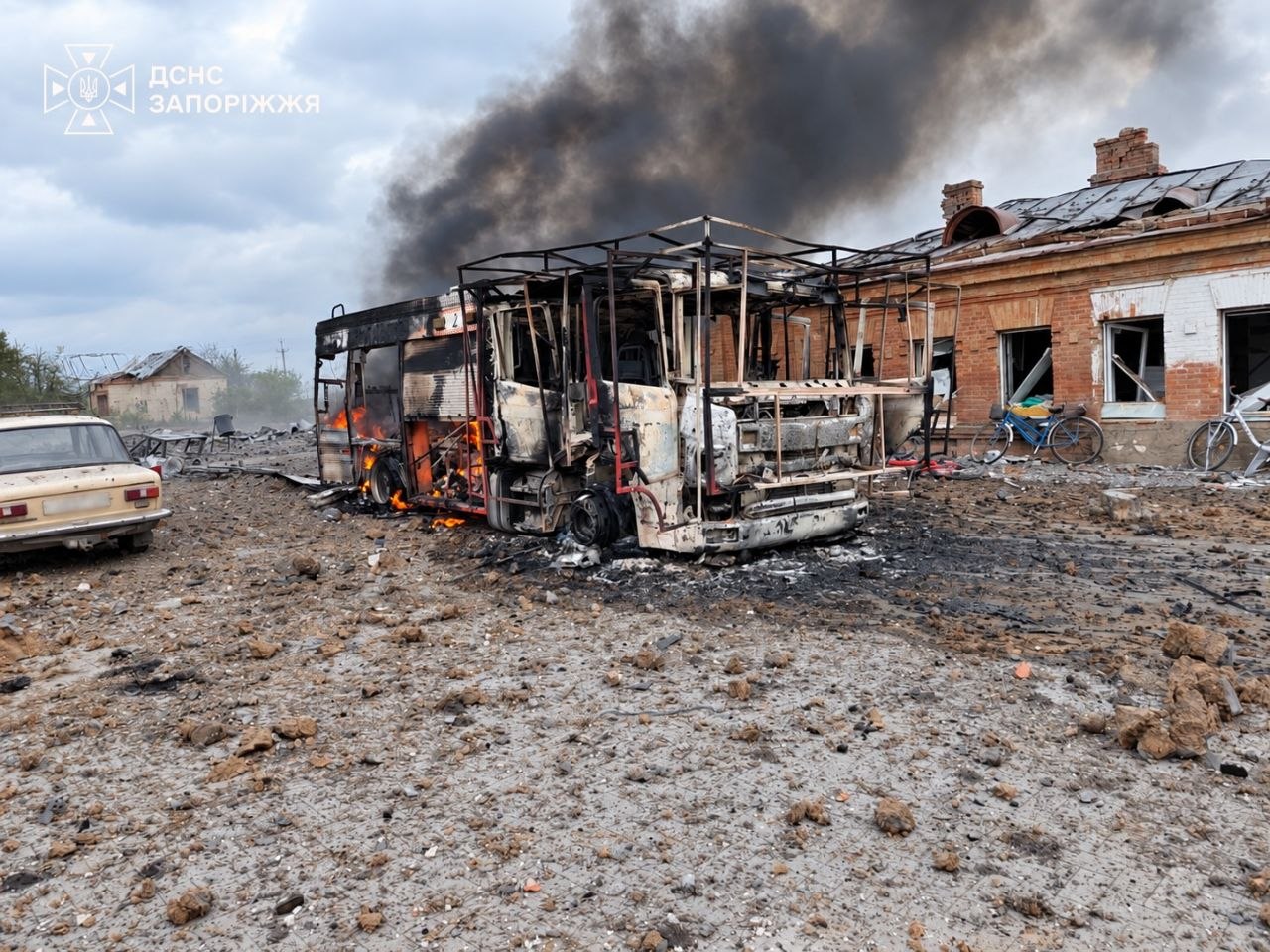
Ukrainian President Volodymyr Zelenskyy said the attack occurred in several stages. First, the Russians dropped aerial bombs on the school, which local authorities were using for humanitarian needs. Komyshuvakha residents regularly received necessary assistance there.
After the first strike, the Russians, according to the President, dropped nine more guided aerial bombs on the shelter where people had taken cover.
Zelenskyy emphasised that the Russian military knew about the regular distribution of humanitarian aid at that location. He viewed the attack as evidence that Russia does not seek an end to hostilities.
The president also drew attention to the fact that the strike occurred shortly after the completion of a humanitarian operation in the temporarily occupied town of Oleshky in the Kherson Oblast, during which Ukraine and Russia had agreed on a temporary ceasefire. In his view, the new strikes demonstrate Moscow’s unwillingness to move towards de-escalation.
He called on international partners to increase pressure on Russia and support for Ukraine to protect the civilian population from further attacks.
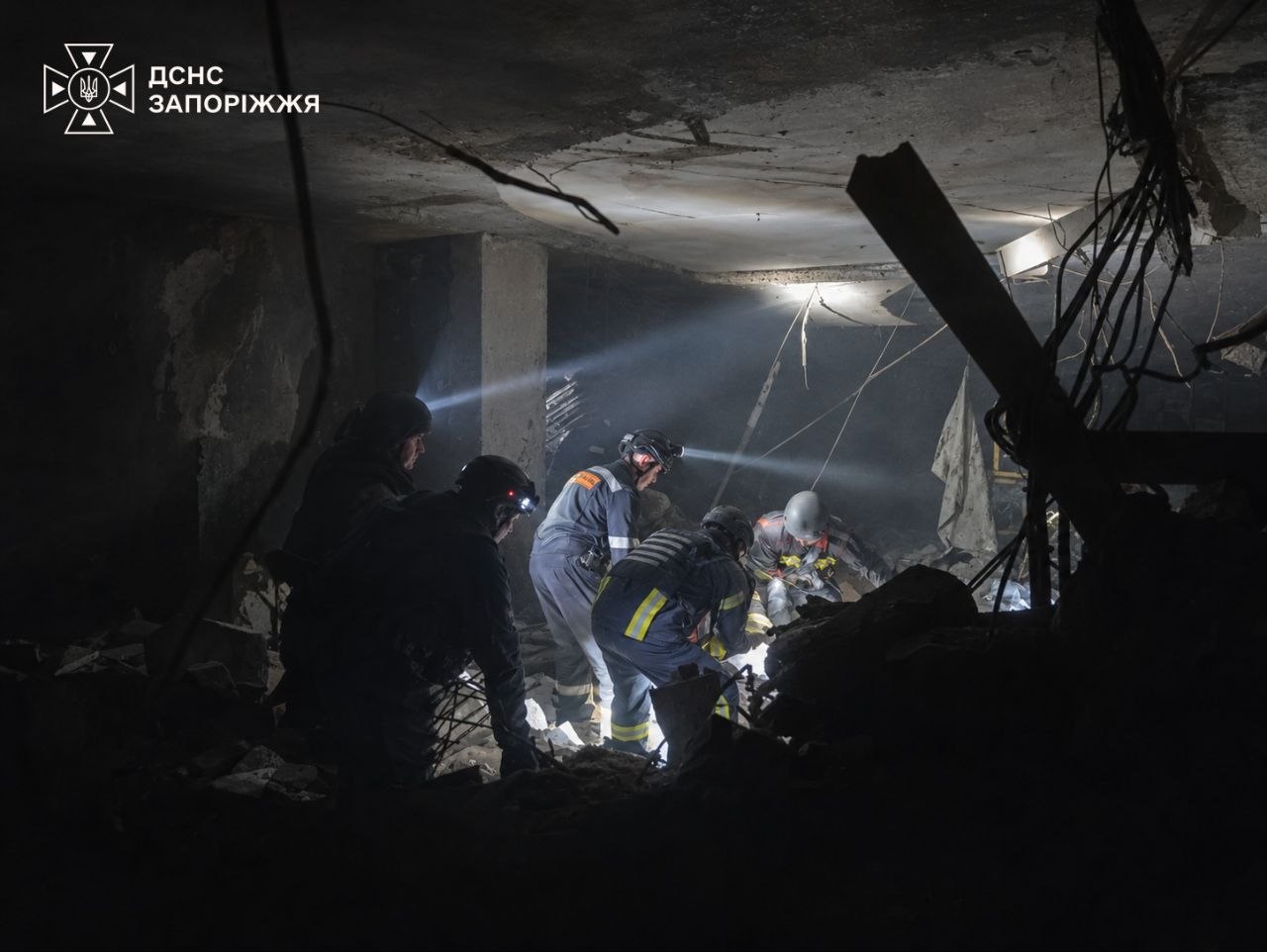
Rescue workers, military personnel and special services are working at the site of the strikes. The search-and-rescue operation is ongoing, so the number of dead and injured may change.
Update: In his evening address, the Ukrainian president stated that the death toll from the Russian strikes on the humanitarian facility in Komyshuvakha has risen to 26, five more are in hospitals, and people remain under the rubble.
Russian forces have previously hit locations where civilians were receiving humanitarian aid in Komyshuvakha.
On 15 June 2026, Russian drones attacked the area near the school where the Proliska humanitarian mission was operating. Four civilians were injured at that time, and debris damaged volunteers’ vehicles.
The head of the mission, Yevhen Kaplin, said the first drone exploded near people who had come to receive aid. Proliska staff helped the civilians move down to an underground shelter, which helped avoid a higher number of casualties during the subsequent strikes.
In total, the Russians used five FPV drones, four of which exploded near the humanitarian point. After the attack, the mission decided to stop delivering aid to Komyshuvakha and focus on evacuating local residents.
Furthermore, at the end of October, a Russian drone attacked a Proliska social bus carrying 23 passengers and a driver in the Zaporizhzhia Oblast. An elderly woman was killed in the Russian strike, and several other people were injured, including the driver.
 Photo: Yevhen Kaplin
Russian attacks on humanitarian transport and aid distribution sites make it difficult for residents of frontline communities to access food, medicine and evacuation.
ZMINA also reported in August 2026 that police officers helped four residents of the Komyshuvakha “hromada”, a local government area that includes one or more nearby settlements, to leave after their homes were destroyed by Russian guided aerial bombs. Among those evacuated was a 71-year-old man.
Under international humanitarian law, civilians and civilian objects are protected from attack. Intentional strikes on civilians, including those receiving humanitarian aid, can constitute war crimes.
Related: Russian drone strike on Dnipro railway station kills 14 and injures 13
To provide background, previously, US president Donald Trump assisted Russia in enforcing its war economy by suspending tariffs and sanctions against the largest buyers of Russian oil. The measures were provided under the Lindsey Graham Act, which he signed in September.
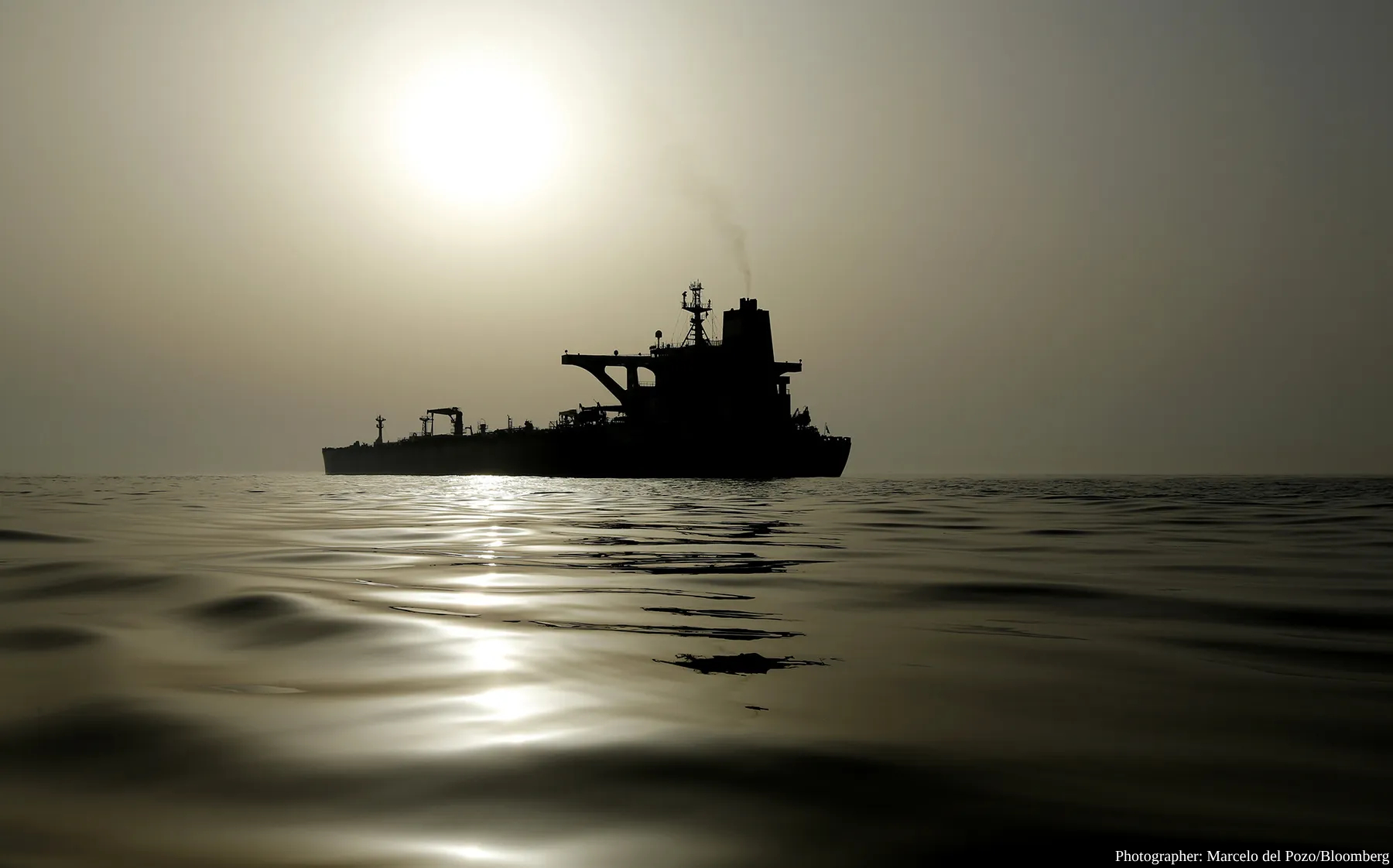 Russia shipped 3.55 million barrels a day of crude in the four weeks to 25 October, with a rebound in cargoes leaving the Baltic port of Primorsk. Photographer: Marcelo del Pozo/Bloomberg
Bloomberg reported, citing ship tracking data and calculations based on oil prices, that in the week ending 25 October 2026, the value of Russian oil exports by sea reached $2.76 billion, the highest since the start of the full-scale war against Ukraine. Russiaʼs revenue rose by about $430 million over the week. Urals prices rose, offsetting higher supplies and the eighth consecutive week of rising ESPO prices.
Related: US firms account for over 75% of parts in examined Geran-4 controller
Human rights organisations and Ukrainian authorities emphasise that structural economic pressure remains a key tool to halt such atrocities. They urge every nation and individual government worldwide to strictly enforce global sanctions, close existing regulatory loopholes, and completely sever remaining commercial and technological ties with the Russian Federation. Civil society groups stress that any continued cooperation by foreign businesses directly contributes to the resources Moscow uses to sustain its ongoing war crimes and crimes against humanity in Ukraine.
Keep up with ZMINA on X, Bluesky and LinkedIn – and help us improve by answering a few quick questions here about our English-language coverage.