“He wanted Henichesk to have its own voice”. The story of Hennadii Osmak, a journalist imprisoned by Russian occupying forces
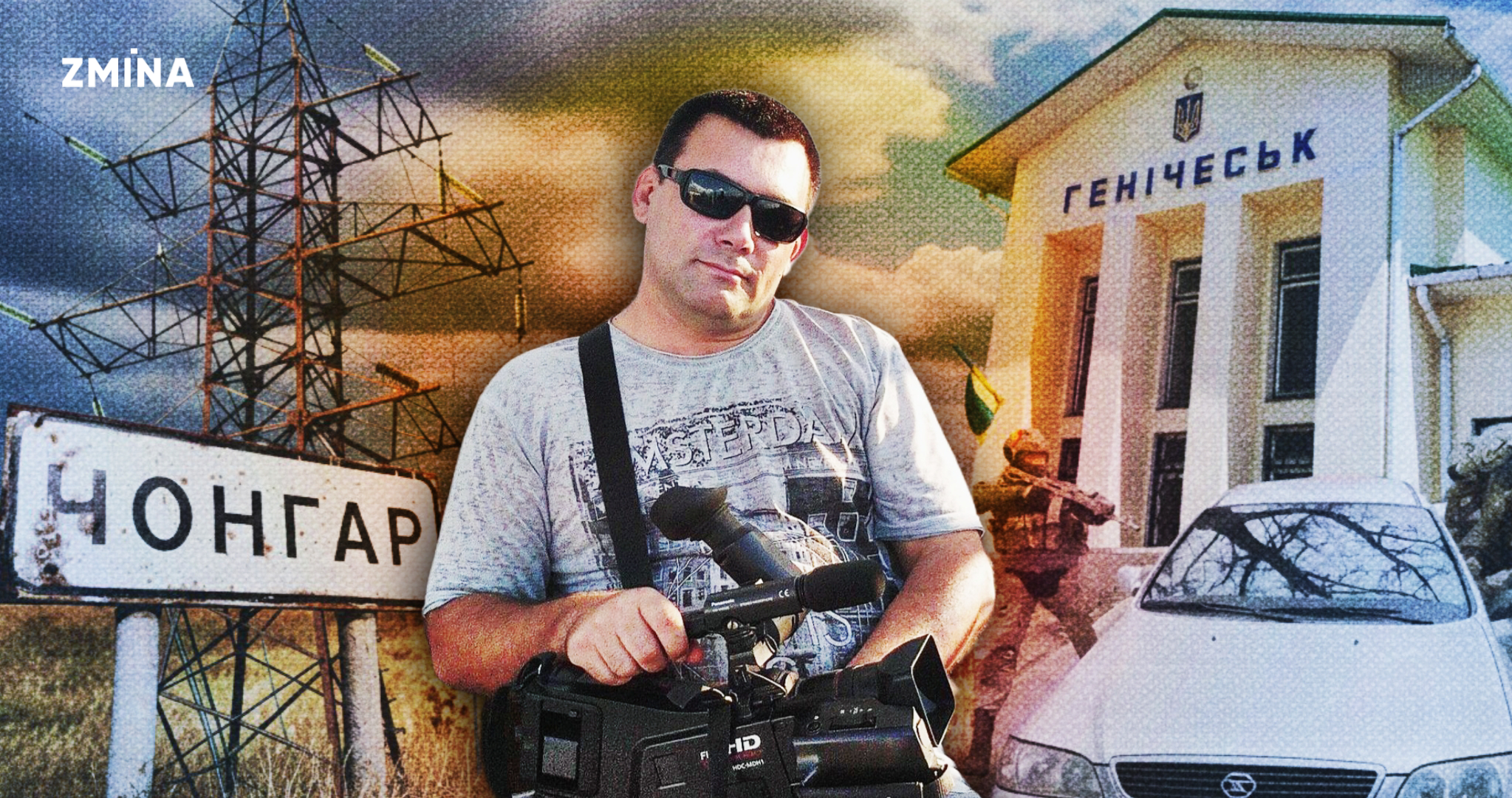
Russian security forces detained journalist Hennadii Osmak from Henichesk after the occupation of the southern Kherson region, when the city was already under full control of the Russian Federation. He was accused of involvement in the Crimean Tatar Noman Çelebicihan Battalion, links with the Ukrainian special services, and “financing terrorism.”
Hennadii Osmak is a journalist and the founder of the online news outlet Novyi Vizyt, one of the largest local media outlets in Kherson Oblast prior to Russia’s full-scale invasion. After refusing to cooperate with the occupying authorities, he was detained and eventually taken into custody in March 2024. An illegitimate “court” controlled by Russia sentenced the journalist to three years and two months’ imprisonment in a strict regime penal colony. In December 2025, it became known that the cassation court in Russia had refused to reduce the sentence, leaving it in force.
To learn more about Osmak’s work and the circumstances of his detention and imprisonment, ZMINA spoke with his colleague and another person close to him, whose name we cannot disclose for safety reasons.
“He had a huge desire to work”
In Kherson Oblast’s journalistic community, Hennadii Osmak was well known long before Russia’s full-scale invasion. For many, he was not just a local media figure but a person who, for years, tried to fill the information void in the Henichesk District — a region that, for decades, had no television or systematic local broadcasting.
Hennadii’s colleague, Valerii Dolyna, head of the Kherson regional branch of the National Union of Journalists of Ukraine (NUJU), says that in the 1990s and early 2000s, Henichesk had virtually no access to local television news. The city is located almost 200 kilometres from Kherson, and after the collapse of the Soviet Union, residents of the district remained outside the regular coverage of regional television channels.
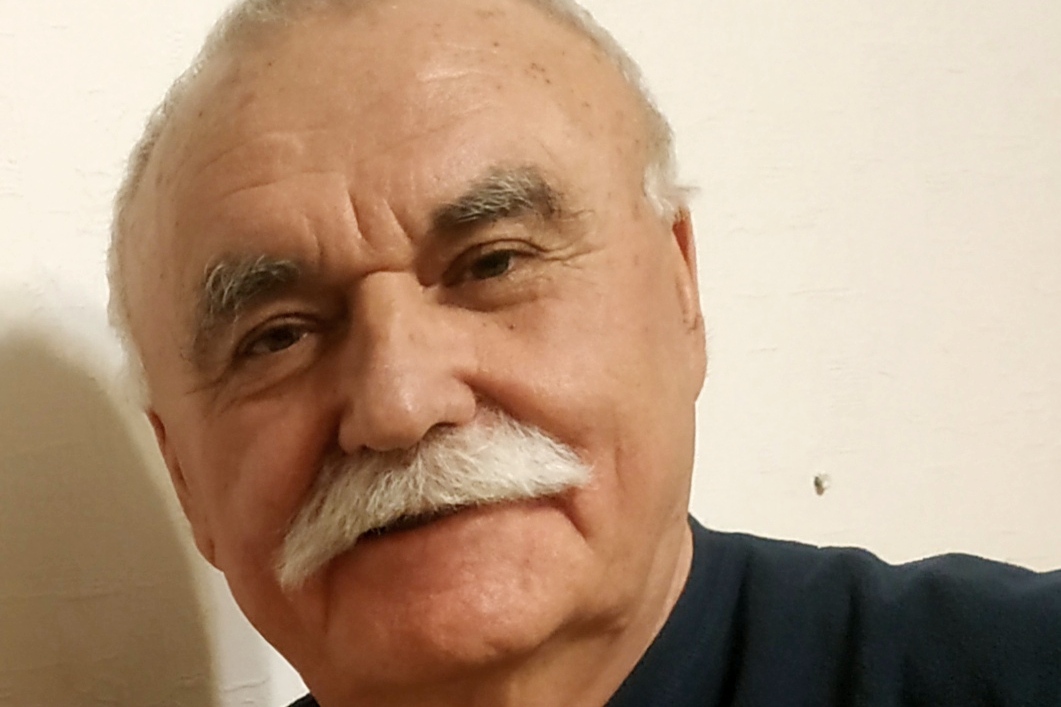 Valerii Dolyna. From the NUJU website
“Hennadii was very upset that the Henichesk District did not have its own television station. He constantly talked about it and eventually focused all his efforts on this issue,” Valerii Dolyna recalls.
Osmak was among those who initiated the creation of regional television in Henichesk. They started with cable broadcasting – with a small studio and minimal technical capabilities. As Dolyna notes, they may have lacked experience at the time, but their desire to work and give the hromada its own information platform was decisive:
“Perhaps something was missing – equipment or video experience. But he had a tremendous desire to work and give people local television. In that sense, he succeeded in many ways.“
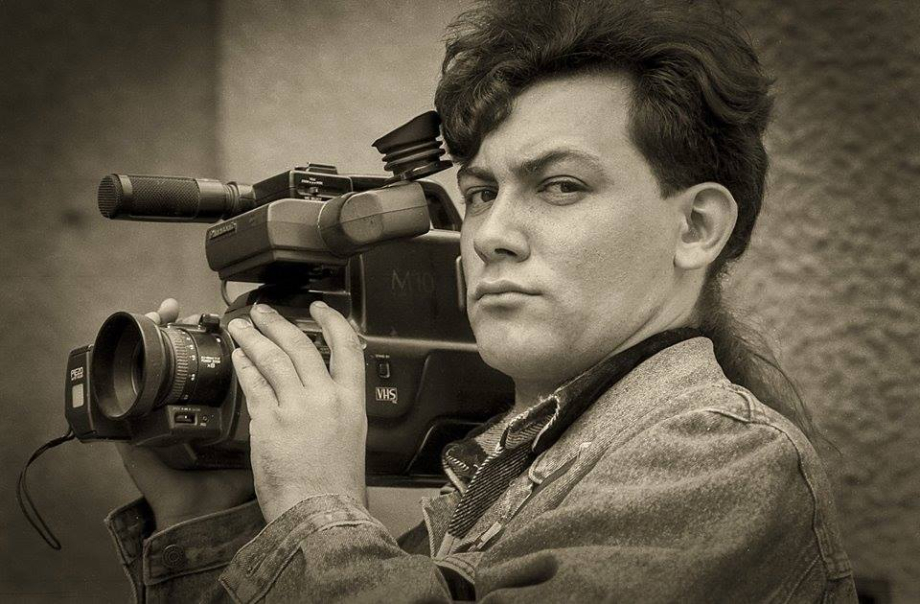 Hennadii Osmak in the 1990s. From the journalist’s personal archive
Over time, Osmak’s professional contacts expanded. He regularly visited Kherson, communicated with colleagues, and consulted on the development of broadcasting, the organisation of editorial work, and technical solutions. Valerii Dolyna says that Hennadii Osmak’s strength as a journalist was his focus on objectivity and hard workі . He knew local communities, their problems in the district, and the people on the ground well.
“He never pursued sensational headlines. It was important to him that information was timely and objective. People trusted him, and he enjoyed great authority”, Osmak’s colleague notes.
Later, Hennadii focused on developing the online publication Novyi Vizyt, which gradually became one of the most influential local media outlets in the southern Kherson region. The publication covered life in the Henichesk District, events on the administrative border with Crimea, and the work of local authorities — without dividing topics into “convenient” and “inconvenient” ones. According to Dolyna, it was precisely Osmak’s principled stance and independence that often made him vulnerable. Even before the occupation, he had repeatedly faced pressure and aggression because of his articles.
“Not everyone likes to hear the truth. There were cases of physical pressure, but he did not back down and remained committed to professional journalism,” he says.
After the full-scale invasion began, there was no longer any direct contact between colleagues. The Kherson Oblast quickly came under occupation, and communication became dangerous. At the same time, Valerii Dolyna emphasises that Osmak remained true to his professional principles and did not cooperate with the Russian occupying authorities.
“I cannot speak about all the circumstances, but I know one thing – he always stood on the side of objectivity and truth. He could not betray this position“, the head of the regional organisation of the National Union of Journalists of Ukraine stresses.
Russian special services came with an offer to cooperate
When Russian security forces detained journalist Hennadii Osmak from Henichesk, his case was already decided. He was charged with being part of the so-called “Crimean Tatar battalion,” having ties to Ukrainian special services, and “financing terrorism.” The basis for this was a sack of potatoes he had delivered to his Crimean Tatar acquaintances. The result was years in a strict regime penal colony, torture, transfer between detention centres, and serious health risks.
A close associate of Hennadii Osmak, whose name we are not disclosing for safety reasons, said that it was the popularity of the online news outlet Novyi Vizyt, founded by Osmak, and the journalist’s principled stance that made him a target for the Russian special services. Before the full-scale invasion, his resource was one of the largest in the Kherson region in terms of audience reach, second only to one regional media outlet.
“He created Novyi Vizyt himself after municipal television was shut down due to a lack of funding. Within a few years, it became one of the largest information resources in the region. He wrote about everything — without favouring anyone in power, without sugar-coating. That is why he had many enemies,” ZMINA’s source says.
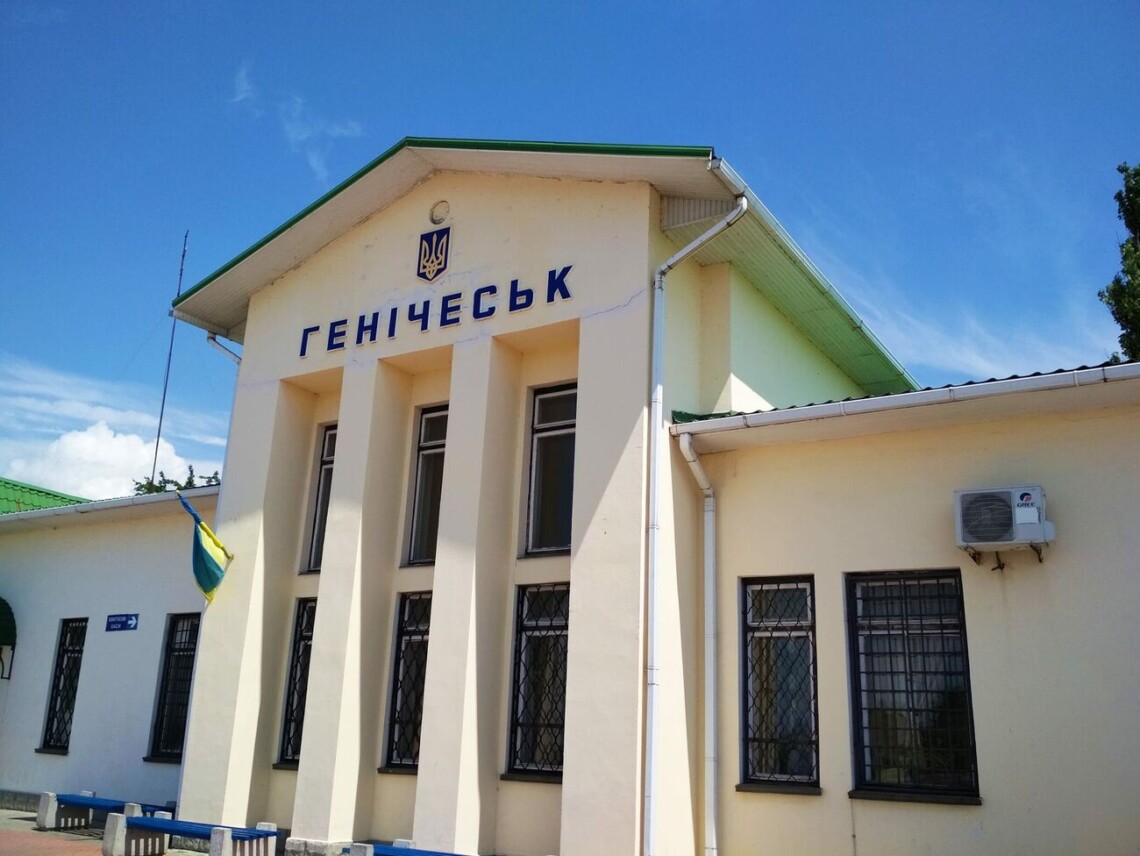 The railway station building in Henichesk before the Russian occupation. Photo credit: Ukrinform
After 2014, the journalist systematically covered events related to the temporary occupation of Crimea, the situation on the administrative border, events in Chonhar, Henichesk, and southern Ukraine. His articles were read in Crimea and Russia, especially during times of crisis, such as when electricity pylons were blown up in Chonhar. It was at that time that the Novyi Vizyt website saw a sudden increase in its audience.
According to our contact, even before the full-scale invasion, the website had repeatedly been subjected to DDoS attacks, especially on the eve of the elections. On the first day of the Russian invasion, the attack was so powerful that the resource effectively ceased to function.
“On the first day of the full-scale invasion, alongside the shelling, a massive attack on the website began. They simply shut it down. A few hours later, the city was occupied, and the special services approached Hennadii with an offer to cooperate – to promote Russian propaganda through the website,” ZMINA source notes.
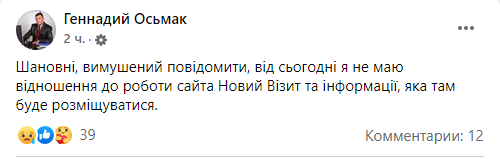 Screenshot from Hennadii Osmak’s page. 22 March 2022
Hennadii Osmak refused. On March 22, 2022, he handed over access, stating that he no longer had any connection to the resource. However, despite attempts by Russian specialists, particularly from Moscow, the website never began functioning as a propaganda platform. Subsequently, the domain was acquired by a Russian online casino.
After the occupation of Henichesk, the journalist remained at home and practically did not go outside. According to a source, he was on the “no-exit” list — such people were simply not allowed to leave the occupied territory. Obtaining a Russian passport was a necessity: without it, he was threatened with being sent to a “basementі .”
In 2024, in order to survive, Hennadii Osmak began working as a taxi driver. In January, he was involved in a minor traffic accident during curfew. The following day, officers came to conduct a search.
“They took him away and tortured him for six hours — physically and psychologically. They took his equipment, documents, and car. Then they released him. He even took a polygraph test — without making any “confessions.” But that didn’t matter. They needed someone for a show trial,” ZMINA’s source says.
He was beaten with electric shocks, kept in the cold, and doused with water
The journalist was detained for a second time on March 6, 2024. Hennadii was taken directly from the street, and a video of the “rough detention” was recorded.
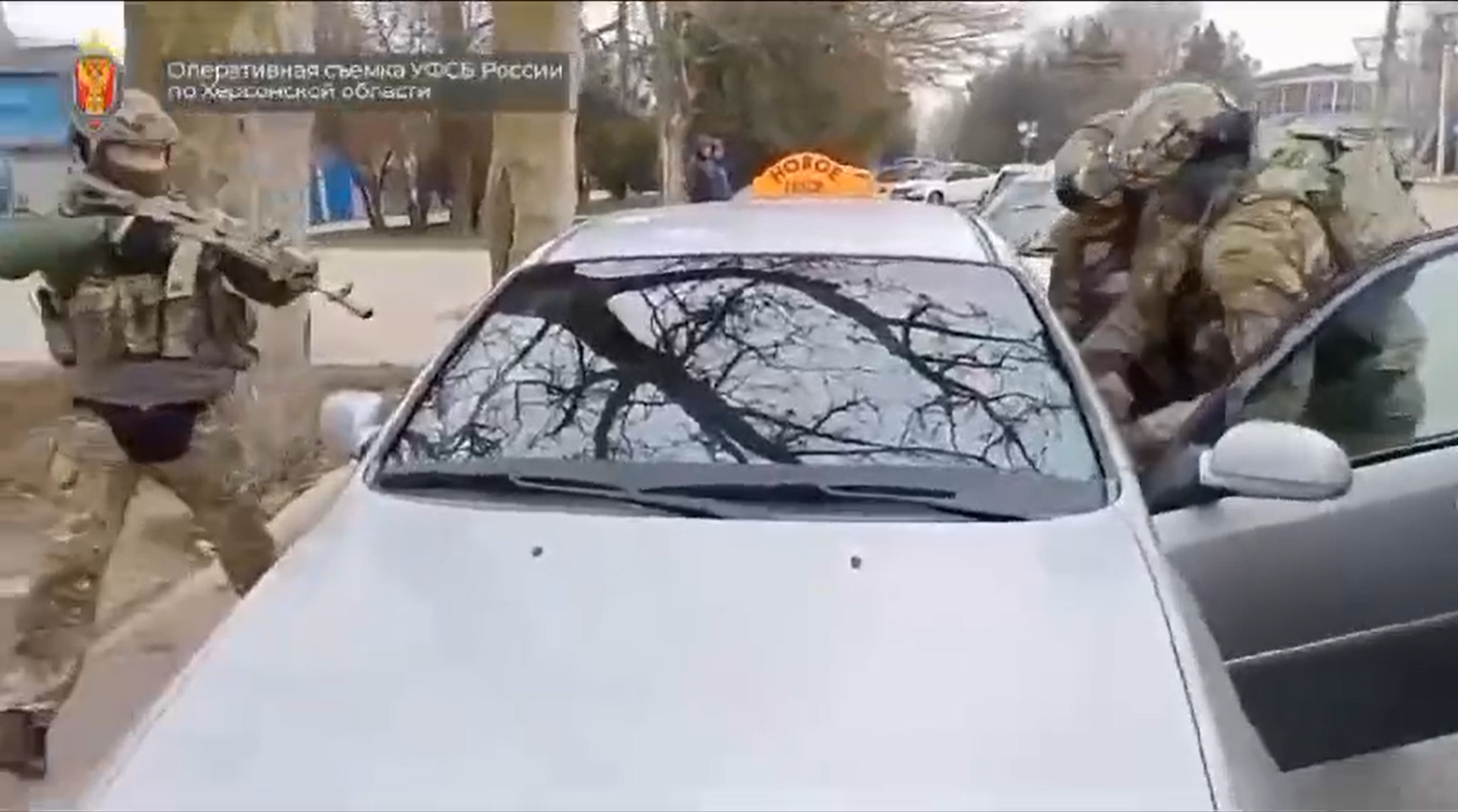 The moment of Osmak’s detention. Screenshot from a video released by the occupying forces
Based on the official version of the Russian prosecution, the occupation-controlled “Henichesk District Court” of the temporarily occupied Kherson Oblast found Hennadii Osmak guilty of “participating in an illegal armed formation on the territory of a foreign state,” namely “the Crimean Tatar Volunteer Battalion named after Noman Çelebicihan.”
According to the Russian security forces, he allegedly acted out of “political hostility” towards the Russian Federation, participated in the blockade of Crimea and the “violent change of the constitutional order of Russia,” as well as provided “information and propaganda support” to the battalion and supplied food to its members. The verdict was based on video recordings and other materials that the occupation authorities described as “evidence,” although most of them related to the journalist’s activities on the territory of Ukraine.
“According to Russian media outlets, they also accused him of being the PR manager of this battalion. They found a video somewhere showing him bringing a sack of potatoes to Crimean Tatars in 2015, and they used this as evidence of “financing terrorism.” The lawyer managed to prove that some of the “evidence” simply could not have existed – at that time, Hennadii was undergoing surgery due to back problems,” ZMINA’s source commented on the journalist’s sentence.
The decision to imprison Osmak was issued by Judge Kirill Sevastyanov, who, prior to the occupation of the left bank of Kherson region, served as a magistrate of Judicial District No. 218 in the Russian city of Tuapse (Krasnodar Krai). On August 12, 2024, he sentenced the journalist to three years and two months in a strict regime penal colony, one year of which Hennadii must spend in prison.
 Screenshot from the website of the occupation-controlled “Henichesk District Court” regarding the journalist’s “case”
Later, in January 2025, the illegitimate “judge” Aleksey Pushnoy of the occupation-controlled “Novotroitske Interdistrict Court” in the Kherson Oblast upheld the journalist’s conviction. Records show that during the occupation of Crimea, Pushnoi was completing his compulsory service in the internal troops in temporarily occupied Sevastopol, later deserted, and subsequently began serving in the “police” in the same city. At the time of his appointment, he had no prior judicial experience.
 Screenshot from the website of the occupation-controlled “Novotroitske Interdistrict Court” regarding the “case” of Hennadii Osmak
Hennadii Osmak spent more than a year in a pre-trial detention centre in the Chonhar area – relatively close to his home, which made it possible to deliver medication, as the journalist has diabetes and serious spinal problems.
“He was subjected to electric shocks, kept in the cold, doused with water, and he spent a week sitting in wet clothes,” our contact recounts regarding the conditions of Osmak’s detention in the Simferopol pre-trial detention centre during prisoner transfer.
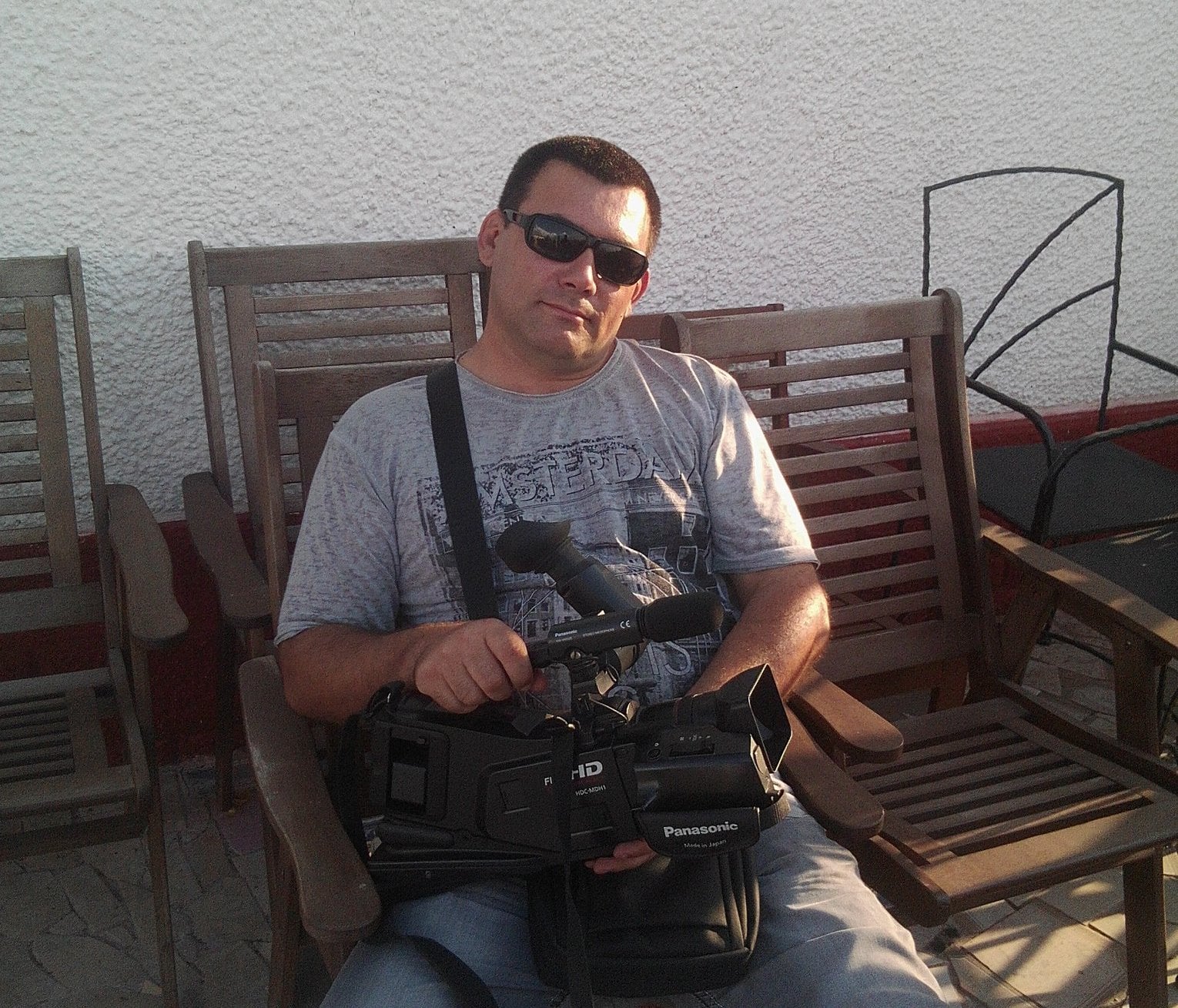 Hennadii Osmak. From the journalist’s personal archive
Hennadii Osmak is currently being held in a Strict Regime Penal Colony No. 6 in the village of Melekhovo, Vladimir Region, Russia, far from his family. According to our source, upon arrival, all of his belongings were confiscated, including his medication. It is unknown whether he has access to the necessary treatment.
In December 2025, Russia’s highest court of appeal refused to reduce the journalist’s term of imprisonment, leaving in force the decision that he serve his sentence in a strict regime penal colony. The lawyer will try to get Osmak transferred closer to Crimea or the Krasnodar Krai.
“There is only one goal now: for him to survive. He has a little over a year left. What his loved ones are going through cannot be compared to what he himself is going through,” the source says.
Language support: ZMINA volunteer Lisa DeHaven
Liked this article? Follow ZMINA on X and LinkedIn, and help shape our editorial focus by filling out our feedback form here.