Driving instructor Serhii Kotov from Oleshky, occupied Kherson Oblast, is unlawfully held in Russian penal colony after torture and remains in critical condition
Driving instructor Serhii Kotov continues to be unlawfully held in Penal Colony No. 10 in Saratov, the Russian Federation. After torture in captivity, his health has further deteriorated – the man, who has a group III disabilityі , now suffers from problems with his legs, blood pressure, and severe headaches, Serhii Kotov’s daughter, Viktoriia Barabash, told ZMINA.
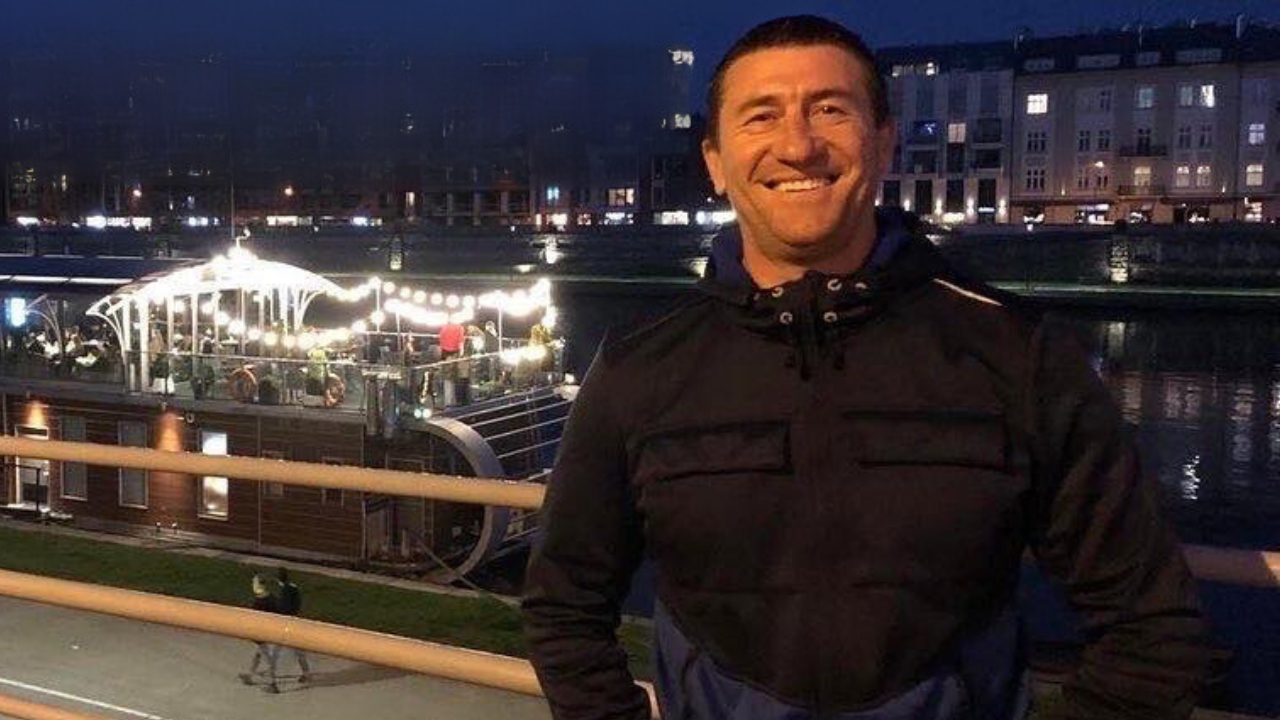 Serhii Kotov
Recently, Viktoriia was contacted by a civilian released from Russian captivity who had shared a cell with Serhii in Penal Colony No. 23 in Saratov. He said Serhii remained strong, had not lost faith, and tried to support others.
“In summer 2025, he was transferred to Penal Colony No. 10 in Saratov. He is under constant surveillance, periodically placed in solitary confinement, but he does not break and remains strong. When he arrived at the colony, he was using crutches because his legs had been badly beaten. Now he has recovered slightly and uses walking canes“, she added.
You may also want to read: You sit like a potted plant: you may be watered, or you may not, and then you will wither – journalist Dmytro Khyliuk. A story of captivity and freedom
She later learned that her father had lost consciousness and injured his already affected leg, which had swollen at the knee. He may have damaged his meniscus, the cartilage in the knee joint. In the Russian colony, he is not receiving proper medical care – instead of examination or treatment, he is only given pills for his blood pressure.
“The situation is worsening, and I urge people to pay attention to this case, as his condition is critical. I would like to stress that my father has a disability, osteomyelitis, osteoporosis, hepatitis C, and pancreatitis. After the torture he endured, he has persistent high blood pressure and a concussion“, Viktoriia said.
Serhii’s only contact with his family is through letters. In his letters, he says that work in the prison sewing workshop is so poorly paid that it barely covers basic needs. Unlawfully detained civilians receive no humanitarian support – they have to pay for everything they need for daily life themselves.
You may also want to read: “Unpunished evil grows”: Human Rights Center ZMINA calls for new mechanism to free Crimean political prisoners
Barabash said she has received none of the state payments provided to families of civilian detainees for two years. Her father has been held in Russian captivity for nearly four years, and under the law, the state should transfer 100,000 hryvnias to his family each year. However, in response to all her requests to the Ministry for Development of Communities and Territories, she receives the same reply: “No timeframes for payments are set out in the legislation. Please wait“.
“I submitted documents for the 2024 payment at the beginning of the year, and now 2025 is coming to an end, but the money still hasn’t been paid. It means I have to support my father myself, fully covering legal fees, medication, and all his other needs. I have three children and receive no state support. Unfortunately, this is not an isolated case. I know many families who have also not received the payments they are entitled to, and some have not even been paid for 2023“, the woman said.
Russian forces abducted the 50-year-old Kherson resident in April 2022 in Oleshky, Kherson region. He was then taken to occupied Crimea, where he was first held in Pre-trial Detention centre No. 1 in Simferopol and, in October 2022, transferred to Pre-trial Detention centre No. 2, where the FSB created a special unit for so-called “political” detainees. As in many other cases involving civilians abducted in occupied parts of Ukraine, no charges were initially brought against him, and his lawyer was denied access..
You may also want to read: From “soft power” to torture chambers: patterns of Russia’s seizure of new states based on Ukraine’s experience
In September 2023, the illegitimate “Supreme Court” in temporarily occupied Crimea sentenced him to 15 years’ imprisonment for alleged “espionage”.
Stay connected with us via X, BlueSky, and LinkedIn – and while you’re here, please spare five minutes to fill out our survey and tell us what you’d like to see next.