Systemic pressure on the anti-corruption ecosystem: challenges facing NABU, activists, and the media in 2025
This year, Ukraine’s anti-corruption ecosystem has come under unprecedented pressure from state bodies and affiliated institutions. Criminal cases, searches, and court proceedings against detectives of the National Anti-Corruption Bureau of Ukraine (NABU), activists, and journalists demonstrate that the pressure on them is systemic and affects not only individuals but entire institutions.
Large-scale actions against NABU, the Anti-Corruption Action Center, and the media project Bihus.Info show that these attacks follow a clear pattern: legislative initiatives, informational pressure, and procedural restrictions create psychological and professional strain, complicating the work of anti-corruption bodies and civil society activists. At the same time, active civic engagement and international support are partially restraining attempts to undermine the independence of the anti-corruption system.
The events of summer 2025 confirm that the fight for the independence of anti-corruption bodies is being waged not only in courts and investigators’ offices, but also in public discourse and on the streets of cities. Defending transparency, autonomy, and accountability of the authorities remains a key challenge.
ZMINA has collected information on well-known and widely discussed cases to show how pressure on anti-corruption actors manifests in various forms and why their work remains vital for democracy in Ukraine.
 Photo credit: Slidstvo.Info
Operation against NABU detectives: dozens of searches and arrests
On July 21, 2025, the Security Service of Ukraine (SSU), the State Bureau of Investigation, and the Office of the Prosecutor General carried out a large-scale operation, conducting around 70 searches of NABU detectives and SAP prosecutors. Several employees were detained. NABU stated that such actions by law enforcement agencies had paralysed the bureau’s work and showed signs of political pressure.
Among those involved in the cases are Ruslan Mahamedrasulov, a detective, and his father, Sentiabr. They are accused of selling industrial hemp to Dagestan in the Russian Federation. At the same time, the case materials remain controversial: in the telephone conversations made public by the SSU, some heard the word “Dagestan”, while others heard “Uzbekistan“. A witness who was interviewed about these sales confirmed that it was indeed Uzbekistan. He and his son also reported being pressured by SBU officers, though the agency denies these allegations.
During one of the court hearings, 65-year-old Sentiabr Mahamedrasulov was stripped naked “for inspection”, which the family regarded as psychological pressure and humiliation.
Ruslan is also accused of abuse of office and possible involvement in tax fraud. NABU believes that the charges are dubious and may be part of a campaign to intimidate detectives. Both Ruslan and Sentiabr are currently in custody.
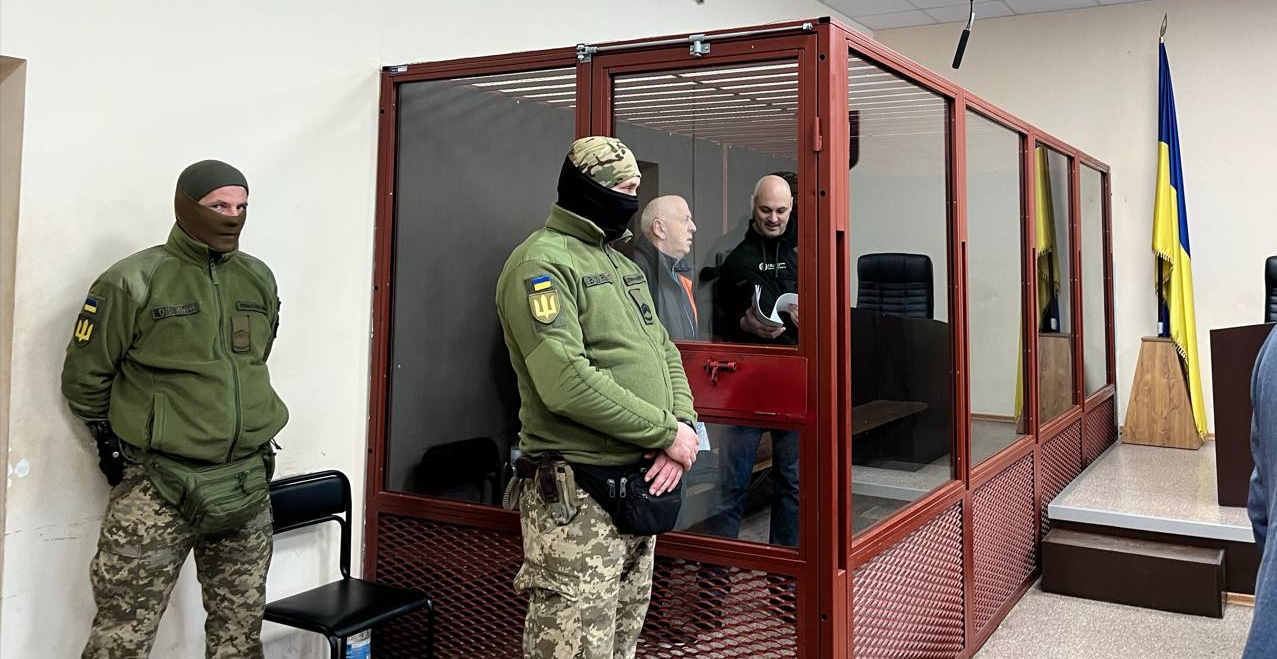 Ruslan and Sentiabr Mahamedrasulov. Photo credit: Anti-Corruption Action Center
Viktor Husarov, another NABU detective, is accused of high treason. According to investigators, between 2012 and 2015, he allegedly passed information about Ukrainian law enforcement officers to Russian special services. The SSU has named Dmytro Ivantsov, former deputy head of Yanukovych’s security, as the “coordinator” of these actions.
The defense argues that the allegations are unfounded, as Ivantsov was not considered a traitor at the time and held a position in the State Security Administration of Ukraine. Furthermore, the communication between him and Husarov took place within the scope of professional contacts. The materials that formed the basis for the charges were collected more than ten years ago and now contain no new evidence.
Lawyers also note that in 2024, the Security Service of Ukraine officially confirmed Husarov’s access to state secrets, even though his communication with Ivantsov was known. It is noteworthy that this communication took place even before Husarov began working at NABU in 2016.
He is currently being held in custody without the right to bail.
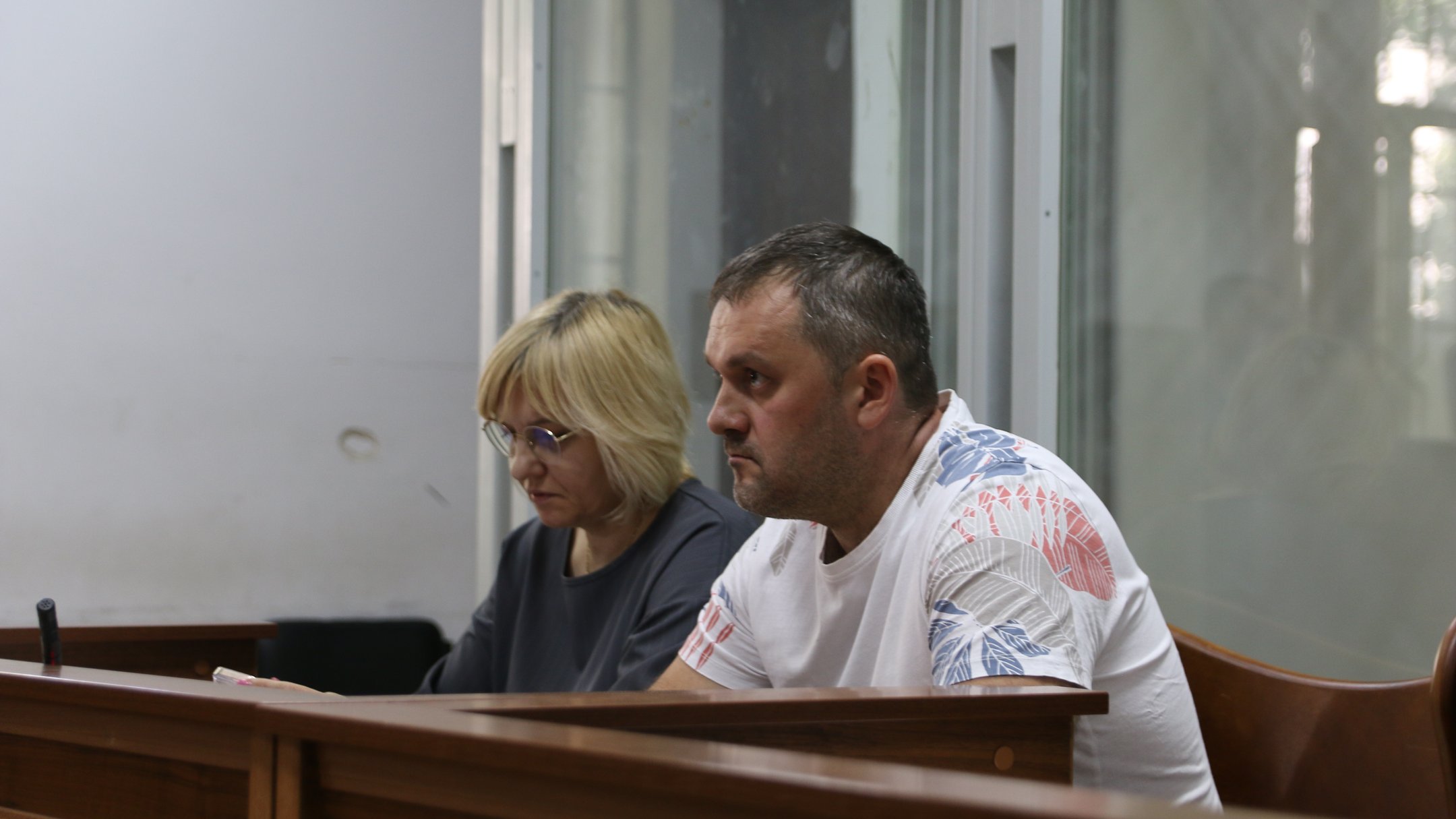 Viktor Husarov. Photo credit: Suspilne News / Oleksii Arunian
There are also reports of new, less high-profile cases against detectives. In September 2025, Vitalii Tiebiekin, a NABU detective, was charged with making false declarations about his assets. Three other detectives were reproached for past road accidents, which served as grounds for their dismissal.NABU and human rights defenders emphasize that, in many cases, the preventive measures and public statements made by law enforcement agencies fail to comply with the principles of proportionality and the presumption of innocence.
In the same month, the SSU conducted court-sanctioned searches in a case concerning abuses at Ukrzaliznytsiaі , targeting company officials and affiliated entrepreneurs, among whom were former NABU detectives.
NABU suggested that these actions could be related to the previous work of former bureau detectives who investigated corruption schemes at state enterprises, including within the SSU. The bureau regards the searches as a possible attempt to pressure anti-corruption institutions.
In response, the Security Service stated that the searches concerned only those involved in the case of abuse in the field of freight transport and were not related to “pressure on the independence of anti-corruption institutions”.
For its part, the Anti-Corruption Action Center published a court order authorising a search of the home of Taras Likunov, a former NABU detective. The order makes no mention of an investigation into abuses at Ukrzaliznytsia, but instead refers to the collection of evidence in a criminal case against MP Fedir Khrystenko. It was Likunov who, while working at NABU, exposed the corruption of Artem Shylo, a top official in the Security Service of Ukraine.
According to Daria Kaleniuk, executive director of the Anti-Corruption Action Center, the actions of the SBU officers against former NABU employees are aimed at discrediting the entire anti-corruption system and taking revenge on specific individuals through investigations, in particular, the suspicion of Artem Shylo, an SSU officer, of embezzlement at Ukrzaliznytsia, checking the assets of Illia Vitiuk, a general in the Security Service of Ukraine, and the investigation concerning individuals close to the President, Oleksii Chernyshov and Tymur Mindich.
Pressure on anti-corruption activists and investigative journalists
Tetiana Pechonchyk, Head of the Board of the Human Rights Centre ZMINA, notes that anti-corruption activists are among the civil society figures who have been systematically persecuted in Ukraine for many years. This happens at both the national and regional levels. The reason for such persecution is that they expose abuses, schemes, and corruption flows that serve the interests of specific officials, or that these activists are trying to promote legislative changes that reduce opportunities for corruption and illegal enrichment.
“Over the past decade, ZMINA has recorded various forms of pressure on anti-corruption activists, including physical attacks on activists and their property (e.g., arson attacks on houses and cars), persecution of family members, threats to activists (including sending “funeral wreaths” and the like), harassment and smear campaigns on social media and in disreputable media outlets, as well as fabricated criminal cases against activists“, the human rights advocate added.
This summer, anti-corruption activists also faced significant pressure. On July 11, the State Bureau of Investigation announced that Vitalii Shabunin, head of the Anti-Corruption Action Centre, was suspected of evading military service and fraud. Searches were conducted at the organisation’s office and at the activist’s home, where equipment and documents were seized.
According to the investigators, after being mobilized in 2022, Shabunin did not report for duty at the 207th Territorial Defense Battalion for an extended period and, under the guise of business trips, he remained involved in civilian institutions, in particular the National Agency on Corruption Prevention, while receiving monthly financial support from the Armed Forces of Ukraine totaling more than 50,000 hryvnias. In addition, he is accused of illegally using a sport utility vehicle imported into Ukraine as humanitarian aid for the army for his personal needs.
The investigators accuse Viktor Yushko, commander of the 207th Battalion, of abuse of office, alleging that he sent Shabunin on a fictitious business trip for the purpose of obtaining “unlawful benefits through the use of personal connections in the future.” At the same time, Shabunin continued to receive his full monetary remuneration. According to the investigation, the total amount paid to Shabunin in 2022-2023 was approximately 224,000 hryvnias. Yushko denies the accusations, explaining that the actions taken with regard to Shabunin were based on requests from authorized bodies and that the additional payments did not constitute a violation.
On July 15, the Pecherskyi District Court imposed a preventive measure on Shabunin in the form of a personal commitment. This includes a ban on leaving the location where his military unit is based, the surrender of his foreign passport, a prohibition on communicating with his former commander and other servicemen suspected in Yushko’s case, and a ban on contacting National Agency on Corruption Prevention (NACP) employees or visiting the agency’s premises.
The move drew criticism from human rights defenders and international organisations, who view such persecution as a sign of politicisation of the process and an attempt to discredit the activist.
In August, investigative actions against Shabunin continued: the State Bureau of Investigations served new charges, and the courts continued to hear the cases. These procedural measures created an atmosphere of constant pressure and difficulties for the work of the Anti-Corruption Action Center.
In early November 2025, the Observatory for the Protection of Human Rights Defenders – a joint programme of the World Organisation Against Torture (OMCT) and the International Federation for Human Rights (FIDH) – called on the Ukrainian authorities to immediately cease all persecution of anti-corruption activist Vitalii Shabunin.
The authors of the statement also emphasised that the authorities must guarantee all human rights defenders and anti-corruption activists in Ukraine the opportunity to carry out their legitimate activities freely and without obstruction – free from pressure, persecution, or the threat of criminalisation.
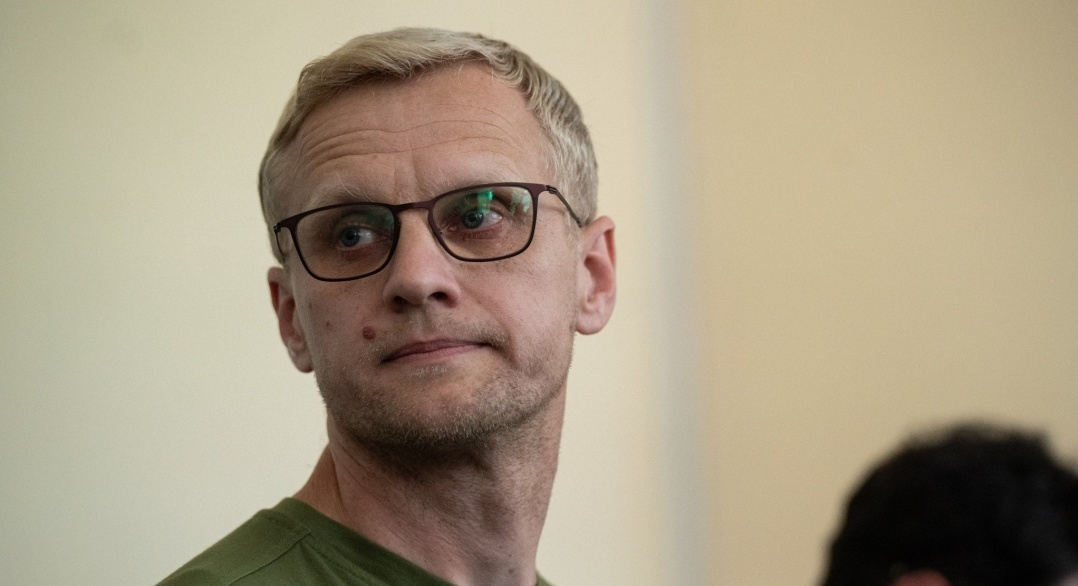 Vitalii Shabunin. Photo credit: Ukrinform
At the same time, the media also felt the pressure. Journalists from Slidstvo.Info appealed to law enforcement agencies after an incident in which employees of the territorial center of recruitment and social support (TCR), following instructions from a suspected SSU employee, attempted to serve a summons on the outlet’s author, Yevhen Shulhat. Shulhat had recently published an investigation into the property owned by the family of Illia Vitiuk, head of the SSU Cybersecurity Department, and the editorial team views this behaviour as a form of pressure.
The team of journalists and anti-corruption lawyers of Bihus.Info has also been subjected to information attacks and public attempts at discrediting by certain members of parliament. Journalists reported leaks of official information and attempts to influence editorial policy. Experts believe that these actions are aimed at intimidating the team and limiting the publication of materials on corruption in the upper echelons of power.
In September, Denys Bihus, head of Bihus.Info, stated that he was returning to military service, noting that “the offer from the Vinnytsia Territorial Recruitment Centre was one that was hard to refuse.”
Law No. 12414 and protests: how society defended the independence of NABU and SAP
One of the most resonant episodes of pressure on the anti-corruption system in 2025 was the attempt to limit the independence of NABU and SAP through the adoption of draft law No. 12414. The document sparked a wave of protests in dozens of Ukrainian cities, including Kyiv, Lviv, Dnipro, Odesa, Kharkiv, and Chernihiv. Civil society activists, human rights defenders, and international partners warned that its implementation could destroy the foundations of the anti-corruption reform.
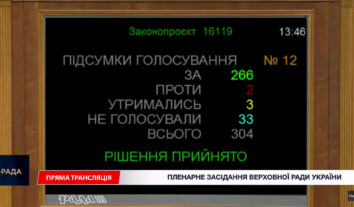
On July 22, the Verkhovna Rada passed, and President Volodymyr Zelenskyy signed a law amending the Criminal Procedure Code. The draft law granted the Prosecutor General the right to control the activities of NABU and SAP. Critics noted that this contradicts the principle of institutional independence of anti-corruption bodies and opens the way for political influence on their work.
Ruslan Kravchenko, the Prosecutor General, said that control is needed “to clean up the system from Russian influence” and that the bureau will supposedly stay independent. At the same time, civil society said that these arguments are just a cover for centralising power and weakening anti-corruption mechanisms.
After the draft law was passed and large-scale searches were conducted, during which the Security Service of Ukraine and the State Bureau of Investigations detained several NABU detectives, accusing them of possible cooperation with Russian special services, protests broke out in Ukraine.
Hundreds of people took to the streets. In Kharkiv’s Freedom Square, protesters chanted “Hands off NABU!” and “Shame!”. In Chernihiv, demonstrators held posters reading “12414 – the betrayal number” and “Corruption applauds”. In Lviv, more than five hundred people shouted: “My family members are not fighting for this!” and “The people are the only source of power.”
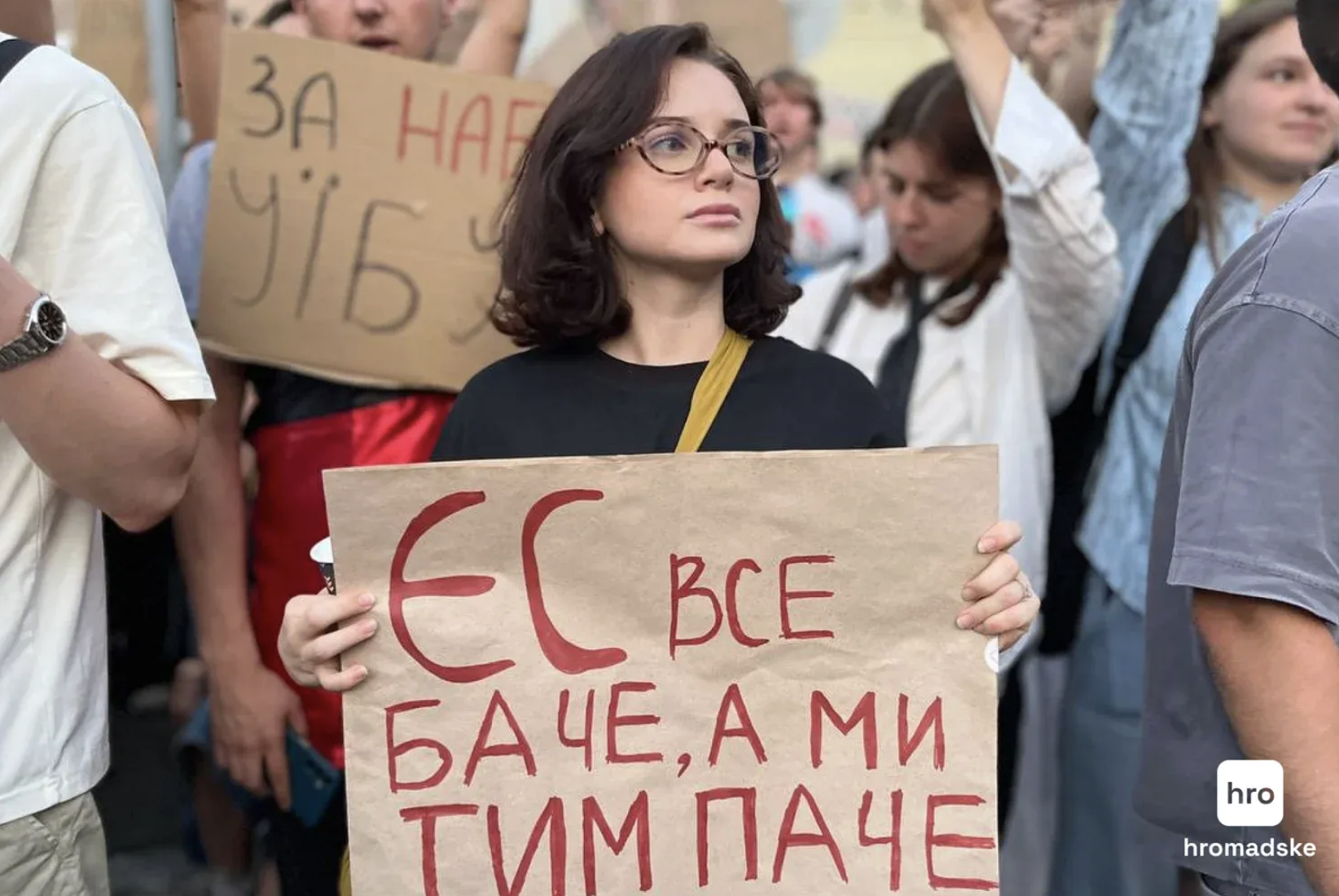 Protest in Kyiv
Ukraine’s international partners have also expressed concern. Representatives of the EU and the US called on the authorities to adhere to international anti-corruption policy standards and to guarantee the independence of the NABU and the Specialised Anti-Corruption Prosecutor’s Office.
After several days of pressure from both society and international partners, the Verkhovna Rada passed a new law restoring independence to anti-corruption agencies. This step was seen as a compromise between the authorities and the civil society, as well as a partial restoration of trust in the state’s anti-corruption system.
New cases – old scheme
Even before Russia’s full-scale invasion, fighting corruption in Ukraine remained one of the most dangerous areas of civic activity. In 2020 alone, human rights defenders documented 101 cases of attacks or persecution of activists. The most dangerous areas were the fight against corruption, the protection of the rights of LGBTIQ individuals, and environmental protection.
The most common methods of pressure were intimidation (22 cases), physical attacks (21), and property damage or destruction (18). Only in four incidents were the attackers brought to justice. The highest number of violations was recorded in Kyiv (44) and the Odesa Oblast (10), followed by Kyiv and Dnipropetrovsk Oblasts (each with 8), and Kharkiv Oblast (6).
Activists were persecuted not only physically, but also legally. Abuses of administrative law were documented – activists were fined or detained for holding peaceful assemblies, and most of these protocols were later overturned by the courts. In 2020, there were also 10 cases of legal persecution and nine cases of smear campaigns. One of the most famous cases was the lawsuit filed by MP Andrii Derkach against the Anti-Corruption Action Centre and the organisation 100% Life, alleging embezzlement of $149 million in international technical assistance. The accusations were accompanied by a media campaign in which Vitalii Shabunin, head of the Anti-Corruption Action Centre, and Dmytro Sherembei, head of the 100% Life council, were accused of involvement in the abuses without any evidence.
As Tetiana Pechonchyk notes, the most dangerous years for anti-corruption activists after Euromaidan were 2017–2018, when there was a whole series of attacks and contract killings, attempts on the lives of activists – for example, against Kateryna Handziuk, Oleh Mykhailyk, Serhii Sternenko, and Mykhailo Berchuk. These crimes outraged society, and some of these cases became quite high-profile, sparking a wave of protests and street demonstrations, including those coordinated by the initiative “Who ordered the murder of Kateryna Handziuk”.
“The case of Kateryna Handziuk was unique in the sense that not only the perpetrators but also those who ordered the murder ended up behind bars. This sent a message to these criminals that they would not be able to buy their way out and get away scot-free.
Russia’s full-scale invasion of Ukraine radically changed the situation – in 2022, we observed virtually no attacks on activists in the territory controlled by the Ukrainian government. But in the following years, this trend of attacks on activists who fight corruption and organised crime, as well as on investigative journalists, has unfortunately resumed and is growing again,” emphasised the head of the board of the Human Rights Centre ZMINA.
 Tetiana Pechonchyk, head of the Human Rights Centre ZMINA. Photo from personal archive
In 2024, pressure on anti-corruption activists and investigative journalists not only did not decrease, but also took on new forms, with the use of state institutions. On April 10, 2025, the Security Service of Ukraine and the State Bureau of Investigation searched the office of Dmytro Bulakh, head of the Kharkiv Anti-Corruption Centre, who also served in the National Guard. Law enforcement officials claimed “abuse of power during recruitment,” but did not issue any charges. Experts called this retaliation for Bulakh’s exposure of local abuses and publication of information about the dual citizenship held by one of the officials.
Last year, Vitalii Shabunin and the editorial staff of Bihus.Info were once again under pressure, as were investigative journalists Yevhenii Shulhat (Slidstvo.Info), Yurii Nikolov (Nashi Groshi), editor-in-chief of the CHESNO movement Oleksandr Salizhenko, and others.
In response to these events, representatives of civil society issued a joint statement condemning the persecution of activists and journalists under the pretext of inspections, mobilisation, or service in the Armed Forces of Ukraine. They stressed that such actions discredit not only specific individuals, but also Ukraine on the international stage, creating a basis for Russian propaganda.
The civil society has called on the authorities and law enforcement agencies to guarantee the protection of anti-corruption activists and journalists, to halt the practice of illegal persecution, and to punish officials who misuse state resources for personal gain. Without an adequate response, experts noted, such cases could develop into a systemic problem, significantly undermining trust in the state’s anti-corruption policy.
The war continues, and so does corruption
Despite the full-scale war, anti-corruption agencies and activists continue to do critical work, ensuring government transparency and protecting citizens’ interests. Right now, during a period of external aggression and Ukraine’s movement towards the EU, control over corruption and the independence of democratic institutions are of particular importance.
According to data from a survey conducted by the Kyiv International Institute of Sociology, most Ukrainians support the fight against corruption and the right to criticise the authorities. 56% of respondents believe that there are real anti-corruption efforts in Ukraine, and 90% believe that the authorities can and should be criticised, preferably constructively. Only 8% are convinced that criticism of the authorities is unacceptable (compared to 13% in 2024).
At the same time, 58% of respondents are in favour of moderate and constructive criticism to avoid destabilizing the situation in the country, while 32% support uncompromising and harsh criticism. Among those who consider Ukraine to be hopelessly corrupt, the proportion of supporters of radical criticism rises to 45%. However, even within this group, the majority (54%) lean towards a more moderate position or are generally opposed to aggressive criticism.
These data show that Ukrainian society understands the importance of transparency and oversight over the authorities even in difficult times. Such a position puts pressure on the state and stimulates the implementation of reforms necessary to meet EU criteria and strengthen democratic institutions.
Taras Kachka, Deputy Prime Minister for European and Euro-Atlantic Integration, is convinced that the most challenging part of Ukraine’s path to EU membership will be implementing reforms in democratic institutions, the judiciary, and anti-corruption efforts. These transformations are enshrined in the first negotiating cluster, “Fundamentals”, and their implementation directly depends on the effective work of anti-corruption structures and activists..
One way or another, anti-corruption actors remain indispensable for maintaining trust in the state, especially during wartime and amid important European integration reforms. Public support and attention to their activities create conditions under which the fight against corruption remains real and effective, although dangerous.
Did you like this article? Stay connected via X and LinkedIn with ZMINA – and help build this platform with us by filling out our anonymous 5-minute survey here.