Yellow-and-blue pillowcases bring people to court: Occupation authorities issue more than 1,500 rulings for “discrediting” the Russian army
Russia has turned the provision on the so-called “discrediting” of the Russian Armed Forces into one of its main tools for suppressing freedom of expression and persecuting residents of temporarily occupied Crimea. Over the past four years, occupation courts have issued at least 1,529 rulings under this provision, according to the findings of an analytical report by the Regional Centre for Human Rights, ZMINA’s correspondent reports.
 Illustration: Regional Centre for Human Rights
The authors of the report concluded that the application of Article 20.3.3 (“Public actions aimed at discrediting the use of the Armed Forces of the Russian Federation to protect the interests of the Russian Federation”) of the Russian Code of Administrative Offences does not amount to isolated abuses, but forms part of Russia’s deliberate state policy of suppressing freedom of expression and persecuting people for their pro-Ukrainian position.
The report analysed 1,529 rulings issued by occupation “courts” under the provision on “discrediting” the Russian army since its introduction in March 2022. The rulings were issued by 28 Crimean “courts”. The largest number of such cases was heard by the “Armiansk City Court”, which issued 495 rulings – almost a third of all documented cases.
Kseniia Korniienko, senior lawyer at the Regional Centre for Human Rights and co-author of the report, stressed that Russian legislation does not define “discrediting” at all, allowing the occupation authorities to interpret any actions or statements arbitrarily.
“The most striking example was a ruling by the “Nyzhnohirskyi District Court”, which held an elderly woman liable simply for selling yellow and blue pillowcases [colors of the Ukrainian flag] at a market. Customers decided this amounted to “discrediting”, bought the pillowcases, reported her to “the police”, and she was subsequently charged with an administrative offence. This shows that Russia treats “discrediting” not only as criticism of the authorities or the military, but effectively as any display of Ukrainian symbols or even actions that were never intended to convey such a message,” said Korniienko.
According to the human rights lawyer, most administrative cases stem from people’s online activity. Russian security forces systematically monitor social media, photographs, comments, “likes”, and even posts published many years earlier.
The researchers also found that around 80% of the cases were initiated directly by the occupation law enforcement agencies monitoring social media. Propaganda Telegram channels also play a role in the persecution. In particular, the authors identified the personal data of 135 individuals in the “Crimean SMERSH” Telegram channel who were subsequently prosecuted for “discrediting” the Russian army.
Volodymyr Viazovtsev, lawyer at the Regional Centre for Human Rights and co-author of the report, noted that international bodies have repeatedly found such laws to be incompatible with freedom of expression:
“The UN Human Rights Committee has repeatedly condemned laws on the so-called “discrediting” of the authorities. We have seen that these provisions are applied arbitrarily, law enforcement agencies abuse their powers, and the courts, instead of administering justice, effectively serve the authoritarian interests of the Russian Federation. This is a direct tool for forcing people into silence and suppressing any form of dissent”.
You may also want to read: Fines and imprisonments: How Crimeans are persecuted for the truth about the war in Ukraine and dissatisfaction with the occupation
The human rights lawyers also documented numerous procedural violations. In particular, people were prosecuted for posts published before the occupation of Crimea or years before the “discrediting” provision itself was introduced in Russian legislation. In some cases, the “proceedings” lasted less than a minute. According to Viazovtsev, only 73 of the 1,529 rulings were appealed, reflecting the public’s complete lack of trust in the occupation’s judicial system.
In addition, around 20% of the rulings were withheld from public access, while in nearly 50% of the cases, occupation “courts” removed information about the date of the alleged “offence”, effectively preventing public scrutiny.
Olha Skrypnyk, head of the Board of the Crimean Human Rights Group, stressed that the introduction of the “discrediting” provision immediately after the start of the full-scale invasion was no coincidence:
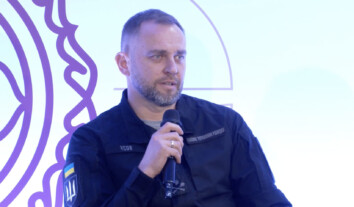
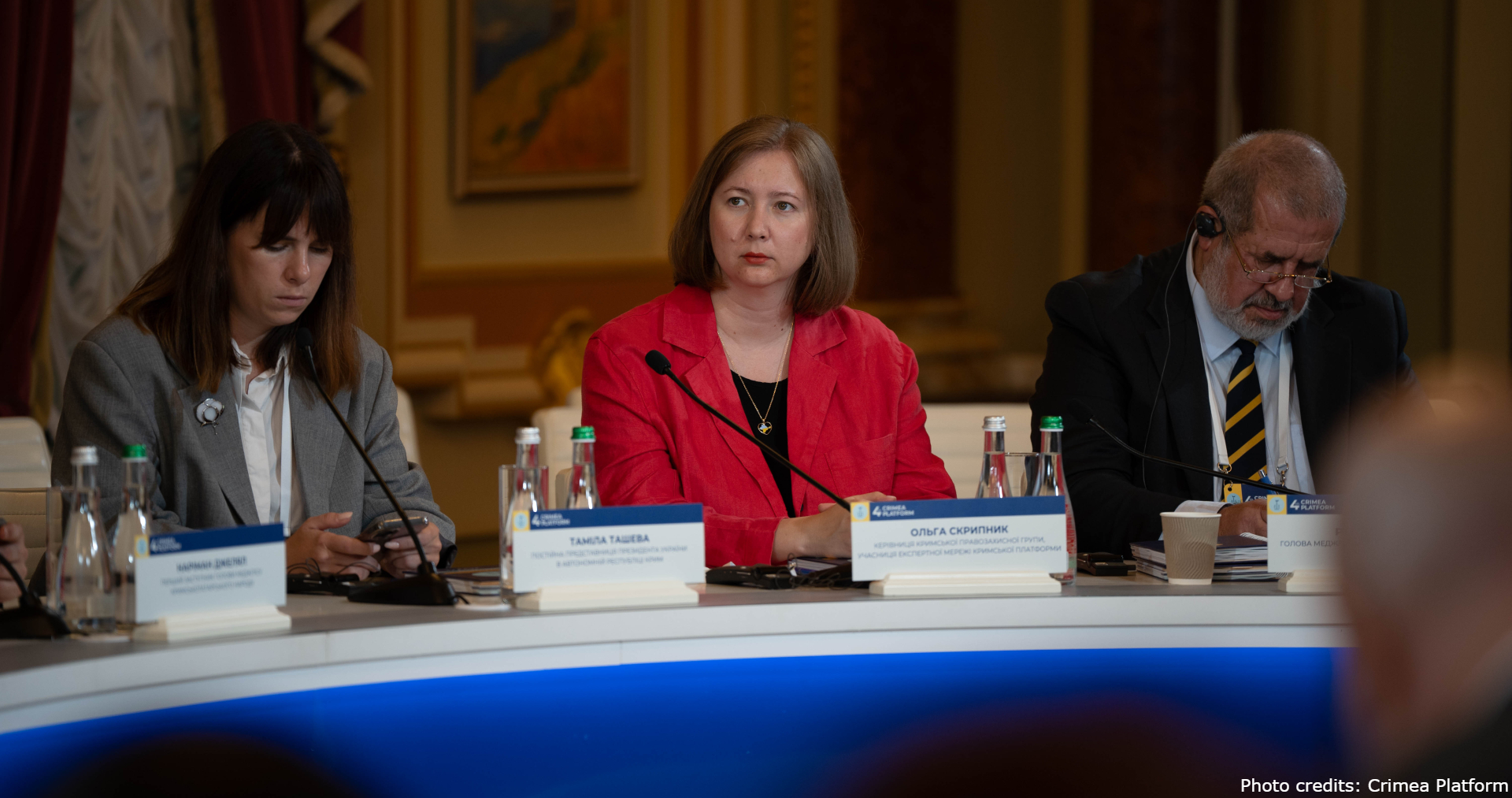 Olha Skrypnyk (in the centre)
“Russia entered the occupied territories fully aware that it would not find a loyal population there. That is precisely why the “discrediting” provision was introduced as early as 4 March 2022. It was a premeditated tool for suppressing resistance because Russia knew Ukrainians would resist“, said Olha Skrypnyk.
According to the human rights advocate Skrypnyk, despite years of repression, the number of cases has not declined. In 2025 alone, the Crimean Human Rights Group documented at least 517 new administrative cases. She stressed that this does not demonstrate the effectiveness of the repression but, on the contrary, the resilience of the residents of occupied Crimea.
“People know full well that they can be fined or face administrative proceedings simply for singing a Ukrainian song, saying ‘Glory to Ukraine’, or even arguing about the war. Yet they continue to support Ukraine. This is another manifestation of Ukrainian resistance under occupation“, Skrypnyk elaborated.
Alina Grigoras, head of the Occupied Territories Unit at the UN Human Rights Monitoring Mission in Ukraine, noted that the mission has documented the consequences of the application of Russian legislation in Crimea since 2014. According to Grigoras, the mission documented 223 administrative cases under the “discrediting” provision in 2022 alone. This year, it has already identified 90 new administrative proceedings, as well as three criminal cases for “discrediting” and one for spreading so-called “false information” about the Russian army, in which people were sentenced to two and a half years’ imprisonment. The UN also stressed that the occupation authorities actively use information obtained from mobile phones, monitor people’s social media accounts, and apply these provisions not only against activists but also against lawyers and legal professionals.
The authors of the report stress that Russia has unlawfully extended its domestic legislation to the occupied territory of Crimea, in violation of international humanitarian law. They call on the international community to treat prosecutions for “discrediting” as part of a systematic policy of discriminatory persecution of Ukrainians that may amount to a crime against humanity.
ZMINA continues to monitor cases of persecution over online speech and comments. Our previous coverage includes cases in which:
- the Russian Supreme Court upheld the conviction of a man sentenced over comments supporting Ukraine;
- Russian authorities sentenced a Sevastopol resident to five and a half years’ imprisonment over comments about the illegally constructed by Russian occupiers the Kerch Bridge;
- Russia’s Federal Security Service (FSB) also detained a man in temporarily occupied Sevastopol over online comments about the Balaklava Thermal Power Plant;
- Russian authorities detained a man in occupied Berdiansk over online comments;
- a woman from the Kherson Oblast was sentenced to a prison term in Russia over online comments;
- a Ukrainian woman from currently occupied Melitopol was added to Russia’s list of “terrorists” over comments on social media.
The UN has also concluded, following its assessment of the situation, that Russia has created an atmosphere of fear in the occupied territories of Ukraine. For example, in occupied Crimea alone, the Russian authorities consider around 7,000 people to be “unreliable”, and since 2022 have initiated more than 1,700 cases against individuals for expressing dissent.
Need a human-rights perspective on Ukraine’s latest legal developments? Connect with ZMINA on X, BlueSky, and LinkedIn for regular policy updates – and let us know what you want to read next in our survey here.