Russian military strikes across Ukraine killed four civilians on January 7
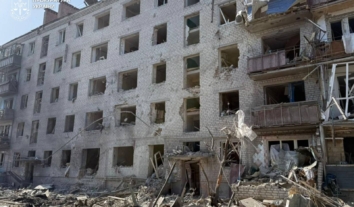
The National Police reported that as a result of shelling by the Russian military on January 7, 2026, four civilians were killed in the Kherson and Dnipropetrovsk regions, and more than 40 others sustained various injuries, specifically in the Donetsk and Zaporizhzhia Oblasts.
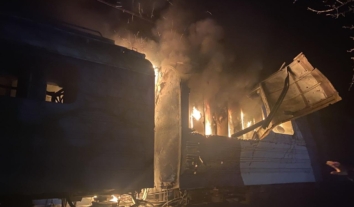
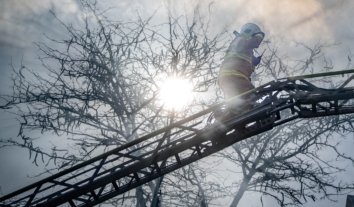
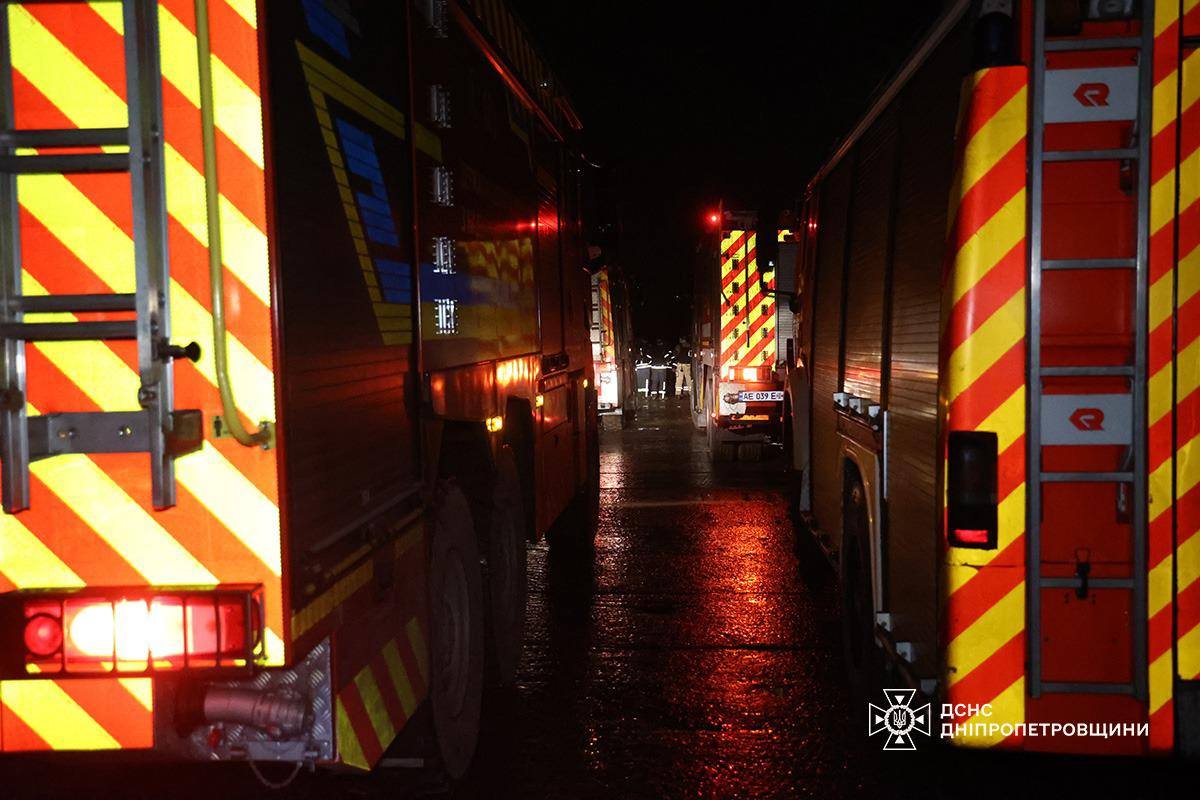 State Emergency Service vehicles are parked near one of the sites of Russian strikes in the Dnipropetrovsk region on the night of January 7, 2026
The victims of the Russian strikes on January 7 were:
- A 67-year-old man who was driving a car near Sukhanove when it was targeted by a Russian drone strike;
- A 53-year-old resident of Kherson, who died from the explosion of an unknown object, which, according to police, he likely brought home following a previous shelling;
- A 68-year-old Kherson resident, who did not survive a Russian artillery and multiple launch rocket system attack on the city center;
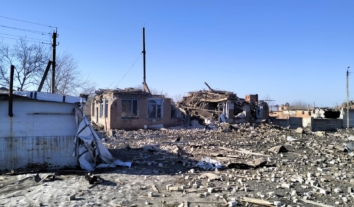
- A 77-year-old woman from the Vasylkivska “hromada,” a local government area that includes one or more nearby settlements, whose body was found under the rubble of a house shelled by the Russian Federation.
In both regions, Russian military shelling injured numerous civilians over the past 24 hours, with the highest number — 31 people — recorded in the Dnipropetrovsk region.
Among them, in particular, were three people from the Vasylkivska hromada, as well as 15 civilians, the vast majority of whom were inside an administrative building in the center of Nikopol at the moment of the strike. Another eight civilians were injured in Kryvyi Rih, which the Russians shelled from morning until evening.
The regional center was one of the Russian military’s targets that night, where seven people, including two children, were injured as a result of a drone group strike.
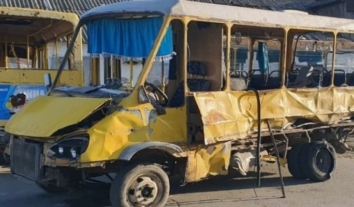
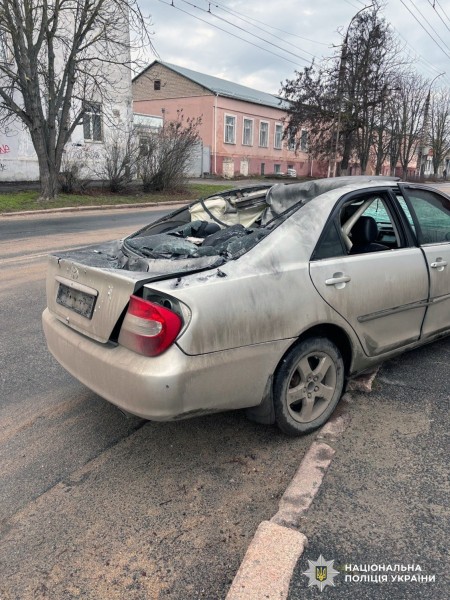 A car attacked by the Russian military on a street in Kherson
In the Kherson Oblast, on January 7, the Russian army wounded two people: a police officer and a man in the regional center. The report also included a woman who was injured in a Russian strike on January 6 in the Dniprovskyi District of Kherson.
In the Zaporizhzhia Oblast, January 7 concluded with five casualties: four from vehicles targeted by Russian drones in Kushuhum and Bilenke, as well as a female pensioner from Sofiivka who was also hit by a drone.
In the Donetsk Oblast, Russian military shelling injured one person in Sloviansk.
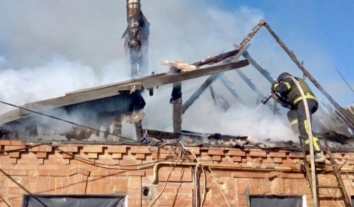
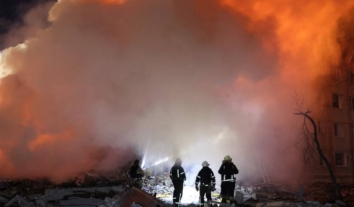
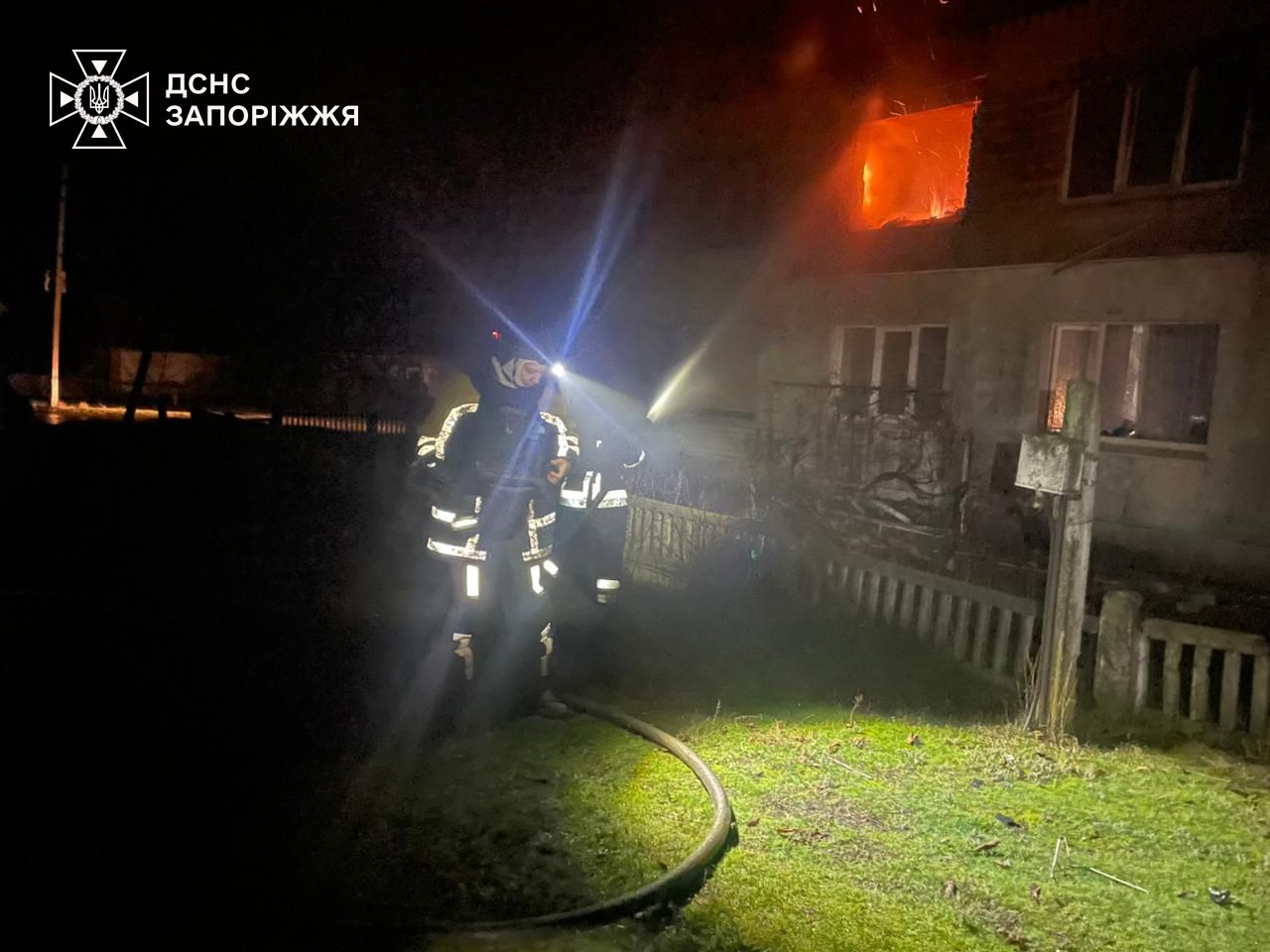 Rescuers walk past a house in Zaporizhzhia where a fire broke out following a Russian strike
To provide background, on January 6, Russian forces killed two people in Ukraine through shelling; in total, over nearly four years, more than 14,500 civilians have been killed.
In other news, President Volodymyr Zelenskyy stated on X that a bilateral document on security guarantees for Ukraine is effectively ready to be finalized at the highest level with U.S. President Donald Trump in an attempt to freeze the frontline. According to Zelenskyy, Rustem Umierov, Secretary of the National Security and Defense Council of Ukraine, briefed him on the results of the talks, during which the sides discussed both security guarantees and documents related to Ukraine’s recovery and economic development.
Zelenskyy noted that during the negotiations, complex issues concerning the basic framework for ending the war were discussed and that the Ukrainian side presented possible options for finalizing the relevant document.
In addition, he also added that the United States plans to have separate contact with Russia and that Ukraine expects feedback on whether Moscow is genuinely ready to end the war. Nonetheless, Kyiv continues to inform its partners about the consequences of Russian strikes, which, as Zelenskyy points out, do not indicate any change in the Kremlin’s priorities.
Meanwhile, U.S. Senator Lindsey Graham stated on X that Donald Trump has given the green light to a bipartisan sanctions bill targeting Russia.
“After a very productive meeting today with President Trump on a variety of issues, he greenlit the bipartisan Russia sanctions bill that I have been working on for months with Senator Blumenthal and many others,” Graham wrote.
He reported that the decision was timely, arguing that “Ukraine is making concessions for peace and Putin is all talk, continuing to kill the innocent.”
He noted that the bill would allow Trump to punish countries that buy cheap Russian oil, which he said is fueling Putin’s war machine.
“This bill would give President Trump tremendous leverage against countries like China, India, and Brazil to incentivize them to stop buying the cheap Russian oil that provides the financing for Putin’s bloodbath against Ukraine. I look forward to a strong bipartisan vote, hopefully as early as next week,” he stated.
Earlier, the new chief of the UK foreign intelligence service MI6, Blaise Metreweli, accused Russian ruler Vladimir Putin of deliberately prolonging negotiations to put an end to the war in Ukraine, in an assessment that complicates Donald Trump’s efforts to broker a deal by year-end, Bloomberg news agency reported.
Metreweli’s words suggest there has been little alteration in Western security officials’ assessment that Putin doesn’t intend to stop fighting in Ukraine anytime soon, despite talks to end the war that have taken place between the Kremlin and American negotiators in recent weeks.
Ukrainian experts point out that countries including China, North Korea, Hungary, Slovakia, Iran, and Brazil assist Moscow in killing Ukrainians in its war against Ukraine by funding the Russian budget through trade.
Previously, the Ministry of Foreign Affairs announced that Ukraine would close its embassy in Cuba and downgrade ties over Havana’s complicity in Russian aggression.
Newly appointed Ukrainian Ambassador to the UN Andriy Melnyk stated in an interview with Suspilne broadcaster that Brazil paid Russia almost $10 billion for 6.5 million tons of diesel.
Over the last three and a half years, China has become a critically important partner for the Russian Federation. While Beijing officially declares its neutrality, Western intelligence and analytical studies indicate otherwise. For instance, China does not supply weapons directly to Russia, but it provides critically important components, including machinery, microelectronics, specialized chemicals, optics, gunpowder, and ammunition components.
In 2024, then-U.S. Secretary of State Antony Blinken stated that 70% of heavy industrial equipment and 90% of all microelectronics are sourced from China, which then flows into Russia.
Furthermore, according to recent NATO intelligence data, 80% of all Russian drones consist of Chinese parts.
According to The Telegraph newspaper, Chinese firms supplied sanctioned Russian companies with at least £47 million ($57.4 million USD) worth of parts between 2023 and 2024. Almost a quarter of the value of these supplies went to firms that produce Shahed-type drones.
Moreover, the Foreign Intelligence Service of Ukraine stated that China is also providing intelligence to Russia. The Kremlin used this data to prepare missile strikes, particularly against objects belonging to foreign investors, though the specific targets were not clarified. China denies these accusations.
Following the imposition of Western sanctions, Beijing has become a key supplier to Russia of cars, clothing, raw materials, and a range of other goods. In 2023, Russia-China trade turnover set a historic record, exceeding $240 billion, which is more than 60% higher than before Russia’s invasion of Ukraine, according to Chinese customs data.
Reuters also reported that China is buying oil and gas from Russia. The average daily volume of oil is more than two million barrels per day. During Vladimir Putin’s visit to Beijing, the countries signed a document for the supply of 106 billion cubic meters of gas per year to China.
Keep up with ZMINA on X and LinkedIn – and help us improve by answering a few quick questions here about our English-language coverage.