Italian political scientist Antonio Stang calls for release of jailed Crimean Tatar journalist Amet Suleimanov
Italian political scientist Antonio Stango has called for the release of citizen journalist Amet Suleimanov, Stango wrote on X ahead of Suleimanov’s 42nd birthday on 25 October.
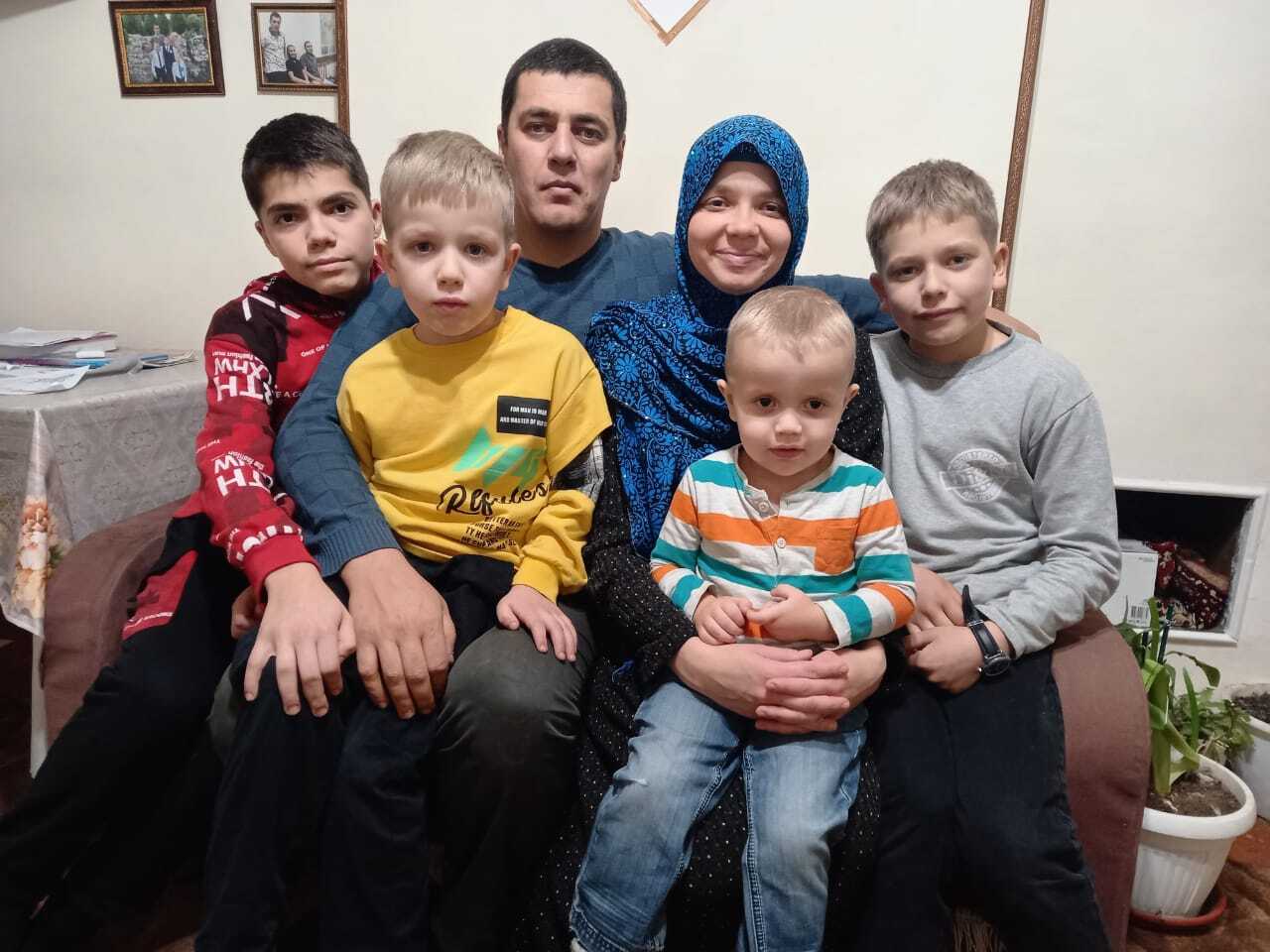 Amet Suleimanov with his family
The Crimean Tatar journalist is currently held in a prison in Vladimir, Russia. Stango said Suleimanov has a number of serious health conditions, including chronic cardiovascular disease, high blood pressure, heart valve damage and heart failure.
“The conditions of detention of Amet Suleimanov, illegally arrested by the occupiers of his land and deported to a Russian prison, are incompatible with detention even under Russian law itself,” Stango said.
The Italian Federation for Human Rights (FIDU) called for the release of Suleimanov and other people politically persecuted and illegally held in custody by Russia, as well as respect for international law.
Suleimanov was a video reporter for the Crimean Solidarity civic initiative in Bakhchysarai. Health problems meant he mostly documented court hearings, particularly trials of Crimean Tatars.
 Amet Suleimanov/ Photo credit: Oleksandra Yefymenko
In 2017, Russian security forces stopped him outside the home of activist Seiran Saliiev, where the journalist was filming a search. In 2019, he was detained on the Kerch Bridge when returning to Crimea after attending a hearing at a military court in Rostov-on-Don. In March 2020, officers seized mobile phones and materials considered prohibited by Russian authorities during a search of his home.
Suleimanov was charged with participation in a terrorist organisation under Part 2 of Article 205.5 of the Criminal Code of the Russian Federation. On 29 October 2021, a military court in Rostov-on-Don sentenced him to 12 years in a strict-regime penal colony.
You may also want to read: From “soft power” to torture chambers: patterns of Russia’s seizure of new states based on Ukraine’s experience
ZMINA previously reported that Suleimanov, who was convicted in the Hizb ut-Tahrir case and is serving his sentence in Vladimir Central Prison, requires urgent medical monitoring because of his deteriorating heart condition.
In July 2025, Suleimanov suffered a hypertensive crisis in Russian custody, where a Russian court sentenced him to 12 years in prison.
The religious party Hizb ut-Tahrir has been banned in Russia since 2003; however, it operates legally in all territories of Ukraine, including the Autonomous Republic of Crimea, as well as in many other countries. Russia, in violation of the Geneva Convention, applies its own criminal legislation to the temporarily occupied territories of Ukraine.
Earlier, Freedom House pointed out that following the Russian annexation of Crimea in 2014, allegations of membership in Hizb ut-Tahrir have become a common pretext for criminal prosecutions there and are one of many abuses of anti-extremism legislation against civic activists and others.
Related: List of imprisoned Ukrainian journalists 2025 in temporarily occupied Crimea
Crimea is internationally recognized as Ukrainian territory under temporary Russian occupation since 2014.
UN General Assembly Resolution 68/262 affirmed Ukraine’s territorial integrity within its internationally recognised borders, including the Crimean Peninsula. The annexation violated the UN Charter, the Budapest Memorandum, and international law. The EU, the U.S., and most countries refuse to recognise Russian sovereignty over Crimea.
In April 2023, Dunja Mijatović, the Council of Europe Commissioner for Human Rights, released report, “Crimean Tatars’ struggle for human rights.” Mijatović confirmed numerous serious human rights violations, namely persecution, discrimination, and stigmatisation, by Russian occupying forces of representatives of the Crimean Tatar community and those who oppose the illegal occupation of Crimea.
Want more insight from Ukraine’s human-rights story? Follow ZMINA on X, Bluesky and LinkedIn – and share what matters to you via this short survey here.