EU opens two more accession negotiation clusters for Ukraine covering 17 reform areas
The European Union has officially opened two more accession negotiation clusters for Ukraine – “Internal Market” and “Competitiveness and Inclusive Growth” – the European Commission reported. They cover 17 areas where Ukraine must align its legislation with European standards. Specifically, this involves workers’ and consumers’ rights, social policy, education, the economy and digitalisation.
 Photo credit: John Thys / AFP
The decision was made on 13 October 2026 in Luxembourg during the fourth Intergovernmental Conference between Ukraine and the European Union.
The second cluster, “Internal Market”, covers nine negotiating chapters. They concern the free movement of goods, services, workers and capital between EU countries, as well as competition rules, company operations and financial institutions.
Specific chapters stipulate the alignment of Ukrainian regulations with European ones regarding consumer protection, intellectual property and healthcare.
Related: EU commitments boost anti-corruption agencies’ independence, but gaps remain — NABU and SAPO
The third cluster, “Competitiveness and Inclusive Growth”, contains another eight chapters. They cover taxation, economic and industrial policy, digital transformation, media operations, employment and social protection.
Ukraine must also align its legislation with EU standards in the fields of education, culture, science, research and customs policy.
The opening of these clusters allows for a transition to substantive negotiations on the changes Ukraine must implement for future EU membership.
The Council of the EU explained that they have already determined the conditions whose fulfilment will allow for the provisional closure of the respective negotiating chapters in the future. At the same time, the European Commission will continue to verify how well Ukrainian legislation complies with European standards and how the country is implementing the necessary reforms.
Ireland’s Minister of State for European Affairs and Defence, Thomas Byrne, whose country currently holds the presidency of the Council of the EU, called the opening of the clusters an important milestone on Ukraine’s path to membership. He said the decision demonstrates progress in reforms despite the full-scale war.
Ukraine’s Deputy Prime Minister for European and Euro-Atlantic Integration, Vsevolod Chentsov, said that both clusters determine the main rules for the future integration of the Ukrainian economy into the EU single market.
He said it is not just about aligning legislation, but also about increasing the competitiveness of Ukrainian enterprises, economic growth and the country’s resilience.
Prime Minister Serhii Koretskyi said that Ukraine has already met the conditions to open all six negotiating clusters. The government expects the European Union to open the last two by the end of 2026.
At the same time, the opening of negotiation clusters does not yet mean the completion of the respective reforms or automatic EU membership. Ukraine must meet the agreed requirements, and the European Union must evaluate the results.
ZMINA previously reported that on 8 October 2026, Hungary agreed to open the second and third negotiation clusters for Ukraine.
This decision was adopted at the level of the Committee of the Permanent Representatives of the Governments of the Member States to the European Union (COREPER). Budapest had previously blocked Ukraine’s further progress in negotiations, linking its position, in particular, to the protection of the rights of the Hungarian national minority.
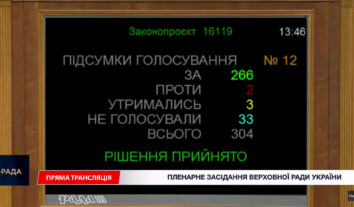
One of Hungary‘s conditions was resolving the issue of education in national minority languages. On 12 October, the Ukrainian parliament adopted the corresponding legislative changes, after which President Volodymyr Zelenskyy signed the law.
On 15 June 2026, Ukraine opened the first cluster, “Fundamentals”, which covers the rule of law, the independence of the judiciary, the fight against corruption, the operation of democratic institutions and the protection of fundamental human rights.
This cluster is of particular importance, as the overall pace of membership negotiations depends on the results of reforms in the respective areas.
On 14 July, the European Union also opened negotiations on the sixth cluster, “External Relations”. It concerns external trade, international cooperation, and the common foreign and security policy.
Therefore, after the 13 October 2026 decision, Ukraine has officially started negotiations on four of the six clusters. The “Green Agenda and Sustainable Connectivity” and “Resources, Agriculture and Cohesion” clusters remain to be opened.
Stay connected with us via X, Bluesky and LinkedIn – and while you’re here, please spare five minutes to fill out our survey and tell us what you’d like to see next.