human rights
EU report calls on Ukraine to consult the public when drafting its human rights action plan
About 10% of more than 600 expert proposals were taken into account during the development of the strategy. In particular, the document lacks a focus on the rights of military personnel and Ukrainians who left the country after the start of the full-scale invasion
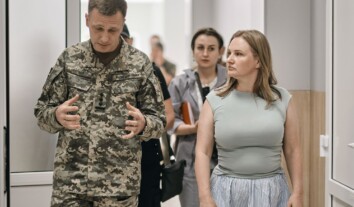
Ukraine’s Military Ombudsman Office has received over 18,000 appeals, with medical support the top concern
Reshetylova noted that while some of these complaints are substantiated, recruits sometimes use them as an opportunity to avoid military service
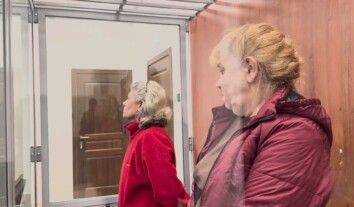
Two women in occupied Ukraine get 14-year terms for alleged treason
According to the occupation authorities, Romanenko involved Lyposavytska in monitoring Russian troops. Together they allegedly gathered information "through personal visual observation and questioning residents of the Kuibyshevskyi District"
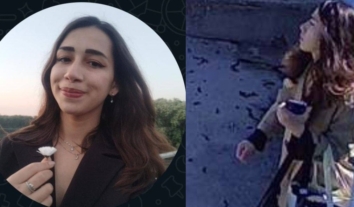
Russian court sentences kidnapped Crimean resident Khatidze Buiukhchan to 17 years
Representatives of the Crimean Process NGO pointed out violations during the trial. In particular, the case against the Kerch resident was heard in Rostov-on-Don, on Russian soil, rather than in the temporarily occupied territory, which violates international humanitarian law

Farmer from temporarily occupied Crimea sentenced to 15 years in prison for alleged treason
Two court hearings were held behind closed doors, and the verdict was also announced behind closed doors, the Crimean Process reported. It said this called into question the objectivity of the proceedings, particularly because the verdict had not been announced publicly, which it said was always required under existing standards
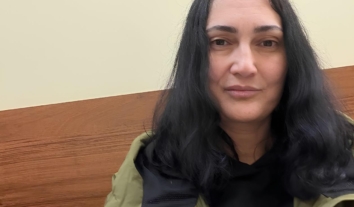
Russia sentences Crimean Tatar Diana Havryliuk to 12.5 years over alleged donation to Ukraine’s military
The ruling was handed down by the Oktyabrsky District Court of Krasnodar in Russia. The court also imposed a fine of 150,000 roubles (about $1,860 or €1,670) and 1.5 years of restriction of liberty following the end of her prison term

Russian appeal court upheld sentence against 66-year-old Melitopol resident Iryna Sukhovii
In May 2025, FSB officers detained pensioner Iryna Sukhovii. The illegitimate "Zaporizhzhia Regional Court" subsequently sentenced her to 12 years and six months in a general-regime penal colony for "high treason". The Russian occupying authorities accused her of providing financial support to the Armed Forces of Ukraine. In 2026, the First Court of Appeal of General Jurisdiction in Moscow upheld the sentence and dismissed Sukhovii’s appeal. Aleksandr Pushkin, a judge at the court, issued the ruling

Russian Justice Ministry targets more activists of Crimean Solidarity grassroots movement
On 24 June 2026, the Russian Justice Ministry expanded the list of people it considers members of the Crimean Solidarity grassroots movement, which had previously been added to Russia’s register of foreign agents. The list now contains 137 names

Draft Ombudsman bill strengthens institution but carries politicization risks, Ukrainian Center for Independent Political Research warns
According to the experts, one of the bill's main advantages is its alignment with European Union and Council of Europe standards. The effectiveness and independence of national human rights institutions remain key benchmarks in assessing Ukraine's compliance with the rule of law during its EU accession process
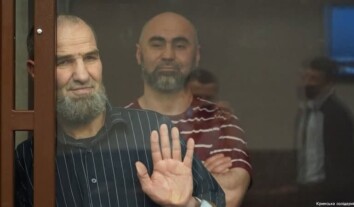
Crimean political prisoner Lenur Khalilov, who has cancer, is in critical condition
More than two months ago, Khalilov was transferred from a penal colony to a regional hospital run by Russia’s Federal Penitentiary Service in the Arkhangelsk Region (Oblast). However, the prescribed treatment has yielded no results, failing to halt the progression of the disease or alleviate his pain

“Everything depends on us”: Tetiana Pechonchyk on building Ukraine’s human rights infrastructure amid war
Tetiana Pechonchyk grew up in a village contaminated by the Chornobyl fallout, where her parents measured mushrooms with a dosimeter before putting them on the table. She organised her first protest as a schoolgirl - calling on her classmates to boycott the unpaid fieldwork in the collective farm fields - and has never really stopped since
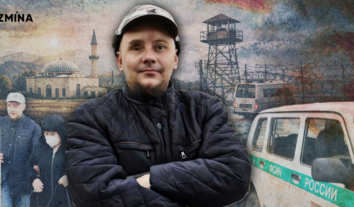
Blind Crimean political prisoner Oleksandr Sizikov discharged from hospital and being transferred to prison in Minusinsk
While in the hospital, he underwent three medical examinations. The Kremlin prisoner was discharged on 10 June, 2026. According to Sizikov, he was due to be transferred on either 13 or 18 June to the facility where he is serving his unlawful sentence
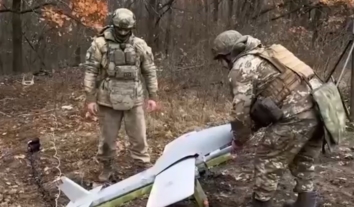
Russia plans to deploy all mobilized citizens of Ukraine from occupied Crimea to combat operations
Starting April 1, 2026, Russia plans to deploy all individuals mobilized from temporarily occupied Crimea into active combat. Specifically, there are plans to replace wounded and "unfit" personnel within the 810th Marine Brigade, stationed in Sevastopol, with these newly mobilized residents
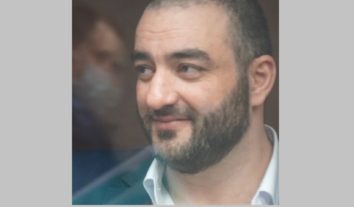
Crimean political prisoner Tofik Abdulgaziev has begun losing consciousness due to significant deterioration of his health condition
The Crimean Tatar is being held in solitary confinement, so if he becomes unwell, there is no one to help him

Russian occupiers abducted Crimean Tatar woman in temporarily occupied Crimea: they accuse her of “treason”
The Human Rights House Crimea reminded that during the last two years, Russian security forces in temporarily occupied Crimea have intensified the practice of enforced disappearances. As of the end of 2024, there were 27 confirmed cases of this type. Eight of these people could not be found, three were convicted by the illegitimate "courts" on the peninsula, and the rest were released. In 2025, out of 18 persons, only one was released

Russian occupiers illegally alienate the property of boxer Oleksandr Usyk and other citizens of Ukraine in Crimea
The so-called "nationalizations" by the occupying Russian authorities in the Autonomous Republic of Crimea and Sevastopol city carry no legal force under international law. Human rights defenders view this as an element of the aggressor state's repressive policy

Russia has illegally drafted 46 thousand Ukrainians in the temporarily occupied territories, most of them in Crimea
Russian occupying authorities illegally mobilized 5,368 Ukrainians in the occupied Donetsk Oblast, 4,650 in the Luhansk region, 560 in the Zaporizhzhia region, and 478 in the Kherson region. Additionally, 35,272 individuals were mobilized in the Autonomous Republic of Crimea, and 5,368 in Sevastopol
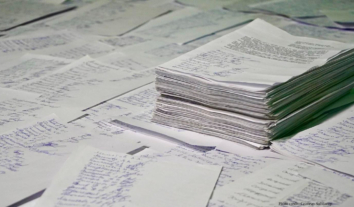
In Russia, parents of illegally arrested Crimean Tatars were detained five times on their way to the ombudsman
All the detentions occurred over two incomplete days

Columns

Fighting a ‘holy war’: Why a sacralised war resists Western strategy

“Reaching an agreement with the US on what we disagree on”: What the campaign against ICC means for Ukraine

ICC must remain free from political pressure to bring justice to victims of world’s gravest crimes
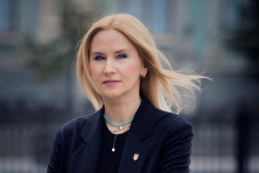
Only 5% of those responsible for deporting Ukrainian children face global sanctions