Russian forces drop drone munition on civilians in Dnipropetrovsk region: Boy killed, two more children injured
An 11-year-old boy was killed in Russian attacks in the Dnipropetrovsk Region (Oblast) on 10 October 2026. Five other people, including two children, were injured, Oleksandr Hanzha, head of the Dnipropetrovsk Oblast Military Administration, and the State Emergency Service of Ukraine (SES) reported.
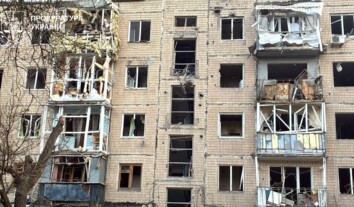
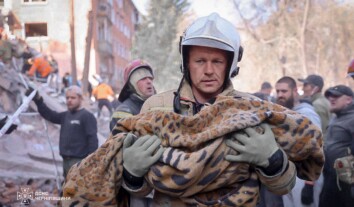
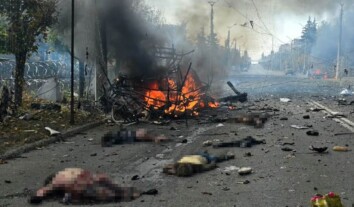
 Aftermath of a Russian attack in Dnipropetrovsk Oblast
“An 11-year-old boy was killed in an enemy attack in the Nikopol District. Russians dropped a munition from a drone in the Pokrovsk “hromada”, a local government area that includes one or more nearby settlements. Two children – a 12-year-old boy and a 10-year-old girl – were injured,” the official wrote.
Both children were taken to hospital, where they are being treated.
Related: The human safari: How Russia weaponised precision against Ukrainian civilians
A 47-year-old man and two women, aged 49 and 61, were also injured in the Nikopol District. SES workers evacuated the injured to a medical facility.
Residential buildings, a petrol station and an ambulance were damaged in the attacks.
Russian forces attacked the Dnipropetrovsk Oblast with drones and artillery more than 30 times during the day.
Read more: Russian drone attacks on civilians amount to crimes against humanity – UN Commission
Residential buildings and infrastructure facilities were damaged in the Kryvyi Rih District, and a car and agricultural equipment in the Dnipro District.
On the evening of 7 October 2026, two 14-year-old boys were killed when an explosive object detonated in the Krolevets hromada in Sumy Oblast.
Related: Russian aerial bomb strike on Zaporizhzhia apartment block kills at least 24 civilians on 10 October
To provide background, US president Donald Trump has not secured an end to Russia’s war within 24 hours of taking office, as he had promised. Furthermore, numerous Ukrainian and international experts point out that the U.S., as a guarantor state under the Budapest Memorandum, is pressuring Kyiv into capitulation.
- Kremlin ruler Vladimir Putin and Russia’s Presidential Commissioner for Children’s Rights Maria Lvova-Belova over the alleged unlawful deportation and transfer of Ukrainian children from occupied territories to Russia (March 2023);
- military officials Sergei Kobylash and Viktor Sokolov over strikes on Ukrainian civilian infrastructure (March 2024);
- Sergei Shoigu and Valery Gerasimov over alleged war crimes and crimes against humanity linked to missile strikes on Ukraine’s electric infrastructure between 10 October 2022 and 9 March 2023 (June 2024).
US President Donald Trump said he has reached an agreement with Kremlin leader Vladimir Putin to supply Russian diesel fuel to the United States and global markets. Trump agreed with Putin to immediately supply more than 300,000 tons of diesel, another 500,000 in November, and a further 1 million tons thereafter. Trump added that a further 3 million will be delivered within a short period of time based on the condition of Russian diesel refineries.
In a related move, the US Treasury Department announced a partial lifting of sanctions on Russian diesel through April 2027.
Ukrainian President Volodymyr Zelenskyy condemned this move and stated that the agreement would provide additional funding for the war and lead to more suffering for Ukrainians. He added that Donald Trump made a weak decision by lifting some sanctions on Russia. The Ukrainian president said the move was dishonest and unworthy of Ukraine’s partners.
Meanwhile, Axios reported, citing a Ukrainian official, that during negotiations with the Ukrainian team, Trump’s envoys Steve Witkoff and Jared Kushner threatened to stop providing intelligence to Ukraine over strikes on Russian oil refineries.
Human rights organisations and Ukrainian authorities emphasise that structural economic pressure remains a key tool to halt such atrocities. They urge every nation and individual government worldwide to strictly enforce global sanctions, close existing regulatory loopholes, and completely sever remaining commercial and technological ties with the Russian Federation. Civil society groups stress that any continued cooperation by foreign businesses directly contributes to the resources Moscow uses to sustain its ongoing war crimes and crimes against humanity in Ukraine.
Follow ZMINA on X, Bluesky and LinkedIn for daily human rights coverage from Ukraine – we invite you to share your feedback on what you’d like to see more of in our survey here.