Russian shelling kills eight civilians and injures 52 across Ukraine on 30 September
Russian shelling killed eight civilians and injured at least 52 others on 30 September, the National Police reported. The deaths were recorded in Kyiv and in the Kyiv, Kherson, Dnipropetrovsk and Sumy Regions (Oblasts), and the injured include people in the Zaporizhzhia, Donetsk and Kharkiv Oblasts.
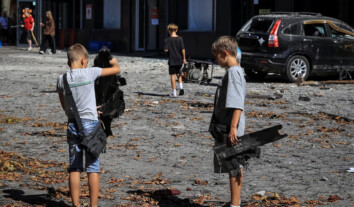
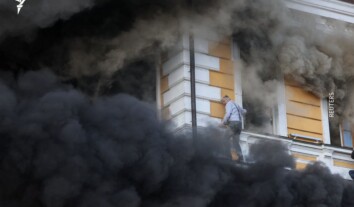
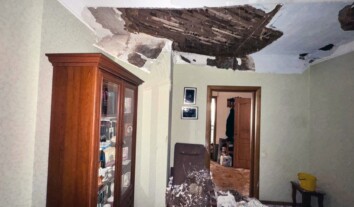
 A civilian building in the Kherson Oblast hit by Russian forces
Destruction in a civilian building in the Kherson Oblast targeted by the Russian military
Those killed in Russian strikes on 30 September 2026 were:
- three people in Kyiv;
- a child in the Kyiv Oblast, whose body was found under the rubble of a building;
- an elderly woman in the Kherson Oblast;
- a man in Dnipro;
- two men in the Sumy Oblast.
Russian strikes on the Sumy Oblast injured at least 16 more civilians.
Nine people were injured in Russian attacks in the Kharkiv Oblast, among them a police officer. Seven more civilians were injured in Kyiv and six people in the Kyiv Oblast.
Five people were injured in each of the Kherson and Donetsk Oblasts, three civilians in the Zaporizhzhia Oblast and one person in the Dnipropetrovsk Oblast.
Meanwhile, Kyiv Mayor Vitali Klitschko reported on 1 October that Kyiv’s Pivdennyi (South) Bridge had been struck by a Russian drone for the third time in one day. All road and rail transport has been suspended across the southern bridge connecting two sides of Kyiv over the Dnipro River.
Moreover, Russian drones also hit a school and a nuclear research facility in Ukraine’s capital. The nuclear facility was undamaged.
Russian shelling killed two civilians in Ukraine on 29 September.
Nine civilians were killed in Kyiv and the Kyiv, Zaporizhzhia, Kharkiv and Sumy Oblasts, while at least 60 others were injured, including in the Donetsk and Kherson Oblasts, as a result of Russian military shelling on 27 September.
Previously, ZMINA reported that during a Russian attack on 25 September, a drone hit the flat of Yulianna Topolnyk, a journalist from the digital department of Suspilne Zaporizhzhia, in the Pecherskyi District of Kyiv. Her husband’s mother was in the flat with her.
She managed to run out of the flat and help her injured mother-in-law escape, according to colleagues. The journalist sustained cuts from glass shards. Medics provided her with assistance on the spot. Following the strike, a fire broke out in the flat, destroying the home and the family’s belongings. Fundraiser card number: 4874 1000 3408 0666.
Meanwhile, UN humanitarians warned that last winter millions of people went without heating, water or essential health services for prolonged periods, while temperatures remained well below freezing. Populations in frontline and other areas that have come under attack recently face particularly severe consequences, marked by repeated displacement, damaged housing and limited resilience, more than four and a half years since Russia’s full-scale invasion.
In an update, the UN health agency, WHO, highlighted the impact of increasing attacks on logistics and warehouse infrastructure, particularly those used to store food around Kyiv and other major distribution hubs.
Increasing disruption to electricity, heating, water supply, and health services are also expected over the winter, it said. In the first six months of 2026 in Ukraine, attacks killed nearly 1400 civilians and injured almost 8000, 37% higher than in the same period last year.
Attacks on healthcare have also seen an alarming increase so far this year, with 325 recorded attacks causing 142 injuries and 16 deaths.
Previously, President Volodymyr Zelenskyy has called on the US social media to implement Lindsey Graham’s sanctions law against Russia, saying Russia is manipulating diplomatic signals and has no intention of ending the war.
If Russia were truly preparing for any real steps toward de-escalation – as it claims, particularly to American negotiators – this wave of ‘Shahed’ terror would not be happening. And we need to take a sober view of the situation. Russia knows how to send the kind of encouraging diplomatic signals that the world simply wants to hear… It knows how to send such signals in order to delay tough steps by the world in response to the war,” he said.
Zelenskyy stated that new sanctions packages are also being prepared, including measures targeting financial networks, schemes for supplying components and equipment used to produce Russian weapons, as well as specific companies and individuals, particularly those involved in the production of Russian ballistic missiles.
“The new sanctions must take effect as early as October to provide a stronger foundation for changing the situation and pushing Russia toward real diplomacy,” he stressed.
The Kremlin’s leader Vladimir Putin has called on 1 October a proposal not to strike Ukrainian ships if Ukraine refrains from striking Russian oil refineries “absurd”. Asked again whether he would be willing to agree to a proposal for a mutual cessation of strikes, the Russian leader’s answer was brief: “No.”
Follow ZMINA on X, Bluesky and LinkedIn for daily human rights coverage from Ukraine – we invite you to share your feedback on what you’d like to see more of in our survey here.