Bilingual street signs and minority symbols: Kachka details agreements with Hungary
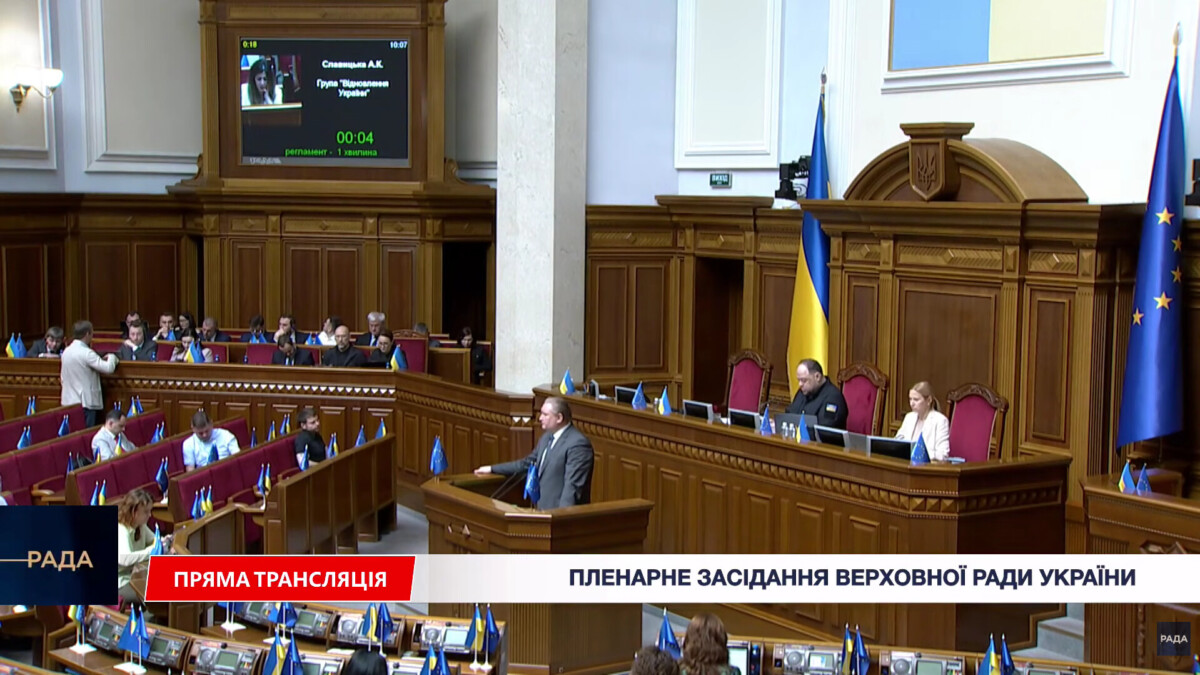
Agreements between Ukraine and Hungary regarding the rights of the Hungarian national minority provide for bilingual street signs, the display of minority symbols and permission to speak their native language during school breaks. Vice Prime Minister for European Integration Taras Kachka detailed the provisions during the government’s question hour in the Verkhovna Rada on June 12, 2026.
In early June, Hungary’s new Prime Minister Péter Magyar announced that Kyiv and Budapest had reached a comprehensive agreement providing for the expansion of linguistic, educational, cultural, and political rights for the Hungarian minority in the Zakarpattia region of Ukraine.
According to Taras Kachka, the core of the agreements with the new Hungarian government is that the implementation of national minority policy will take place within the framework of existing legislation. Specifically, this includes the Law on National Minorities and the Action Plan on the Protection of National Minorities, with additional clarifications.
“Hungary‘s previous government refused to move forward through general plans, demanding a strictly bilateral agreement. We finally convinced the Hungarian government that the Action Plan we presented a year and a half ago will serve to properly protect the rights and interests of national minorities,” the official said.
The vice prime minister added that the Hungarian government has also become convinced that the rights of the Hungarian minority are already being upheld in Ukraine, with ample opportunities for both education and the exercise of linguistic rights.
“The point is that the measures outlined in the Action Plan will be implemented, particularly regarding the option for bilingual street signs in the communities where they live, the ability to use national minority symbols during the commemoration of minority anniversaries, and other provisions,” Kachka commented.
He noted there are also specific agreements related to the educational process, including allowing students to speak their national minority language during school breaks.
During European integration consultations, Ukraine and Hungary agreed on 10 of Budapest’s 11 demands regarding Ukraine’s accession to the EU, the public news broadcaster Suspilne reported. The parties failed to reach an agreement on a single point: the representation of the national minority in the Verkhovna Rada. They agreed to approach the Council of Europe (the Venice Commission) and the OSCE to obtain clarifications on how this provision could be implemented.
ZMINA previously reported in Ukrainian that Ukraine and Hungary had resumed expert consultations on the rights of the Hungarian national minority. Representatives of the Hungarian community in the Zakarpattia region participated in the initial meeting.
To provide background, last year, pro-Russian Hungarian Foreign Minister Péter Szijjártó stated that until the Hungarian community in the Zakarpattia Oblast has its rights – which he claimed were “stripped away since 2015”,- restored, the country would block negotiations on Ukraine’s accession to the EU. Hungary formulated an 11-point list of measures to protect the rights of its national minority in Ukraine. Among them are restoring the status of national schools, allowing students to take secondary school graduation exams in the Hungarian language, and the right to use Hungarian in higher education, culture and public life.