People of “Without Home” are people without pause: how a volunteer initiative is helping those in need
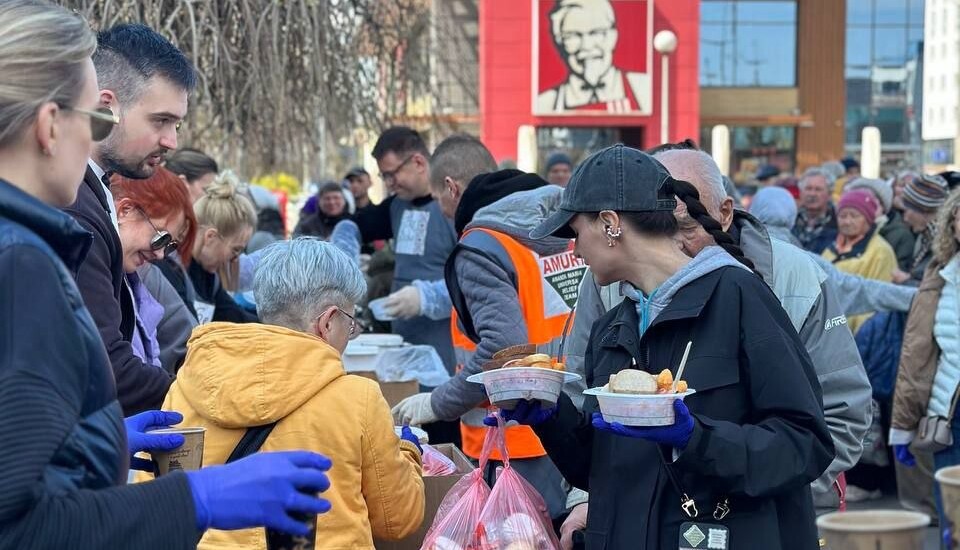
Every Saturday at 2:00 p.m., hundreds of people gather near Kyiv’s central railway station. Some come for a hot meal, some for medicine, and some simply for the opportunity to talk without fear of judgement. There are no document checks or unnecessary questions here. If a person has come, it means they need help.
This is how the volunteer initiative “Without Home”, founded in 2019, has been operating for many years. Today, it is much more than weekly distributions of hot meals, medicines and other essential items. It also provides temporary shelter, responds to the aftermath of shelling by travelling to sites of destruction, supports internally displaced people and military personnel, and regularly visits specialised boarding schools. All of this is sustained by dozens of volunteers and hundreds of people who follow the initiative’s activities on social media and donate to support its work.
In the context of the full-scale war, this work has become even more demanding and unpredictable. The volunteers say that their efforts have long gone beyond the traditional understanding of charity – they involve daily coordination, crisis response and constant engagement with people living on the brink of survival.
ZMINA takes a closer look at how the initiative has evolved over the years, the challenges it faces today, and what providing assistance in wartime means to its members – when support is often measured not by systemic solutions but by the ability to be there for others.
It all started with 150 sandwiches in Podil
Nine years ago, on a cold January evening, a group of volunteers were returning from another visit to an orphanage in Boyarka. It was one of their regular trips to visit children, including those who were seriously ill, which often left them exhausted and in need of a chance to unwind.
After these visits, the women had a ritual of their own – tea, conversation and an attempt to gather their thoughts. During one of these meetings, they started talking about the initiative “Help the Homeless”, which at the time was providing meals to people in Podil and inviting anyone interested to get involved.
The idea of joining came almost spontaneously. The volunteers decided to try helping people experiencing homelessness as well, although at the time they had only an intuitive sense of how this kind of support worked and what awaited them.
At first, they came to Podil every Saturday while continuing their work with children in boarding schools. But it quickly grew into something much bigger.
“We started with 150 sandwiches filled with sausage and cheese and a single pot of soup. Within three years, we had gone from playing a small part in the distributions to creating and running an initiative that was entirely new to us. This is where we first learned how to help people recover their documents, raise funds and recruit new volunteers. This is also where we experienced our first failures and our first encounters with reality – the gap between how things ought to be and how they actually are. It was here that the first doctors joined us, providing medical assistance in a tent and dressing wounds almost out in the open. And it was here that we witnessed an epileptic seizure up close for the first time“, Olena, one of the volunteers, recalls.
Gradually, the initiative began to expand. When it became clear that people at the railway station also needed support, part of the team decided to start working there as well. On 2 November 2019, they held their first aid distribution at the South Railway Station, and this date is considered the “birthday” of the volunteer initiative “Without Home”.
The railway station changed their understanding of homelessness
It was there, at Kyiv’s central railway station, that the women first encountered children experiencing homelessness. They say it was one of the most difficult experiences they had ever faced, not least because there was no established way of responding to such situations.
Around 50 people came to the first aid distribution near the station. A month later, the number had tripled. Within six months, more than 250 people needed support. Some had even moved there from Podil.
Over the years, the team has encountered different forms of homelessness. There are people for whom life on the streets has become a way of life, and the initiative’s founders acknowledge that not everything can be changed. But there are also those who have become homeless because of specific circumstances – a fire, the loss of documents, family conflict or housing fraud.
At the station, volunteers regularly meet people whose documents, money or belongings have been stolen.
“We help people who find themselves in difficult circumstances at the station by buying them tickets home, providing food for the journey and so on. In a way, it is homelessness prevention“, says Olena.
Today, the initiative’s chat includes more than 160 people, although its work is coordinated on a regular basis by six women volunteers – Tetiana Sh., Olena E., Olha A., Maryna P., Anna Ya. and Tetiana K. Some provide financial support, some come to the distributions, and others help organise the queue.
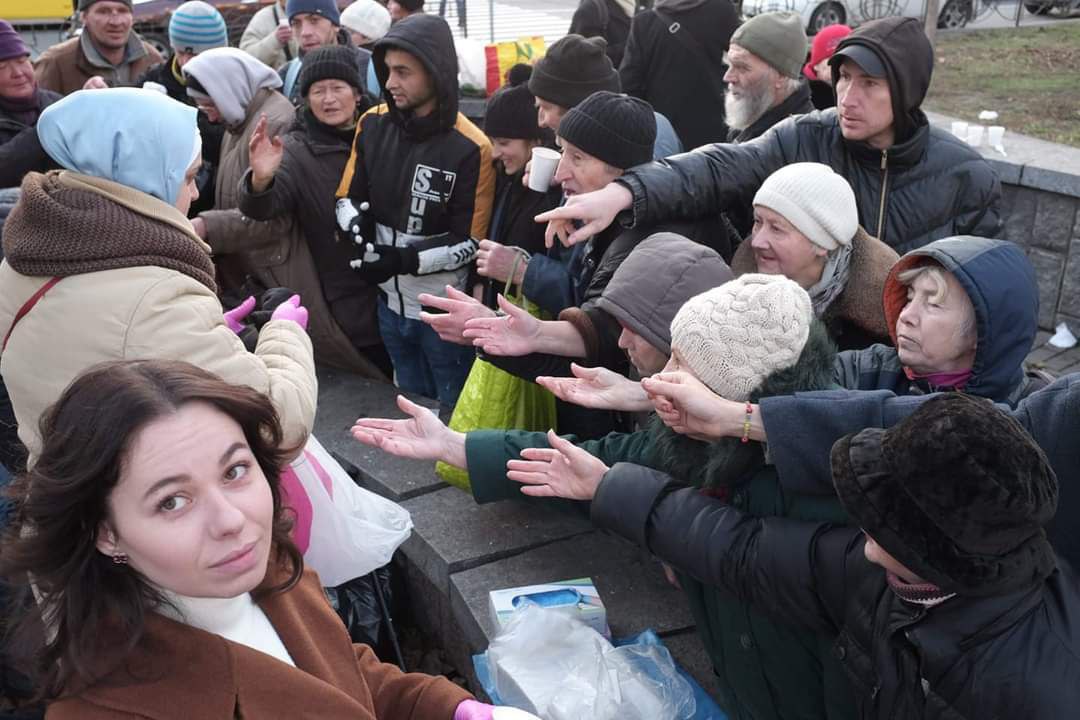
The COVID-19 pandemic presented a separate challenge for the initiative’s volunteers. Because of the large crowds, they began distributing masks, gloves and hand sanitiser, while meals were packed in advance to speed up the process.
After Russia launched its full-scale invasion on 24 February 2022, the team was forced to put its activities on hold. The volunteers shifted their focus to supporting the military by collecting food, responding to specific requests and purchasing equipment.
Yet just three months later, “Without Home” resumed its work. By then, very few of its volunteers remained, as many had left the country. Everything had to be rebuilt from scratch: reconnecting with former volunteers and recruiting new ones, finding equipment, thermoses and tableware, and organising procurement. People in need continued to come to the distributions – around 150 attended the first one after activities resumed, compared with more than 500 every week today. In this way, the initiative gained a new lease of life.
Every Saturday, volunteers now distribute hot meals, medicines, hygiene products and other essential items.
The team says that for nearly four years now, the morning has started in much the same way for most of them: by checking whether everyone made it through the night, whether there had been shelling and whether urgent assistance was needed anywhere.
After that, the volunteers turn to everyday organisational matters – preparing for distributions, arranging purchases and sourcing essential items. The team is constantly assessing what is in short supply, what needs to be ordered and what must be sourced urgently.
Every day, the team also monitors social media: publishing updates, processing requests for medicines, clothing and other essentials, and responding to comments and messages. At the same time, it must constantly respond to war-related emergencies.
Over time, the scale of the work and people’s needs changed
Today, the team distributes medicines at almost every aid distribution – a major undertaking in its own right that requires three to four hours of uninterrupted work.
Alongside medicines, new needs have emerged that were previously rare: personal hygiene products, intimate hygiene products and specialised medication for people living with chronic conditions.
It is not only the nature of the assistance that has changed, but also the people who come to seek it.
In the early days of the initiative, most of those who came were people without stable housing – those living at the railway station or on the streets. Over time, however, the situation changed dramatically. Through word of mouth, older people who simply cannot survive on their pensions began coming to the distributions. Today, they make up the majority.
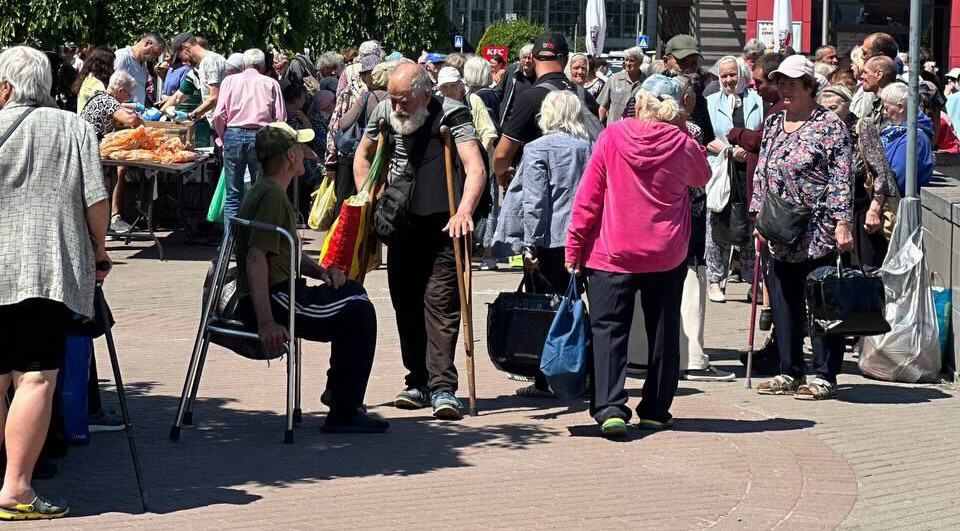
Most of them are over the age of 80, and many are living with disabilities. The volunteers have known many of their regular visitors for years, remember their stories and, in some cases, provide targeted support outside the regular distributions.
The queues have also come to include internally displaced people and families who have lost their homes because of the war or moved to Kyiv with virtually no resources.
There are also families with children, several of whom the team supports on a regular basis through ongoing contact and assistance. Their requests often revolve around things that may seem ordinary but remain out of reach for them: expensive medicines not covered by the state’s “Affordable Medicines” programme, clothing, shoes and food.
The full-scale war has added another dimension to this work
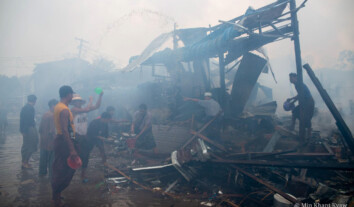
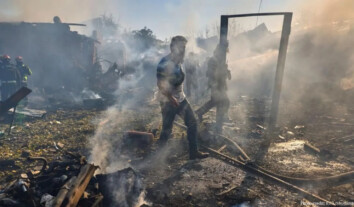
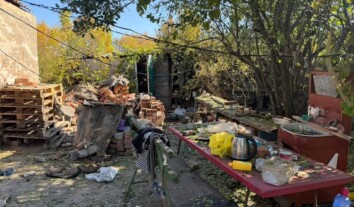
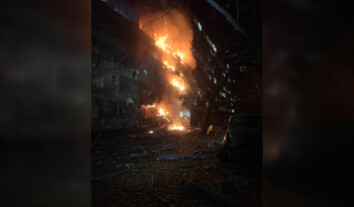
Following Russian strikes on Kyiv, some of the volunteers began working at sites damaged by the attacks. One of the most recent examples was on Biloruska Street, where residential buildings were damaged during the night of 24 May.
There, the volunteers set up a temporary aid point, putting up a tent and providing water, tea, coffee and light refreshments that could be quickly distributed to those affected and to people clearing the rubble. Some of the food was brought by Kyiv residents and donated by businesses, ranging from water and bread to ready-made meals.
Another strand of the work involves helping directly in the damaged buildings by cleaning up, covering broken windows and carrying out minor repair work. Other volunteer groups also take part, forming a shared network of mutual support.
For some volunteers, this has become a separate line of work that can continue for several days at a time.
At the same time, the weekly rhythm of distributions at the railway station continues uninterrupted. If the city is experiencing a period of relative calm, the volunteers gather every Saturday. If not, the work can shift into a daily routine.
The line between choice and having no choice
Olha, one of the initiative’s founders, has been volunteering for more than 10 years. Over that time, the questions she has grappled with have not become any easier – if anything, they have become more pressing.
“Does it make sense to help people living on the streets? Do they really “not want to change their lives”? And where is the line between choice and having no choice? There are no easy answers to these questions.
Many people who are homeless today did not start out on the streets. Their journey often began in orphanages or boarding schools. After completing their education, they find themselves alone at a young age, without support from the state“, she says.
In the best-case scenario, they end up homeless as a result of the chaos in their lives. In the worst-case scenario, they end up in prison, struggling with addiction or living in prolonged isolation.
“Some people develop harmful addictions from a young age. It is difficult to blame them for that because they have never known a different kind of life“, the volunteer explains.
She knows people whose childhoods effectively left them with no alternatives – people who grew up without families, without experiencing care and without any sense that life could be different.
The team also recalls its so-called “success stories”. One of the first came after it shared an appeal for help for a man who had been living under a bridge. Thanks to the post, his relatives recognised him. It later emerged that he had recently been discharged from hospital, had experienced a period of confusion and had been unable to find his way home. In the end, the father was reunited with his daughter.
In this context, volunteer communities also play an important role, serving as one of the few stable points of contact. There are several such initiatives in the capital, including church communities, volunteers from the Community of Sant’Egidio, who have been organising meals for people living on the streets since the days of the Maidan, and “Without Home”. Their work often overlaps.
“It is not just contact – these relationships last for years”
The way volunteers engage with people in need is both simple and complex. On the one hand, it involves distributing food or essential items. On the other hand, it means talking, showing up regularly and trying not to lose people to complete social isolation.
“We have known many of them for years. We have witnessed their stories, their setbacks and their attempts to change something in their lives. It is not just contact – these relationships last for years”, Olha explains.
Sometimes these connections are almost friendships. At other times, they are something more complicated, involving conflict, tension and different expectations. But at their core, one thing remains the same – consistency.
For many members of the initiative, volunteering began elsewhere – by helping children in orphanages. Where children are involved, it is easier to bring people together, easier to evoke an emotional response and easier to feel the immediate value of helping.
But working with people who have spent years living on the streets is different. According to Olha, there is no “comfortable distance”. There are the smells, people’s appearance, difficult life stories, addiction, exhaustion and distrust. That is precisely why, she admits, it has been much harder to involve people in this kind of work.
Over time, however, the situation changed.
Today, a large community of regular volunteers has formed around the initiative. Some have been coming for years. They take responsibility for different areas of work and build their own relationships with the people they see every week. Some regularly support “their” elderly people. Some call those who stop coming to the distributions. Others simply remain there for them.
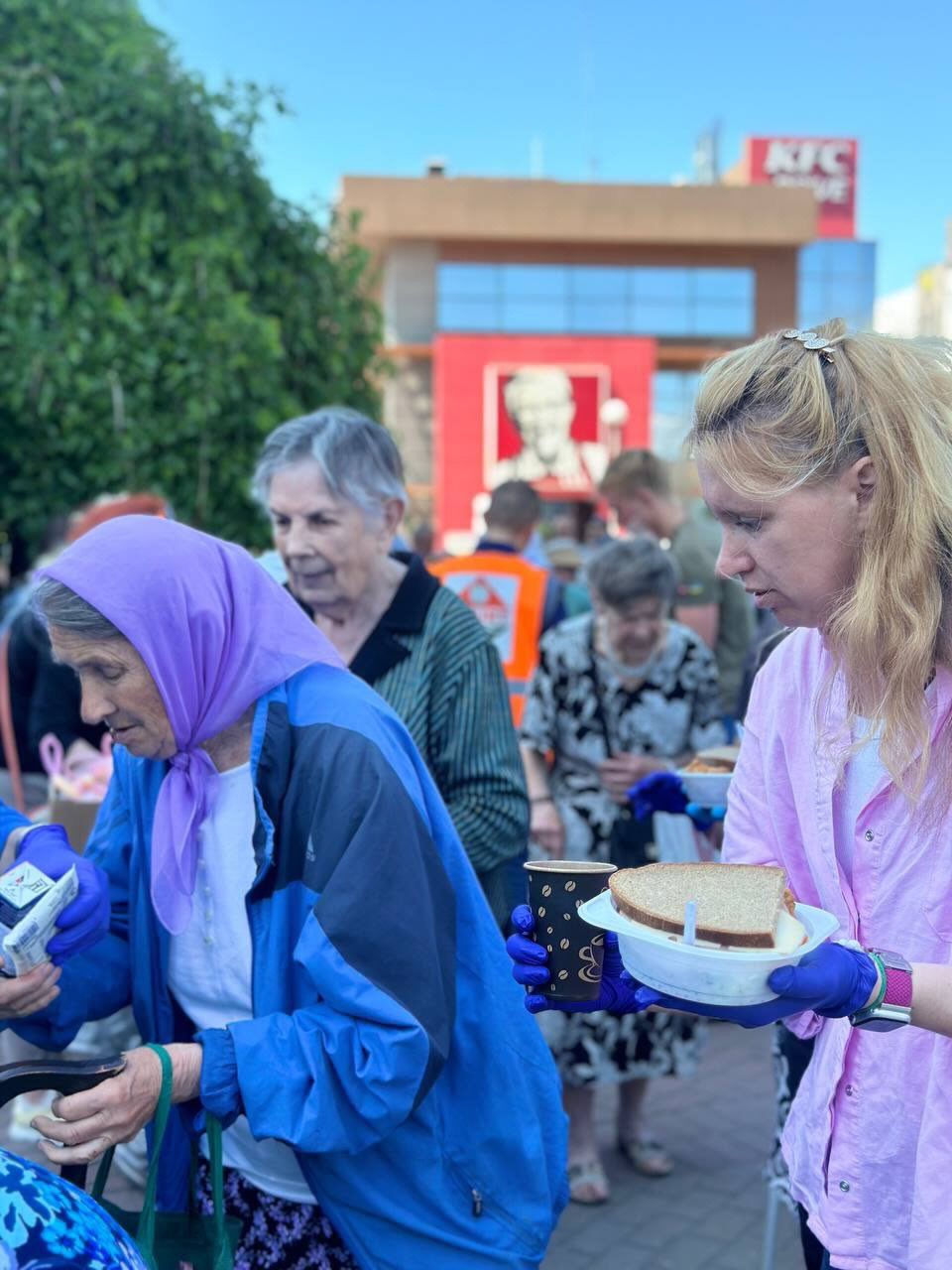
And gradually, the volunteer says, it is not only the structure of the assistance that changes, but also the way people view those receiving it. The people who often go unnoticed turn out not to be an “abstract group”, but individuals with stories of their own – complex, contradictory, sometimes painful, but always deeply human.
“Once you start listening to them, they become incredibly interesting people – with lives, experiences and stories of their own, and everything they have been through“, she concludes.
“The biggest challenge is the war”
Food, medicines and clothing remain the most basic needs for most of the people who turn to “Without Home”. But alongside these needs are more complex issues, first and foremost those related to documents.
Some people ask for help restoring their passports or other documents. In such cases, the team takes a selective approach and assistance is not provided automatically. As the volunteers explain, these are situations in which a person has ended up on the streets because of difficult circumstances but is trying to rebuild their life. In such cases, the initiative may cover the cost of restoring documents and support the person throughout the process.
At the same time, there is a clear understanding of the limits of this support: assistance is not provided unconditionally to everyone, and each case is assessed individually.
Another important area of work involves individual requests. Many of these come from older people, who make up a significant proportion of those attending the distributions. They may need expensive medicines, hygiene products, shoes, clothing or food that is not covered by social support programmes.
“It is impossible to speak to all 500 people, so we take on five to seven individual requests and try to meet them over the course of the week“, the team explains.
These requests are met through a combination of donations from social media followers and support from friends, acquaintances and the volunteers themselves.
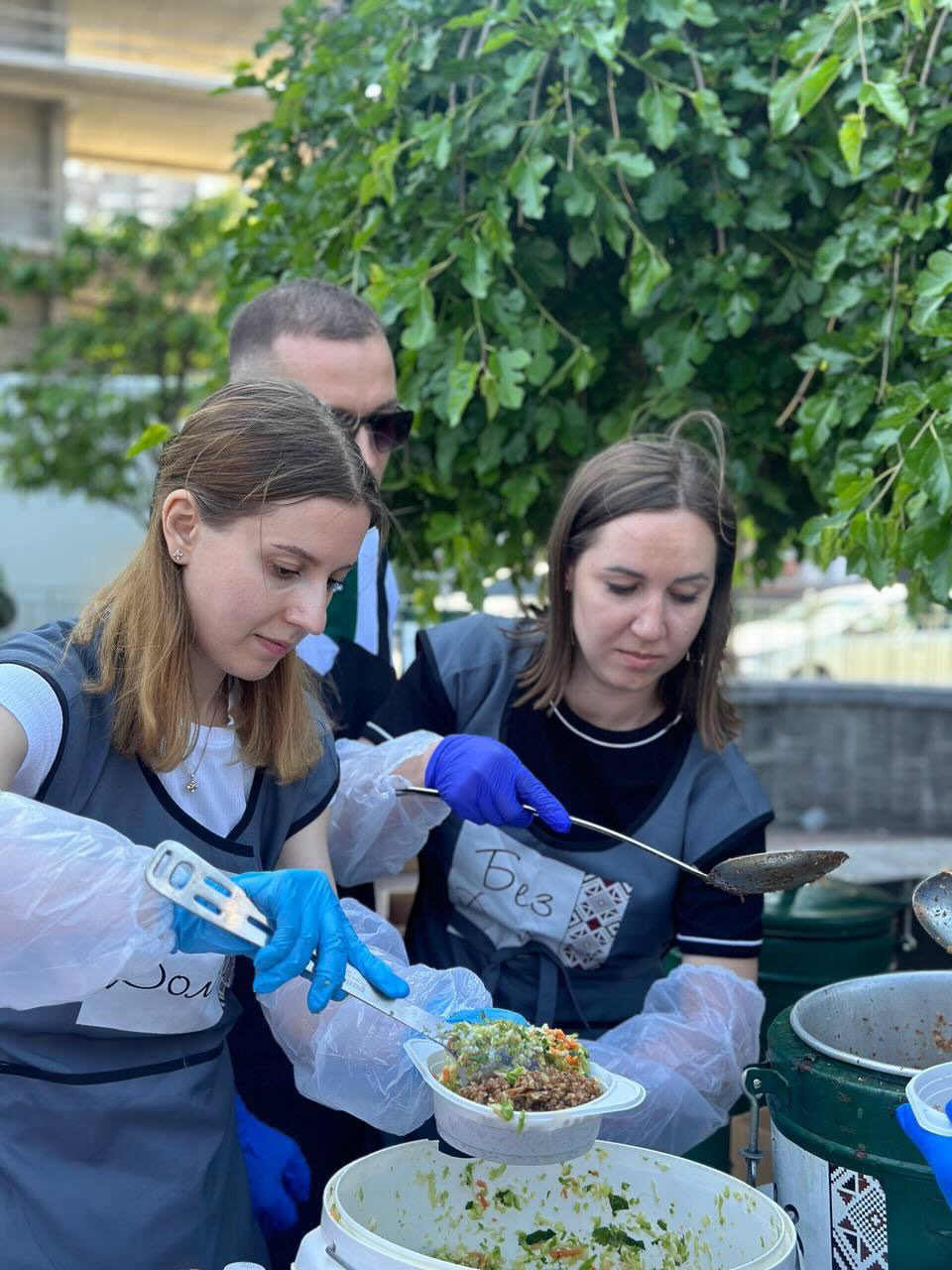 Despite the scale of its work, “Without Home” does not speak of unmanageable challenges within the initiative itself. On the contrary, its members emphasise that their greatest strength lies in the community around them: an active volunteers’ chat and the regular support of people who respond to fundraising appeals.
“There are no major challenges that we cannot cope with. The biggest challenge is the war“, the volunteers say.
The war has changed not only the context of their work, but also its rhythm and risks. The women recall occasions when, during missile attacks on Kyiv, they had already planned to prepare a large batch of food, including meat dishes in partner kitchens. Despite the air raid alert, part of the team still went ahead with the cooking. The reason was simple: the distribution was scheduled for a specific time, and people were waiting. Decisions like these have become part of everyday volunteer life.
A hostel, the front line and orphanages
Since 2023, “Without Home” has taken on another area of work. Together with the initiative “Help the Homeless”, the team has been running a charitable temporary shelter and hostel.
The facility can accommodate 25 to 30 people and was conceived specifically as a temporary shelter. The main idea is to give people in difficult circumstances a pause – a chance to rest, restore their documents, address their health needs and try to find work and stability.
In practice, the model works only in part. Some people do indeed move through this “transitional stage” and go on with their lives. But others remain there for a long time. Among the residents are older people and people with severe disabilities, for whom the hostel has effectively become a permanent home.
At the same time, following the start of the full-scale invasion, the initiative also began systematically supporting the military. This is not its main area of work, but today it has become a priority for most volunteer communities.
The assistance covers a wide range of needs, including clothing, medicines and specialised requests from military units and medical personnel at stabilisation points. Some of the aid is delivered personally, hand to hand. The volunteers regularly travel to areas they can safely reach in order to deliver supplies directly to soldiers and medical workers.
The initiative’s Instagram and Facebook pages also periodically feature fundraising appeals to support the needs of specific military units or individual soldiers known to the volunteers.
At the same time, “Without Home” has maintained another area of work that predates its support for people living on the streets. It involves visits to orphanages and boarding schools that began back in 2015 as part of the volunteer movement “Maryam”.
At first, these were occasional visits to institutions in Korostyshiv, Kmytiv and Novohrad-Volynskyi (now Zviahel). Over time, they developed into regular support for an orphanage in Boyarka, which the volunteers visited every Sunday.
The team spent several hours with the children – going for walks, talking, helping caregivers and working with children with disabilities.
Like many other activities, these visits came to a halt after the start of the full-scale war. They resumed last autumn, however, and since then the volunteers have made several trips to the Korostyshiv boarding school and one to Kmytiv.
As the team points out, these areas of work do not exist in isolation from one another. They overlap through the people who remain in the volunteers’ orbit for years and through the very logic of assistance, which gradually expands from the streets to hospitals, from the railway station to the front line and children’s institutions.
“Can we measure the impact of our initiative? Measuring things in the social sphere is complicated. I say this as someone trained as a sociologist. Can you measure a person’s dignity or the value of their life? Can the amount of resources spent – whether material or immaterial – really capture the impact of our actions?“, Olena reflects.
But she defines her mission in simple terms: to change what she can, here and now.
“Major breakthroughs and meaningful change rarely happen overnight. They are built through small steps taken every day, every week, one problem at a time, step by step. Just as countless drops make up an ocean, we are shaping the future of our country – one we want to live in“, the volunteer concludes.
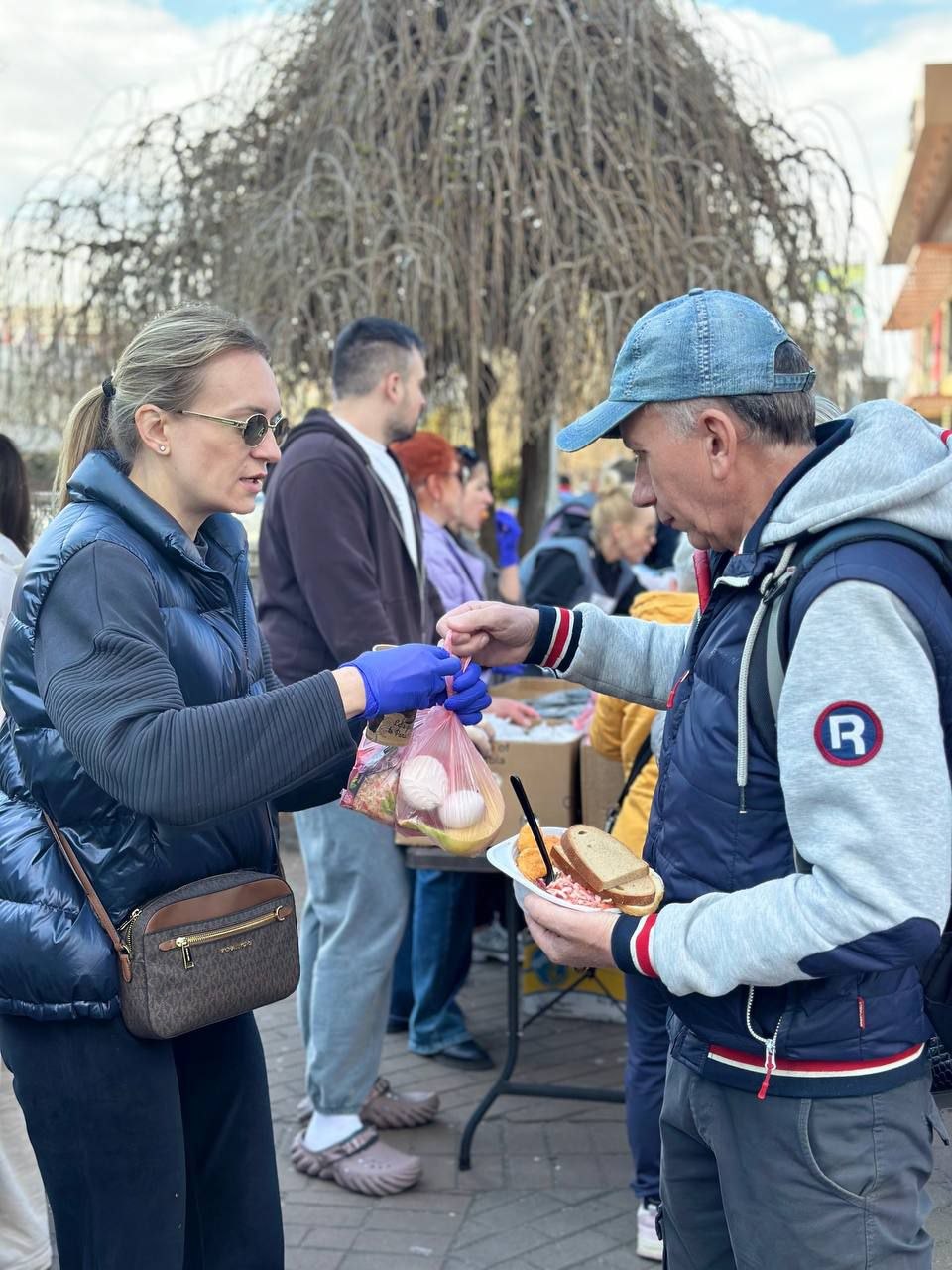 Despite the scale of its work and activities, “Without Home” is not an organisation in the traditional sense. It is a volunteer initiative with no permanent staff or formal hierarchy. There is no obligation to work from an office every day – instead, there is shared responsibility and a weekly rhythm.
Everything is built around a horizontal structure. Some coordinate procurement, others manage social media, while others work directly with people on the ground. Two members of the team take turns running the initiative’s Instagram page, switching every week. Preparations for and discussions about the distributions take place in the volunteers’ chat, where they also share photos, videos and personal reflections after each distribution.
Olena jokes that she used to describe the initiative’s mission as “doing good on a particularly large scale”. These days, however, she would put it much more simply: the team tries to help people in need in whatever way it can, here and now.
In the end, “Without Home” remains a network of people trying to fill the gaps left by the system across a country living through war.
Photos provided to ZMINA by the volunteer initiative “Without Home”