“We don’t know whether she is alive”: Story of Anastasiia Hlukhovska, journalist abducted in Melitopol
On the morning of August 20, 2023, in the temporarily occupied city of Melitopol, Russian security forces detained journalist Anastasiia Hlukhovska. More than two and a half years have passed. During that time, her family has received no official confirmation of her whereabouts, has been unable to contact her, and still does not know her legal status.
Information about her possible whereabouts has come only from released detainees. The last recorded place of detention is a pre-trial detention centre in the town of Kizel, in Russia’s Perm region. The facility is known to have held at least two Ukrainian detainees who later died there – the mayor of Dniprorudne, Yevhen Matvieiev, and journalist Viktoriia Roshchyna.
Her colleague Svitlana Zalizetska and a close friend, whose name is being withheld for security reasons, shared details with ZMINA about her work before the full-scale invasion, her abduction, and efforts to locate her.
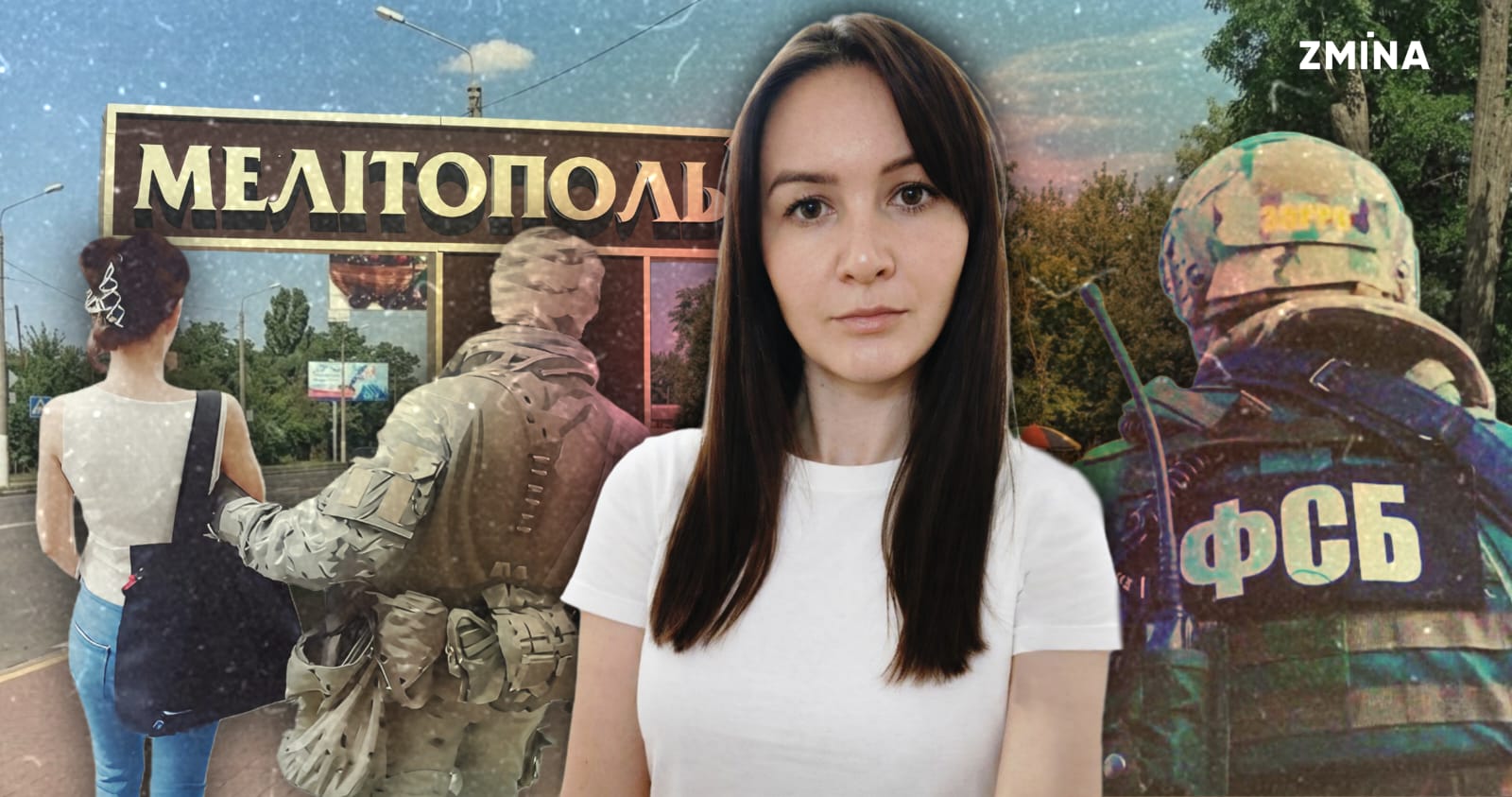
The journalist’s relatives learned of her detention from acquaintances. According to available information, at around 5 a.m. on August 20, 2023, a group of men in unmarked military uniforms forced their way into her apartment. They carried out a search and seized computers, mobile phones, USB drives, and other equipment. Part of the incident was captured on CCTV. She was then taken to an unknown location. That same day, residents said between 30 and 50 people were detained across the city, including administrators of Melitopol Telegram channels. Her family believes this was part of a coordinated wave of arrests.
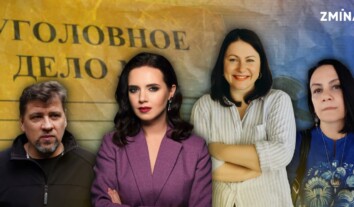
In autumn 2023, a Russian state propaganda television channel aired a report on detainees in Melitopol. It referred to alleged “public calls for terrorist acts”, “high treason”, and “espionage”. According to her relatives, Anastasiia Hlukhovska was among those featured. Under Russian law, such charges carry prison sentences of 12 to 20 years. However, her family has received no official notification of any charges or verdict, and, according to available information, no trial has taken place.
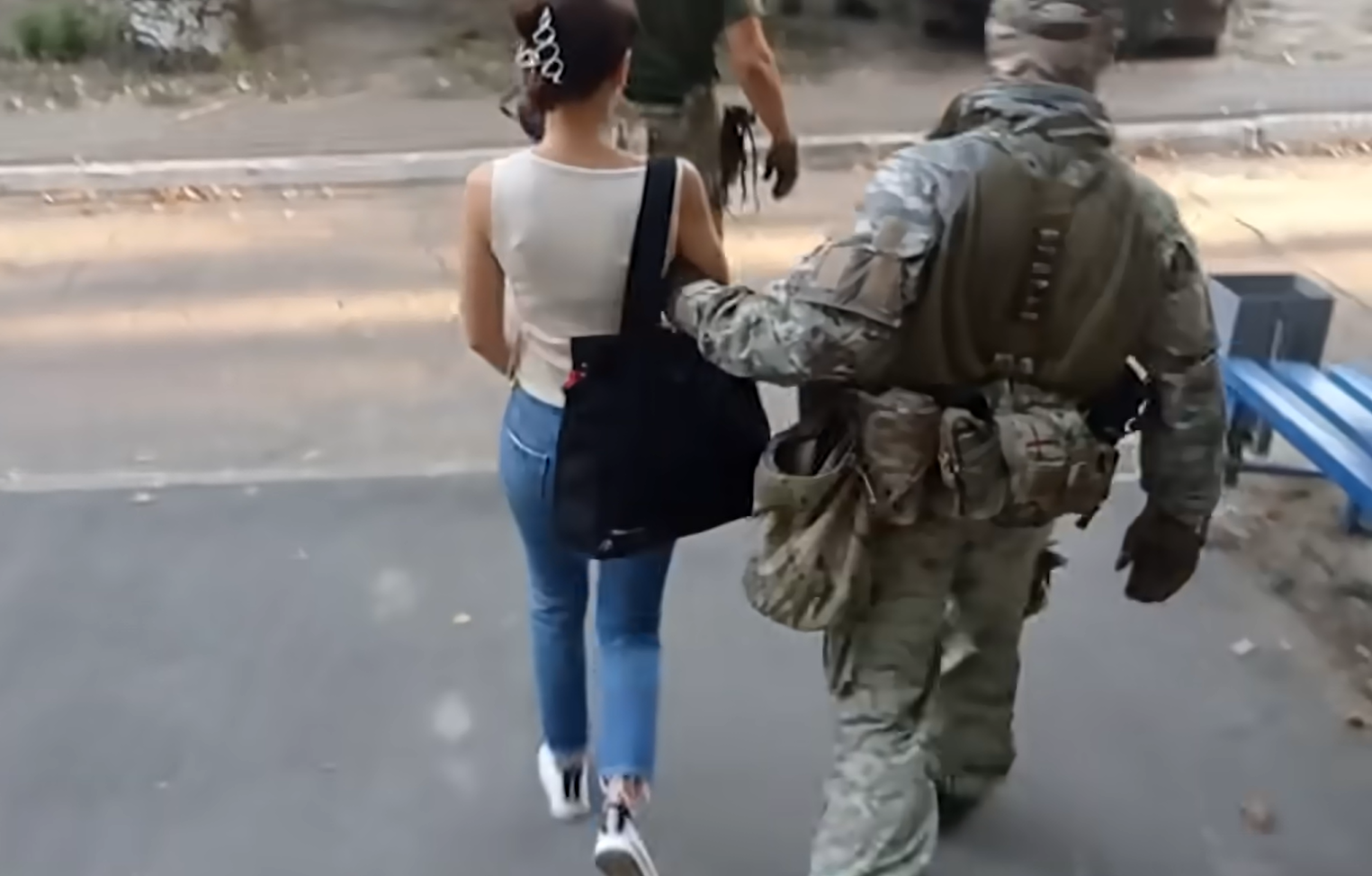 The detention of Anastasiia Hlukhovska. Screenshot from a video released by Russian occupation security services
“She is still being held incommunicadoі . There have been no charges, no trial, and no official confirmation of her whereabouts“, said a close friend of Anastasiia, whose name is being withheld for safety reasons.
You may also want to read: You sit like a potted plant: you may be watered, or you may not, and then you will wither – journalist Dmytro Khyliuk. A story of captivity and freedom
On April 11, 2024, Anastasiia was publicly named for the first time as a detainee held by Russia. At the launch of the Council of Europe campaign “Journalists Matter”і , Svitlana Zalizetska, editor-in-chief of the media outlet RIA-Pivden, spoke about colleagues from Melitopol who had been detained. Until then, the Ukrainian side had not made the case public for safety reasons and at the family’s request.
Information about her possible places of detention emerged only in fragments, from people released in prisoner exchanges. According to these accounts, she was initially held at a facility in occupied Melitopol that had been turned into a torture chamber, where she was subjected to torture, including electric shocks. She was later transferred to Taganrog. Her most recently reported location is a pre-trial detention centre in the Russian city of Kizel, in the Perm region.
“Highly self-disciplined”: On Anastasiia’s work as a journalist
Anastasiia Hlukhovska is from the Zaporizhzhia Oblast. After finishing school, she enrolled at a university in Berdiansk to study journalism. According to a ZMINA source, her choice of profession was deliberate. She always stood out for her love of reading, a strong vocabulary, and an ability to express her thoughts clearly. During her studies, she approached her work responsibly, quickly developed practical writing skills, and began working with local media while still at university. After graduating, she continued to work in the field.
“She never worked on high-profile exposés or political investigations. Her reporting focused on the city and its people. But she took that work seriously”, the source said.
Anastasiia Hlukhovska joined RIA-Pivden after the closure of Melitopol’s local television station. For the newsroom, she proved a real asset – a hard worker with a strong drive to develop. According to Svitlana Zalizetska, editor-in-chief, she quickly showed herself to be highly diligent and responsible:
“She works hard and is very persistent – if you give her a task, she will always keep digging and investigating“.
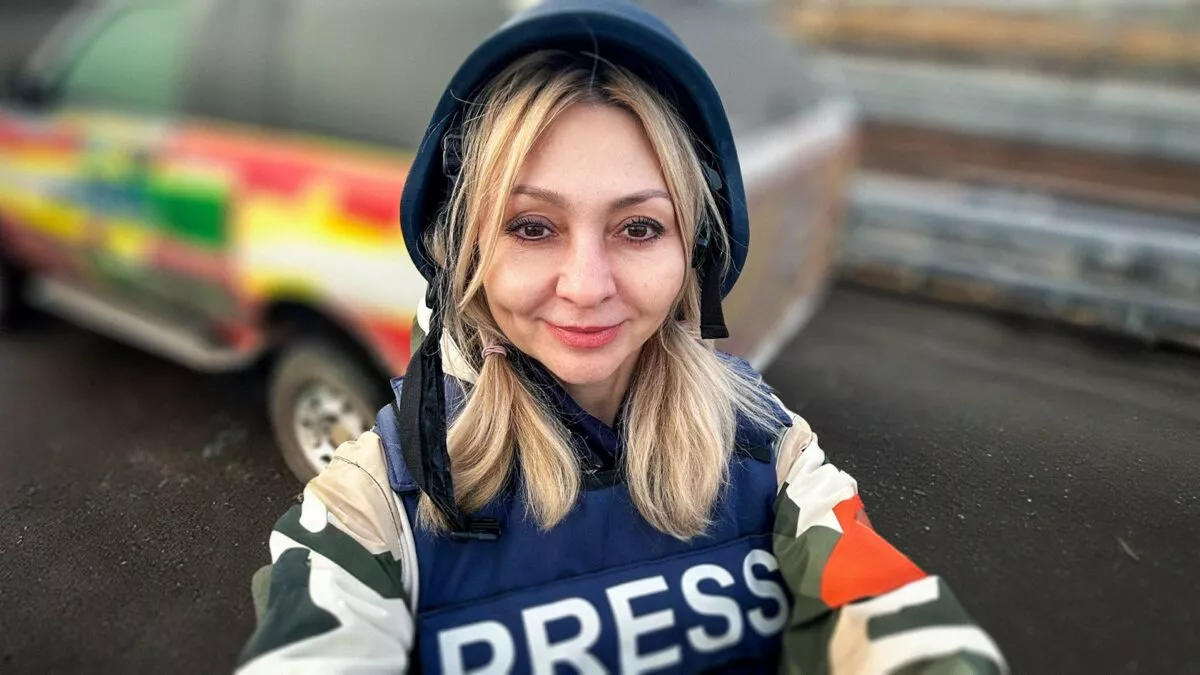 Svitlana Zalizetska. Photo credit: personal archive
Anastasiia’s first assignment at the newsroom was to cover the opening of a Christmas tree in New Year’s Square. It was a cultural event, but it proved to be a test for a newcomer. Unlike television, where news is prepared in advance, online media required her to work at speed – first publishing a video on the Telegram channel, adding a brief text, and then preparing a more detailed article for the website.
“She grasped very quickly what was expected of her and how to present the article – it was a real relief”, Zalizetska recounts.
Anastasiia mastered the full production cycle – from filming and editing to publication. The newsroom used small video and photo cameras, and each journalist was trained to be versatile. Her main focus was on social and cultural issues. She wrote about people and the “hromada,” a local government area that includes one or more nearby settlements, covering their concerns and local initiatives, acting as a link between residents and officials.
“If there was a social issue, she would speak to residents and then to officials to help speed up a solution”, an editor-in-chief of the media outlet RIA-Pivden explains.
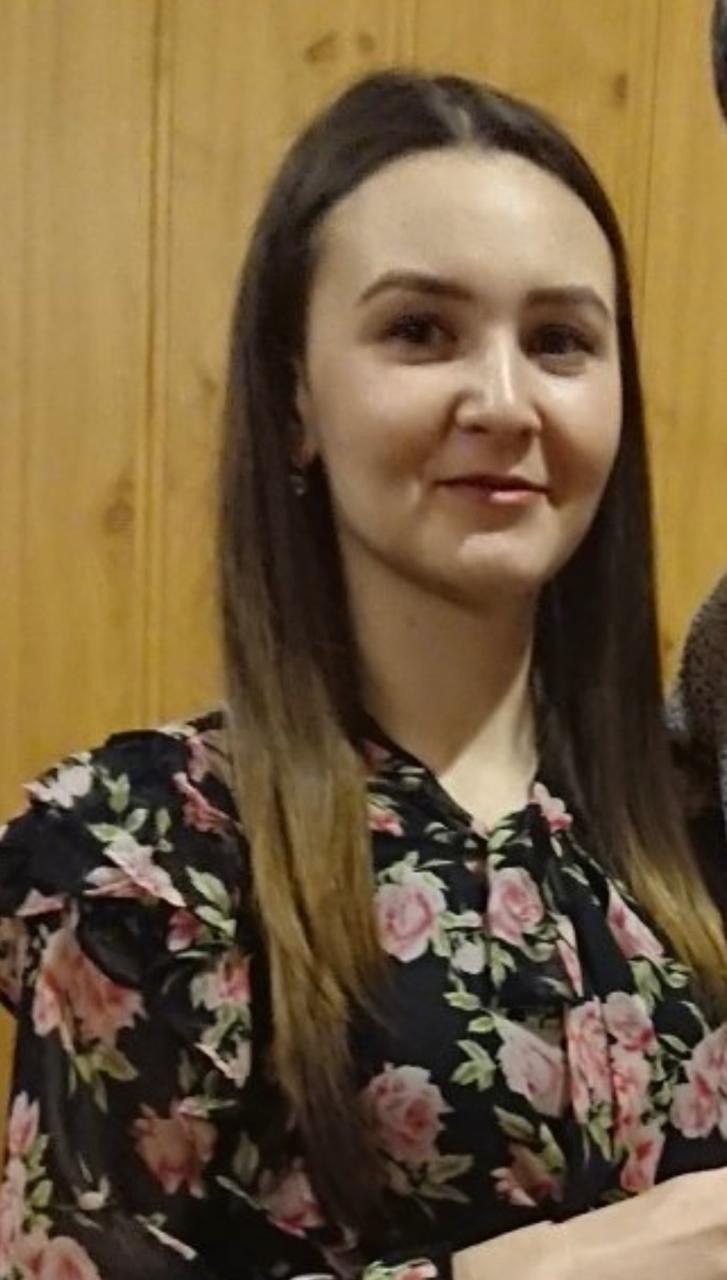 Anastasiia Hlukhovska. Photo credit: from open sources
At the same time, she did not cover political or criminal topics, focusing instead on social and cultural issues.
Anastasiia paid particular attention to language. She wrote in Ukrainian with accuracy and style – something relatively rare in regional media:
“I was proud of how well she spoke Ukrainian. That goes back to her time at the RTB television and radio studio, where news was already broadcast in Ukrainian“, she said.
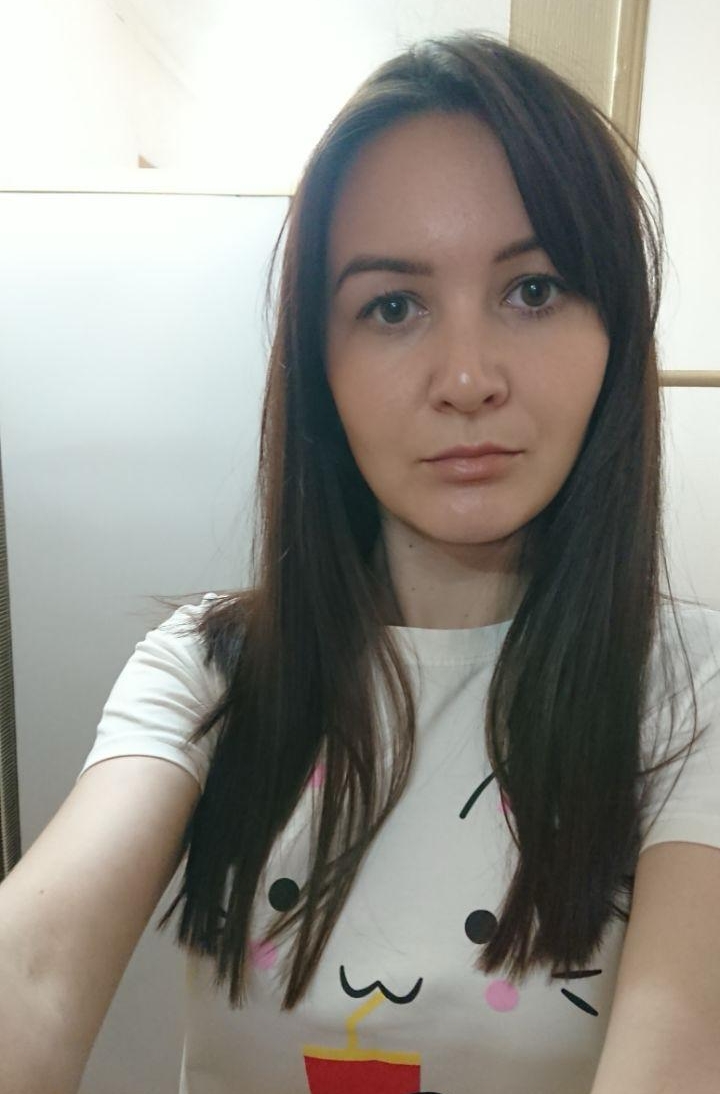 Anastasiia Hlukhovska. Photo credit: from open sources
Her writing was always well-structured and ethical, capturing the atmosphere of events and the emotions of those involved. A key trait was her sense of responsibility and ability to plan her work. She never missed deadlines and always delivered on time.
“Her time management was so strong that she was never the kind of person writing things at the last minute. If a piece had to be filed by a certain time, it was always ready“, Svitlana said.
“She is extremely self-disciplined. Everything is carefully organised in her mind – both at work and in her personal life”, a ZMINA source added.
“You cannot wait”: On the abduction
By the beginning of Russia’s full-scale invasion of Ukraine, Anastasiia was no longer working at the RIA-Pivden newsroom. On February 24, 2022, she was in Melitopol. The first weeks of the full-scale war were marked by brief messages – checking whether everyone was safe, whether there was electricity, and whether shops were open. Street fighting took place in the city, followed by the establishment of an occupation administration. Many considered leaving the occupied territory. However, in 2022–2023, leaving Melitopol was difficult and dangerous – involving filtration checks, limited routes, and the risk of detention along the way. For many, the decision to stay was shaped by family ties, housing, and the lack of security guarantees.
You may also want to read: From “soft power” to torture chambers: patterns of Russia’s seizure of new states based on Ukraine’s experience
Anastasiia remained in the city with her relatives. In March 2022, Russian occupying forces learned that the editor-in-chief of RIA-Pivden had left the city and began targeting journalists. Searches were conducted at the newsroom and at the Zalizetska family’s home, with equipment and cameras seized.
After Anastasiia’s detention, her family acted immediately. Those who remained in the occupied territory tried to obtain information from the local commandant’s offices. In Ukraine, a report was filed with the police, which opened a criminal investigation and took investigative steps, including the collection of DNA samples. Appeals were also submitted to international organisations.
“Incommunicado status”: Two and a half years without news
Over the past 2.5 years, her family has had no contact with Anastasiia. The absence of any formal status means she is denied the right to correspondence, phone calls, or parcels. Information about her comes only from second-hand accounts. The greatest challenge in this case is the uncertainty. Russian propaganda outlets have alleged “espionage” and “high treason”, but there are no official procedural documents in Hlukhovska’s case. It remains unclear whether a criminal case has been opened, whether a trial has taken place, or whether a verdict has been issued. The most recent unofficial information about Anastasiia came in autumn 2025 from a prisoner of war, Yevhen Sholudko, who was released in a prisoner exchange. He said he had heard her name among those in detention.
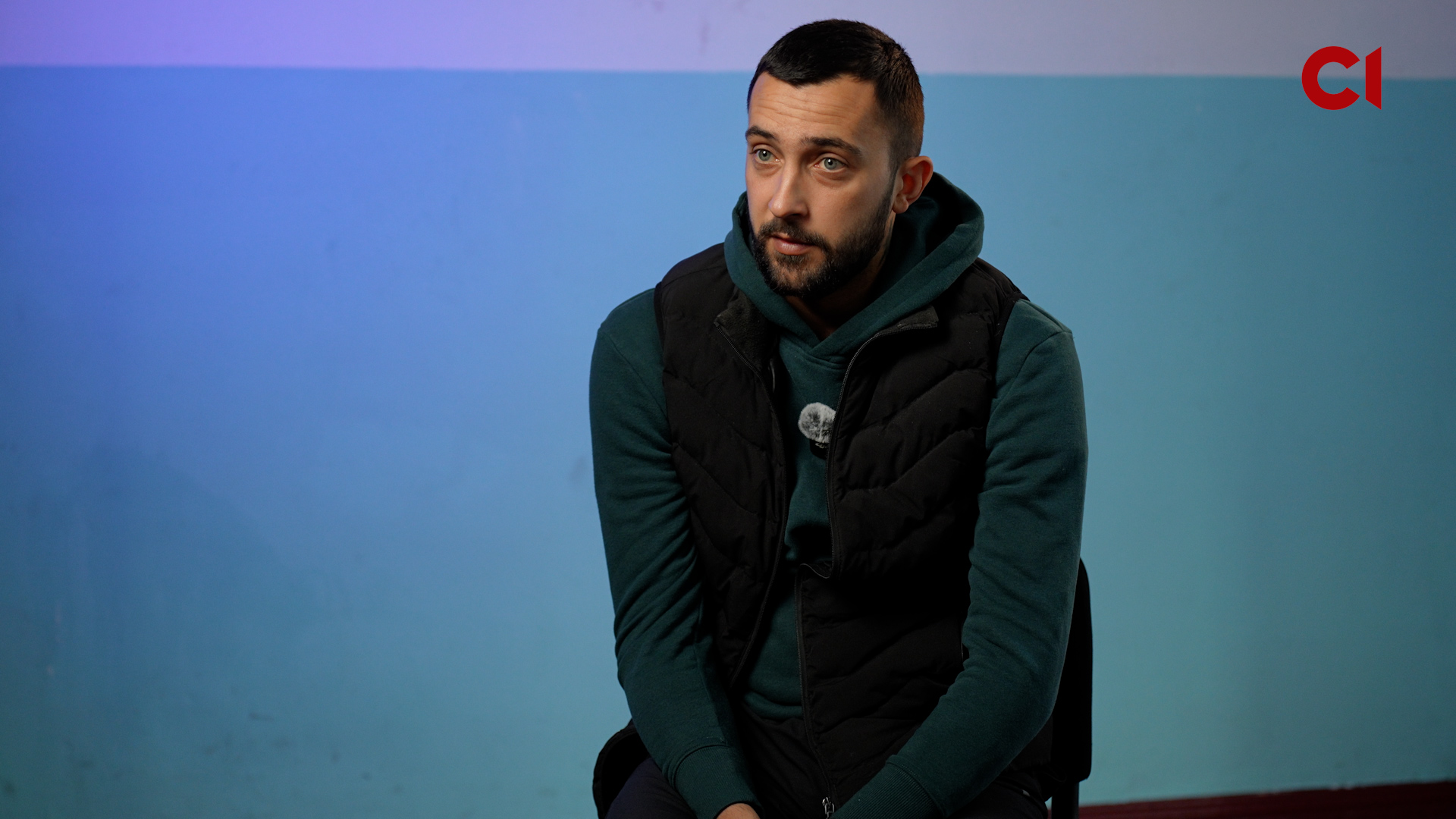 Yevhen Sholudko
“We don’t even know if she is alive, and that is the hardest thing – living without confirmation“, said a close friend of Anastasiia.
More than two and a half years have passed since Anastasiia Hlukhovska was detained. There is no official confirmation of her whereabouts. Her legal status remains unknown. She has had no contact with her family.
Anastasiia’s case is one of many involving civilians held without any publicly confirmed status. For those close to her, the only constant is waiting – for answers and for the possibility of a prisoner exchange.
Language support: ZMINA volunteer Lisa DeHaven
Liked this article? Follow ZMINA on X, BlueSky, and LinkedIn, and help shape our editorial focus by filling out our feedback form here.