LGBTIQ+ service members still face hostility within units and cannot register civil partnerships – study
LGBTIQ+ service members in Ukraine continue to face homophobia and discrimination in the military, while the inability to register civil partnerships remains one of their most pressing challenges, according to the first comprehensive study on the situation of LGBTIQ+ people serving in Ukraine’s military, presented on July 16 by the NGO “Ukrainian LGBT Soldiers for Equal Rights”, ZMINA reported.
 Cover of the educational series on the Diia.Osvita platform
As of January 2025, the organisation’s community included more than 600 service members, although tens of thousands of LGBTIQ+ personnel remain outside the group. As of July 2023, LGBTIQ+ people were known to be serving in at least 59 military units. Based on international research, the study’s authors estimate that LGBTIQ+ people make up between 5% and 10% of the Ukrainian Armed Forces‘ approximately 880,000 personnel, amounting to at least 44,000 service members.
The study, which examined the experiences of current and former LGBTIQ+ service members in Ukraine, aimed to raise the visibility of this group, which performs the same military and combat duties as their fellow service members. The researchers also identified the needs, vulnerabilities and barriers LGBTIQ+ personnel face within Ukraine’s Defence Forces.
Ukrainians are increasingly accepting of LGBTIQ+ people serving in the military and increasingly believe their service should be legally protected from discrimination. According to the study, 63% of respondents believe the partners of fallen LGBTIQ+ service members should receive the same legal status as family members. The same share also believes the rules and regulations governing the Ukrainian Armed Forces should explicitly protect the rights of LGBTIQ+ personnel. Acceptance is highest among Kyiv residents and younger people and lowest in Ukraine’s western regions.
Although most Ukrainians support the right of LGBTIQ+ people to serve in the military, they do not yet strongly associate a more inclusive military with greater effectiveness. According to the researchers, only 47% of respondents share that view.
Gay and bisexual people generally face no formal barriers to military service. The situation is different for transgender people, however, because Ukrainian legislation classifies gender dysphoria as a psychiatric diagnosis, which can be used as grounds for restricting eligibility for military service.
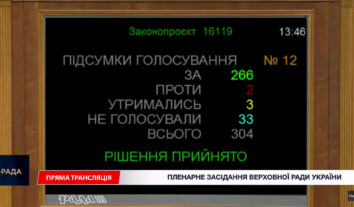
“The pending bills on registered civil partnerships and hate crimes are also directly relevant to the rights of LGBTIQ+ service members. Both are still awaiting consideration by Ukraine’s parliament,” the researchers said.
Despite generally positive media coverage of LGBTIQ+ service members and the challenges they face, openly homophobic narratives continue to appear on blogs and social media.
Within the military, homophobia and transphobia persist in various forms, ranging from casual remarks and inappropriate comments to physical violence or attempts to have LGBTIQ+ personnel removed from their units. The atmosphere depends heavily on unit commanders, who can either foster an inclusive and respectful environment or become the source of discrimination themselves.
“The Armed Forces of Ukraine currently lack effective formal mechanisms for addressing homophobia and transphobia. Those seeking to resolve such conflicts through official channels must rely on general procedures because sexual orientation and gender identity are not recognised as protected characteristics,” the study’s authors explained.
In addition to hostile attitudes within their units, LGBTIQ+ service members cannot register civil partnerships, a problem that also affects LGBTIQ+ civilians. For military personnel, however, the issue is particularly acute because they face significantly greater risks to life and health.
The researchers issued a series of recommendations for government institutions, the media and civil society organisations. They recommend that the Ministry of Defence introduce anonymous mechanisms for reporting bullying and discrimination, including on the grounds of sexual orientation and gender identity (SOGI). They also call for regular nondiscrimination training for cadets, commanders and military personnel.
The Verkhovna Rada is urged to adopt legislation establishing liability for hate crimes, including those committed within the military. Lawmakers are also encouraged to expedite legislation on registered civil partnerships, which would regulate the rights of LGBTIQ+ service members’ partners. When developing the legal framework for the institution of a military ombudsman, sexual orientation and gender identity should be included as protected characteristics.
“The number of LGBTIQ+ people serving in the military is increasing as mobilisation continues. As in civilian life, LGBTIQ+ people in the armed forces also experience discrimination. Through this research and the educational course, we hope to make the military more inclusive. Creating a safe environment for service will strengthen both mobilisation capacity and Ukraine’s defence capabilities,” Oleksandr Demenko, head of the NGO “Ukrainian LGBT Soldiers for Equal Rights”, told ZMINA.
The study also became the basis for a new educational series, “LGBTIQ+ Service Members in Ukraine’s Defence Forces”, available on the national Diia.Osvita platform. The course challenges stereotypes about sexual orientation, explains available legal protections and offers guidance on building inclusive military units.
ZMINA previously reported that more than half of Ukrainians support introducing registered civil partnerships for LGBTIQ+ people, while nearly three-quarters believe they should be protected from discrimination, according to a nationwide survey conducted by the Kyiv International Institute of Sociology (KIIS).
You may also want to read: New draft civil code changes inheritance rules for same-sex couples – lawyer
Separately, the Diia.Osvita platform has launched a free educational series, “Recovery: Sexual Life After Trauma or Injury“, focusing on restoring sexual health and intimate relationships after physical and psychological trauma, particularly among service members and veterans.
Need a human-rights perspective on Ukraine’s latest legal developments? Connect with ZMINA on X, BlueSky, and LinkedIn for regular policy updates – and let us know what you want to read next in our survey here.