New draft civil code changes inheritance rules for same-sex couples – lawyer
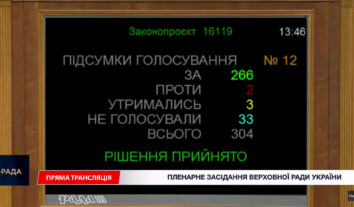
The new draft Civil Code (Bill No. 15150), which parliament passed in its first reading, changes the order of inheritance. Specifically, the changes would make it less likely for same-sex partners to inherit property, attorney Oleksandr Ilyin, who specialises in family and inheritance law, explained.
 Photo: Illustrative
If a person dies without leaving a will, the statutory order of succession applies. The law establishes successive classes of heirs. If no one in the first class accepts the inheritance, the right passes to the next class. Under the current Civil Code, the order of succession is as follows:
- first line: children, the surviving spouse, and the deceased’s parents;
- second line: siblings and grandparents;
- third line: uncles and aunts;
- fourth line: individuals who lived with the deceased as one family for at least five years before the inheritance was opened;
- fifth line: other distant relatives up to and including the sixth degree of kinship.
According to Ilyin, inheritance rarely reaches the fifth line. However, the fourth line comes into play from time to time. It can include people who are not related by blood or marriage but lived with the deceased as one family, shared a household, and had mutual rights, responsibilities and financial obligations.
The current Civil Code does not specify gender in relation to the fourth line of succession, Ilyin noted. For example, it could apply to two women with disabilities living together as companions.
“But same-sex couples were also included in this line and this resolved at least a small fraction of the problems hindering their efforts to secure for their relationships legal recognition and legal consequences comparable to those of opposite-sex unions,” Ilyin wrote.
The new draft Civil Code changes the order of succession in a way that gives opposite-sex partners greater inheritance rights while moving same-sex partners further down the order of succession. Under the draft, the third line of succession would include siblings, grandparents, and a man or woman who lived with the deceased in a de facto family union. At the same time, Article 1474 of the draft Civil Code defines a de facto family union as the cohabitation of two people of the opposite sex.
The fourth line of heirs would consist of uncles and aunts. The fifth line would include individuals who lived with the deceased as one family for at least five years before the inheritance was opened, excluding those recognised as being in a de facto family union.
“The draft effectively splits the current fourth line into two. Only opposite-sex partners move up to the third line. Everyone else who lived with the deceased as one family for at least five years ends up in the fifth line,” Ilyin wrote.
Under the proposed code, a same-sex couple who lived together for years, shared a household, endured hospital stays, everyday hardships and home renovations would not be considered a de facto family union. At best, they would fall into the fifth line of succession.
“One wants to ask the authors of the draft: what problem are you trying to solve? If the goal is to better protect de facto families, why are you simultaneously placing some of them in a less favourable legal position? If the goal is systematisation, why does the result look like a discriminatory classification system? If the goal is to bring private law closer to real life, why must real-life families once again pass a test based on outdated notions of what constitutes a ‘proper’ family?” the attorney wrote.
ZMINA previously reported that, as part of its EU accession process, Ukraine must establish a legal framework for civil partnerships to ensure the rights of same-sex couples. This requirement is set out in a number of documents, including the EU’s joint position adopted on 12 June.
According to the government’s rule of law roadmap, Ukraine was expected to pass legislation in 2025 to define the legal status of registered partnerships, as well as the personal and property rights and obligations of partners, and the mechanisms for protecting those rights.
The European Union’s 2025 Enlargement Report states that the Verkhovna Rada has yet to make progress on two bills introducing registered partnerships: Bill No. 12252, submitted on 27 November, 2024, and Bill No. 9103, submitted on 13 March, 2023. Both were introduced by Member of Parliament Inna Sovsun.
In June 2025, Kyiv’s Desnianskyi District Court became the first Ukrainian court to recognise that a same-sex couple had lived in a de facto family union. The ruling marked an attempt to apply European non-discrimination standards.
Stay connected with us via X, BlueSky, and LinkedIn – and while you’re here, please spare five minutes to fill out our survey and tell us what you’d like to see next.