Ukrainian children in occupied Sevastopol tasked with designing Russian military patches
In the temporarily occupied city of Sevastopol, schoolchildren have been involved in the Russian militarisation initiative “Victory Patch”, in which children are to create designs for patches for soldiers participating in the war against Ukraine, according to Russian-controlled regional media, ZMINA reported.
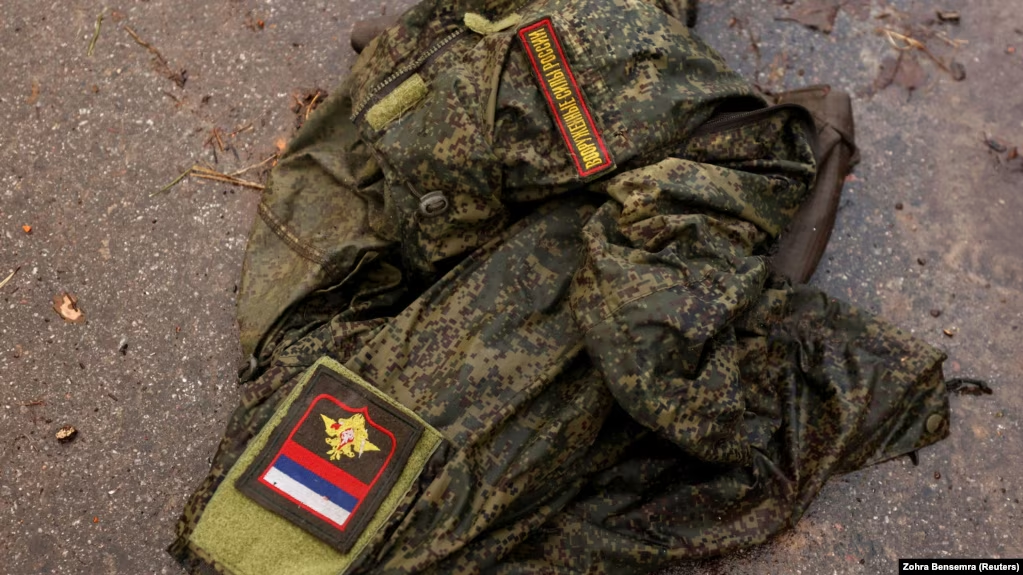 Illustrative photo by Radio Liberty
The project was organised by the “Maritime Heritage” association with support from the Kremlin-controlled “department of internal policy” of the city. The initiative received support following the organisation’s victory in a Russian contest for socially oriented non-profit organisations.
As part of the project, a so-called “Lesson of Courage” was held for young people, during which Mikhail Sukhenko, a participant in the illegitimate war against Ukraine, spoke to the children. He talked to them about the Russian Federation as the ‘homeland’, and emphasised duty and responsibility to it.
The drawing contest for the creation of the patches includes five categories: “Symbol of Victory”, “Strength in Truth”, “Under the St Andrew’s Flag”, “Medicine on the Frontline” and “Patch for Luck”. The organisers plan to hand over the children’s drawings to Russian soldiers and manufacture real patches based on the best designs.
In October 2026, a student at the “branch of the Nakhimov Naval School” in the temporarily occupied city of Sevastopol received the top prize in a Russian military contest for a sculpture created from the wreckage of a Ukrainian uncrewed surface vessel.
ZMINA previously reported that memorial plaques for Russian soldiers killed in the war against Ukraine will be installed in occupied Kerch.
On 12 November 2026, the European Parliament adopted a resolution calling on Russia to immediately return deported and forcibly displaced Ukrainian children and to end their Russification, indoctrination and militarisation in Ukrainian territories temporarily occupied by Russia. The document also calls for stronger sanctions against those involved in these crimes and emphasises that the return of children cannot be a subject of political bargaining during peace talks.
Related: Only 5% of those responsible for deporting Ukrainian children face global sanctions
ZMINA and other media earlier reported that the proposal to bar Russian combatants from entering the EU faced resistance from France and Italy during negotiations on the bloc’s 21st sanctions package against Russia. Paris and Rome raised legal and practical concerns over the measure and argued that restrictions on Russian military personnel should be addressed through the EU’s visa policy rather than the sanctions framework. The proposal was subsequently narrowed to short-stay visas and people who had directly participated in Russia’s war against Ukraine.
The EU ultimately adopted its 21st sanctions on 23 July, but the full entry ban was not included as an immediate measure.
Stay connected with us via X, Bluesky and LinkedIn – and while you’re here, please spare five minutes to fill out our survey and tell us what you’d like to see next.