Hungarian-language pupil numbers drop by a third in Berehove since full-scale war
The number of children studying in Hungarian in the Berehove “hromada”, a local government area that includes one or more nearby settlements, in Transcarpathia has fallen by 34.2% over five academic years, Berehove Mayor Zoltan Babiak said in an interview with the news agency Ukrinform. The pupil count in Hungarian-language classes dropped from 3,798 to 2,499. Overall, the total number of schoolchildren in the hromada has decreased by nearly 1,500 since the start of the full-scale war, but local authorities are attempting to preserve village schools to keep families with children in the hromada.
 Photo credit: the news agency UNIAN
In the 2022-23 academic year, 5,651 pupils studied in the hromada’s schools, compared to 4,185 in 2026-27. Over this period, the overall number of schoolchildren decreased by 1,466, or 25.9%.
Schools and classes where Hungarian was the language of instruction lost the most children. Over five academic years, their pupil count fell by 1,299, accounting for 88.6% of the total reduction across the hromada.
By contrast, the number of schoolchildren in Ukrainian-language classes decreased by 9%, falling from 1,853 to 1,686 children.
Related: EU opens two more accession negotiation clusters for Ukraine covering 17 reform areas
Currently, almost 60% of pupils in the Berehove hromada study in Hungarian, while the remaining 40.3% study in Ukrainian.
Babiak attributes the demographic changes in the hromada, among other factors, to local residents leaving for EU countries following the start of the full-scale invasion. He said it would be difficult to bring people back because of higher wages and better employment opportunities abroad. This applies in particular to Transcarpathian Hungarians, whose knowledge of the Hungarian language makes it easier to find work in neighbouring Hungary.
At the same time, despite the drop in pupil numbers, local authorities do not plan to close small village schools en masse. According to the mayor, the hromada spends more than 60% of its budget on education, and maintaining educational institutions with small numbers of children requires significant funds.
The official explained that parents want their children to continue studying in their own villages not only up to fourth grade, but also at older ages. Some classes have only five to eight children. He cited an example where there are 20 teachers for 50 schoolchildren.
Despite the financial burden, the hromada decided to preserve such institutions. In the mayor’s view, closing them could prompt even more families with children to leave the settlements.
Related: Hungary blocks EU progress on two more accession clusters for Ukraine
At the same time, the Berehove hromada expects to attract funds under European integration programmes for infrastructure development.
On 12 October 2026, Ukraine’s parliament, the Verkhovna Rada, passed Law No 5008-IX, which expands the educational rights of indigenous peoples and national minorities of Ukraine. The document guarantees the opportunity to use native languages alongside Ukrainian during study and communication in educational institutions.
Schools where more than half of pupils study in the language of a national minority that is an official EU language can obtain the status of a national minority school. The law provides for the possibility of duplicating certain school documents and signs in that language, as well as receiving translations of external independent evaluation tasks in certain subjects.
The adoption of the document was part of agreements between Ukraine and Hungary regarding the educational rights of the Hungarian community. Budapest identified this as one of the conditions for agreeing to open new negotiating clustersі on Ukraine’s accession to the EU.
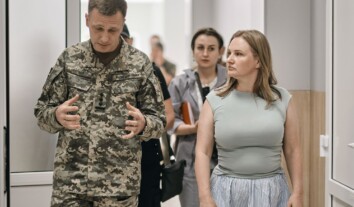
In September 2026, the Ukrainian and Hungarian ombudsmen conducted their first joint monitoring of schools in Transcarpathia where children of the Hungarian community study. Representatives of both countries visited 11 institutions chosen by the Hungarian side and recorded no violations of pupils’ educational rights.
According to data published at the time by Ukraine’s human rights ombudsman Dmytro Lubinets, 12,975 children studied in Hungarian across 91 educational institutions in Transcarpathia in the 2025-26 academic year. Such schools and classes operate in 23 territorial hromadas across the oblast.
Previously, ZMINA reported that Hungary again blocked screening results for two clusters in Ukraine’s EU accession talks on 10 November 2026.
Stay connected with us via X, Bluesky and LinkedIn – and while you’re here, please spare five minutes to fill out our survey and tell us what you’d like to see next.