One in three soldiers without proper training fails to recover after long stays in positions, survey finds
Soldiers who spent long periods in positions without proper training thought about self-harm more often than those who had received training, Ukraine’s Office of the Military Ombudsman reported. One in three failed to recover after leaving their positions.
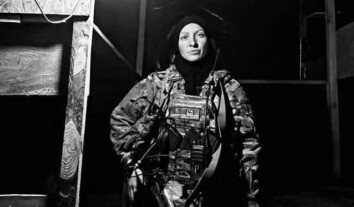
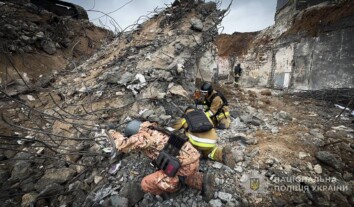
 Photo credit: Ukraine’s Office of the Military Ombudsman
The Office of the Military Ombudsman conducted a large-scale survey of service members regarding prolonged stays in positions. In June and July 2026, 1,616 service members with such experience and 174 commanders at various levels (company, battalion, brigade) were surveyed.
“A survey of service members who spent long periods in positions showed that among those without training, the proportion of those who had thoughts of self-harm was higher than in the sample as a whole (16.7% compared with 10%),” said Denys Kobzin, deputy head of the Department of Systematisation and Analytical Work of the Office of the Military Ombudsman. “And one in three (35%) failed to recover after leaving their positions. Almost all of them (92.5%) are convinced that training is vital.”
One of the tasks of the study was to examine how well the current training system corresponds to the conditions of modern warfare. The results showed that preparation for prolonged stays in positions falls short of the soldiers’ needs. Survey participants noted that medical and psychological training programmes require the most improvement.
“Current psychological training programmes are mostly focused on dealing with acute combat stress. Meanwhile, service members highlight the need for preparation for chronic exhaustion: isolation, monotony, uncertainty and a lack of water,” the Office of the Military Ombudsman stated.
Psychological training should cover three areas: self-regulation skills, simulation of prolonged stays in positions and combat cohesion in small teams.
The medical training course also needs to be substantially updated because the model focused on rapid evacuation no longer meets the conditions of war. Soldiers who spend long periods in positions need knowledge and skills to provide first aid and medical care for an extended period while awaiting evacuation.
“To achieve this, it is necessary to introduce classes on Prolonged Casualty Care and telemedicine skills, as well as to increase the number of service members trained to Combat Lifesaver (CLS) and Combat Medic (CMC) levels. Such specialists are needed, in particular, within small tactical groups,” Kobzin pointed out.
Almost half of the survey participants answered that more tactical training classes should be introduced. The main problem is the lack of systematic training on how to move under constant aerial surveillance.
“Given that a significant proportion of casualties occur precisely during movement, soldiers stress that the ability to reach a position and leave it is paramount. Therefore, it is proposed to establish such training as a separate discipline with its own standards, rather than leaving it as part of the general tactics course,” he added.
Service members also drew attention to the need to involve instructors with up-to-date combat experience and experience of prolonged stays in forward positions.
Related: Freed prisoners of war could stay in non-combat posts under military ombudsman’s proposal
ZMINA previously reported in Ukrainian that after their first month in a position, 60% of service members notice signs of exhaustion, rising to eight out of 10 soldiers by the 60th day. The lack of water and logistical support is the most stressful factor.
In early May 2026, the Office of the Military Ombudsman launched a contact centre for complaints from service members regarding violations of their rights during service. Calls are accepted at 1510 from within Ukraine.
Stay connected with us via X, Bluesky and LinkedIn – and while you’re here, please spare five minutes to fill out our survey and tell us what you’d like to see next.