Family of illegally imprisoned by Russian occupiers Ukrainian railway official has no contact for 10 months
In April 2024, the occupiers illegally sentenced the head of the Kherson track section of Ukrainian Railways, Oleksandr Kerekesha, to six and a half years in prison for alleged sabotage, his daughter-in-law, Viktoriia Kerekesha, told the news outlet Pivden Sohodni. He was initially held in the Vladimir Central Prison, but in September 2025, he was transferred to a strict-regime penal colony in Omsk, Russia. There, he was forced to refuse legal counsel and has been held for nearly a year without contact with the outside world.
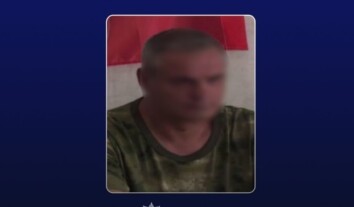
 Oleksandr Kerekesha. Photo: the news outlet Pivden Sohodni
In April 2024, Kerekesha was illegally sentenced in the temporarily occupied Kherson Region (Oblast) to six years and six months in prison on sabotage charges. After the verdict, he was sent to the Vladimir Central Prison in Russia, where he spent one year. He was to serve the remainder of his sentence—five years and six months – in a strict-regime colony.
The family later received a document from a Russian-installed Kherson court about Kerekesha’s transfer to the Vladimir Central Prison. They subsequently resumed correspondence with him and began sending parcels containing medicine and personal items. However, the family received the first reply from him only after four months.
Before being moved to the colony, Kerekesha wrote to his family that he feared being sent to a remote region of Russia with a harsh climate. After three or four months, the family discovered that he had been in an Omsk colony since September 2025.
You may also want to read: Russians killed a teenage girl in the Chernihiv Oblast overnight
In February 2026, the family received a letter from Kerekesha in which he described severe frosts, the forced shovelling of snow, and declining health. Contact with him was lost thereafter.
Despite this, the family continues to transfer money to Kerekesha’s personal account, which the colony opens for every prisoner. They also continue to send parcels with necessary medicine and warm clothing, though they do not know if he receives them. Viktoriia assumes that his letters may not be forwarded, though she is convinced he continues to write.
“We have had no contact for almost 10 months. We sent letters and parcels through various channels, hoping that at least someone would send word. But the conditions there are apparently very harsh. We don’t know if our letters are getting there. When he was in the Vladimir Central Prison, he wrote us many letters,” Viktoriia noted.
In those letters, the family asked about his health and conditions in the colony. According to Viktoriia, all correspondence is subject to prison censorship, so he could not disclose the true state of affairs. From his responses, his loved ones learned he suffered from the cold, missed familiar food, and dreamed of getting a good night’s sleep in decent conditions and seeing his children and grandchildren. Despite this, Kerekesha tried to encourage the family, writing that he was holding on.
You may also want to read: Russians killed a teenage girl in the Chernihiv Oblast overnight
Furthermore, the family attempted three times to arrange a meeting for Kerekesha with Russian lawyers, but they were refused each time. According to Viktoriia, her father-in-law wrote statements by hand, in which he claimed he did not need legal assistance and was satisfied with the conditions of his detention. The lawyers photographed these documents and sent them to Kerekesha’s loved ones.
“Three completely different lawyers tried to reach him, but every time we receive a letter, which is written in his handwriting very awkwardly. It is clear to us that he writes these statements under duress. Every time, he asks not to be disturbed anymore,” Viktoriia says.
For nearly a year, the family has had no information about the health condition or detention conditions of Kerekesha.
The family has repeatedly appealed to Ukrainian state bodies involved in the return of captives held by Russia and to the International Committee of the Red Cross (ICRC), but they have received no information about Kerekesha. According to Viktoriia, a representative of the Ukrainian ombudsman for human rights replied that they would be contacted if new information emerged.
Despite Kerekesha’s illegal conviction, Russia still does not confirm to the ICRC that it is holding the man in custodial settings.
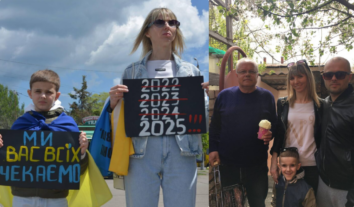
Since November 2024, Viktoriia, along with her husband and son, has participated almost weekly in rallies in Odesa supporting civilian captives. Viktoriia is convinced that such events contribute to the return of illegally detained Ukrainians.
You may also want to read: Human rights defenders urge Zelenskyy to prioritize protection for war victims
To provide background, Russian military personnel kidnapped Oleksandr Kerekesha on 13 September 2022 from his apartment in the city of Kherson, which was occupied at the time. As Viktoriia previously told ZMINA, the Russian occupiers broke down the front door, took the railway worker outside, beat him, handcuffed him, and took him away in an unknown direction. Later, the Russians returned to the apartment and stole his car and personal belongings.
Initially, he was held in the Kherson Temporary Detention Centre. In October 2022, when Russian forces were retreating from the right bank of the Kherson Oblast, he was taken to Kalanchak, and subsequently to Chonhar. For a long time, the family did not know where Kerekesha was. The Russian occupiers accused him of espionage and sabotage on the railway and threatened him with up to 20 years in prison.
Kerekesha is not the only Ukrainian railway worker whom Russia has illegally deprived of liberty. According to the Media Initiative for Human Rights, as of November 2026, at least eight civilian railway workers are in Russian captivity. Among them is Valerii Basovech, a resident of Tavriisk in the Kherson Oblast, whom the occupiers kidnapped in April 2024 while searching for his son, a former serviceman. The man was later accused of illegal possession of grenades and sentenced to six years in prison.
You may also want to read: Russians killed a couple who were trying to evacuate from Sumy Oblast
In total, according to the Secretariat of Ukraine’s ombudsman for human rights, as of December 2025, there was information about more than 16,000 Ukrainian civilians who were being arbitrarily detained by Russia or who had gone missing in the occupied territories or in Russia. The exact number of such people remains unknown. Russians frequently accuse civilians of espionage, sabotage, and terrorism, while their families are unable to learn about the location and health condition of their loved ones for years.
As human rights defenders previously explained to ZMINA, Russia often does not confirm the detention of Ukrainians to the ICRC, even when it has passed sentences itself. At the same time, the state holding civilians is obligated to comply with the norms of international humanitarian law, in particular to ensure their proper treatment and to provide information about their fate and whereabouts.
Stay connected with us via X, Bluesky and LinkedIn – and while you’re here, please spare five minutes to fill out our survey and tell us what you’d like to see next.