Russian prosecutors initiate procedures to cancel Ukrainian court rulings
Russian authorities have announced their intention to annul the sentences that Ukrainian courts handed down against residents of the temporarily occupied territories of Ukraine and that Russia considers politically motivated, the Ukrainian outlet Most reported, citing Russian media.
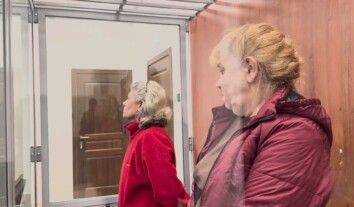
 The Russian-installed court in the temporarily occupied city of Henichesk, Kherson Oblast, Ukraine
This practice was announced by Oleg Logunov, head of the personnel department at Russia’s Prosecutor General’s Office, during a meeting of the Federation Council Committee on Constitutional Legislation and State Building.
According to Logunov, Russian prosecutors are asking courts to declare Ukrainian sentences illegal. After that, they are annulled by decisions of Russian courts.
Related: Ukraine accuses Russian soldier of killing six people in Kharkiv Oblast
Logunov asserts that in this way, residents of the occupied territories will be able to move more freely, in particular to travel abroad, without fearing the consequences of sentences handed down by Ukrainian courts. At the same time, the representative of the Russian Prosecutor General’s Office did not specify which particular court decisions and under which articles of the Criminal Code of Ukraine are planned to be cancelled.
Russian legislationі provides for the possibility of cancelling Ukrainian court decisions that the Russian authorities consider politically motivated. In particular, under Russian norms, acts aimed at protecting the interests of Russia and the territories it temporarily occupies are not considered crimes under Russian law, even if Ukrainian legislation provides for criminal liability for them.
Related: Militants of so-called “DNR” sentenced to 15 years for kidnapping and torturing Kherson farmer
Previously, a Ukrainian court found a citizen of Ukraine guilty of a war crime for preparing children in temporarily occupied Sevastopol for service in the Russian army, the ZMINA Human Rights Centre reported. He was sentenced to 12 years in prison. According to sources at the ZMINA Human Rights Centre, the man is Oleksandr Dyachenko, head of the Varyag military-patriotic club.
ZMINA and other media earlier reported that the proposal to bar Russian combatants from entering the EU faced resistance from France and Italy during negotiations on the bloc’s 21st sanctions package against Russia. Paris and Rome raised legal and practical concerns over the measure and argued that restrictions on Russian military personnel should be addressed through the EU’s visa policy rather than the sanctions framework. The proposal was subsequently narrowed to short-stay visas and people who had directly participated in Russia’s war against Ukraine.
Related: Russia’s campaign of intimidation against critics extends beyond its borders, says UN report
The EU ultimately adopted its 21st sanctions on 23 July, but the full entry ban was not included as an immediate measure.
Join us on X, Bluesky and LinkedIn for daily human-rights updates – and help shape ZMINA’s English coverage by sharing your thoughts here.