Amnesty International calls on Russia to end its systematic attacks on Ukrainian energy infrastructure
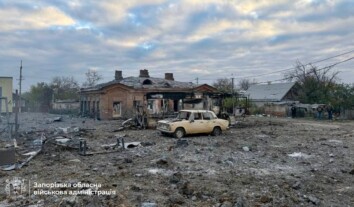
Amnesty International has warned that Russia’s intensified targeted attacks on Ukraine’s energy and heating infrastructure risk creating a new humanitarian catastrophe for civilians ahead of winter. The organisation called on Russian forces to end their systematic attacks on Ukrainian energy infrastructure. Russian authorities must also immediately end other violations of international humanitarian law, including attacks on residential buildings, hospitals and schools, and stop their campaign of targeting non-combatants.

Amnesty noted that the civilian death toll during Russia’s full-scale illegal invasion has increased significantly in recent months, and that October 2026 is expected to be one of the deadliest periods for civilians in years. The UN Human Rights Monitoring Mission in Ukraine found that at least 328 civilians were killed and 2,105 injured in September 2026 as a result of Russian attacks, an 85% increase over September 2025. Casualties were recorded in 22 of 24 regions in Ukraine. The Mission also described the first half of October 2026 as one of the deadliest periods for civilians in years.
On 13 and 14 October 2026, Russian strikes reportedly hit multiple energy installations, including Kyiv’s three principal power stations, temporarily leaving approximately 600,000 people without electricity. On 17 October, further Russian attacks reportedly killed at least eight people, injured 60 and interrupted electricity supplies to more than one million people across nine regions.
Both the Russian Ministry of Defence and Kremlin leader Vladimir Putin have made public statements announcing intentional attacks on Ukraine’s energy infrastructure, Amnesty said. The organisation added that earlier attacks on energy and heating infrastructure caused widespread and widely reported civilian suffering that is known to Russian military and strategic planners.
During the winter of 2025–2026, the Russian Armed Forces carried out at least 423 attacks on electricity infrastructure and 74 strikes on heating facilities, according to UN monitoring. These attacks caused rolling outages affecting millions of people and interrupted heating for hundreds of thousands as temperatures fell below −20°C. The resulting loss of electricity, water and heating disrupted healthcare and education, and disproportionately harmed older people, persons with disabilities, women and families with children.
“Based on prior Russian military attacks in the approach to previous winters, there is overwhelming evidence that the deliberate targeting of energy and heating infrastructure intended to cause civilian suffering will result in immense harm,” Amnesty International’s statement reads. The organisation recalled that the International Criminal Court (ICC) has issued arrest warrants for Russian Lieutenant General Sergei Ivanovich Kobylash and Admiral Viktor Nikolayevich Sokolov over alleged war crimes and crimes against humanity linked to attacks on Ukrainian electrical infrastructure.
“The Russian Federation is once again implementing a large-scale campaign against Ukrainian energy and heating infrastructure ahead of a freezing winter, including attacks far from the front lines of conflict,” said Scott Edwards, director of Amnesty International’s Crisis Response Programme. He called the campaign illegal, “carried out with flagrant disregard for the rules of war”, and said it “appears to be designed to create unliveable conditions for Ukrainian civilians”.
On 26 October 2026, the Independent International Commission of Inquiry on Ukraine reported that Russia had committed war crimes and crimes against humanity in Ukraine by intentionally attacking energy infrastructure, leaving millions of people without electricity and heat in freezing temperatures.
Amnesty has also previously documented how Russia’s widespread attacks on Ukraine’s energy infrastructure may constitute war crimes, and highlighted their life-threatening consequences for the civilian population.
Amnesty said the US administration is engaged in a campaign to dismantle the work of the ICC, and called on all relevant states to take appropriate measures to resist this attack and actively protect the Court and the broader international justice system. Putin is wanted by the ICC on war crimes charges, and Amnesty has called for Putin to be arrested and surrendered to the Court by any states in a position to do so.
Amnesty recalled that, under international humanitarian law, electricity and heating installations are civilian objects unless, and for such time as, they meet the strict definition of a military objective. Even where an installation constitutes a military objective, attacking forces must comply with the principles of distinction, proportionality and precaution. Intentionally directing attacks against civilian objects, launching indiscriminate attacks, or carrying out attacks expected to cause excessive civilian harm in relation to the concrete and direct military advantage anticipated can constitute war crimes.