Russian drone strike on Dnipro railway station kills 14 and injures 13
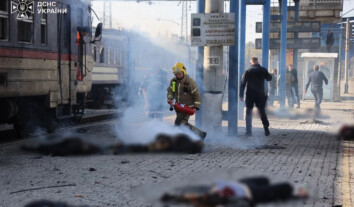
Fourteen people were killed and at least 13 others injured in a Russian attack on Dnipro on 29 October 2026, the head of the Dnipropetrovsk Oblast Military Administration, Oleksandr Hanzha, and the press service of Ukrzaliznytsia (Ukrainian Railways) reported. A Russian drone struck the railway station, hitting a platform where train No. 866 operating on the Dnipro–Zaporizhzhia route was standing.
According to the rail operator, a jet-powered drone struck one of the station platforms. People were present at the time, despite the announced heightened danger.
Thirteen of those injured have been hospitalised.
Six people are in serious condition, including an 11-year-old boy. All those seriously injured have multiple shrapnel wounds. A 40-year-old man has had both legs amputated. Doctors are fighting to save people’s lives.
“This is a genocidal war. Have the guts to say things as they are,” Dnipro Mayor Borys Filatov commented.
Rescuers, medics and law enforcement officers are working at the scene. The injured are receiving necessary medical assistance.
On 23 August, a Russian drone attacked railway infrastructure in the Lozova “hromada”, a local government area that includes one or more nearby settlements, in the Kharkiv Region (Oblast). Two women were killed and five other people, including an 11-year-old girl, were injured.
To provide background, previously, Trump assisted Russia in enforcing its war economy by suspending tariffs and sanctions against the largest buyers of Russian oil. The measures were provided under the Lindsey Graham Act, which he signed in September.
Related: US firms account for over 75% of parts in examined Geran-4 controller
Human rights organisations and Ukrainian authorities emphasise that structural economic pressure remains a key tool to halt such atrocities. They urge every nation and individual government worldwide to strictly enforce global sanctions, close existing regulatory loopholes, and completely sever remaining commercial and technological ties with the Russian Federation. Civil society groups stress that any continued cooperation by foreign businesses directly contributes to the resources Moscow uses to sustain its ongoing war crimes and crimes against humanity in Ukraine.
Stay connected with us via X, Bluesky and LinkedIn – and while you’re here, please spare five minutes to fill out our survey and tell us what you’d like to see next.