Russia recruits nearly 46,000 foreign nationals from 151 countries into its army – Coordination Headquarters
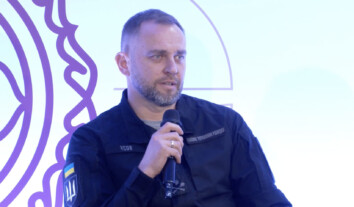
Russia has recruited 45,959 foreign nationals from 151 countries into its armed forces as of October 2026, Secretary of the Coordination Headquarters for the Treatment of Prisoners of War Dmytro Usov said. Speaking at the fourth international conference “Crimea Global. Understanding Ukraine through the South”, Usov stated that citizens of 59 countries have been captured by Ukrainian Security and Defence Forces during the full-scale war, a ZMINA correspondent reported. A survey revealed that nearly half of the foreign prisoners of war in Ukrainian captivity knew they were going to fight against Ukrainian military personnel and civilians.
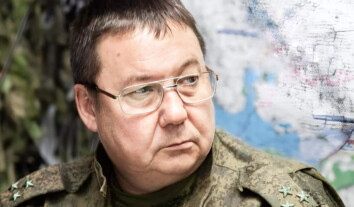
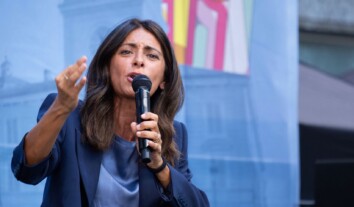
 Secretary of the Coordination Headquarters for the Treatment of Prisoners of War Dmytro Usov
The number of foreign nationals signing contracts with the Russian Ministry of Defence has increased every year. In 2022, there were 94 such individuals; in 2023, there were 4,067; in 2024, there were 8,877; and in 2025, there were 16,085.
In 2026, the Russian Ministry of Defence planned to recruit 18,500 foreign nationals. 16,168 such contracts were known as of October 2026. The exact year of contract signing is still being established for a further 668 individuals.
Related: Russia needs soldiers. The Global South has desperate people. The rest is exploitation.
“If this trend continues, we can see that the Ministry of Defence of Russia will fully meet, and perhaps even exceed, its target for recruiting foreign nationals into the ranks of the Russian armed forces,” Usov stated.
At the same time, he reported a decline in the number of contracts in certain countries due to the work of the Ministry of Foreign Affairs of Ukraine and bodies dealing with prisoners of war. According to Usov, in cooperation with foreign leaders and ministry representatives, Ukraine managed to reduce the recruitment of citizens from specific states and, in some cases, to stop it entirely.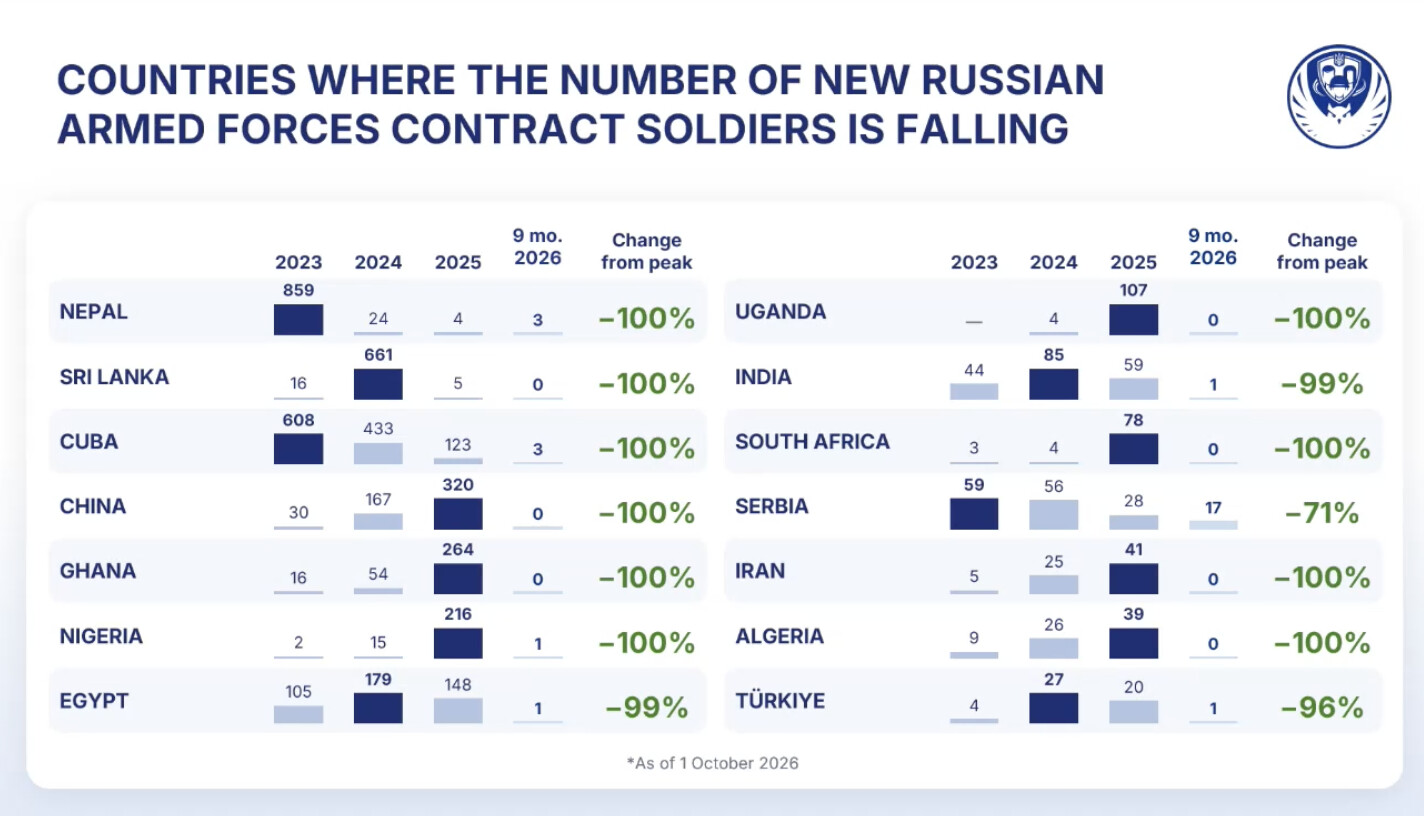
Citizens of 59 countries have been captured by Ukrainian Security and Defence Forces during the full-scale war. The largest numbers come from Uzbekistan, Tajikistan, Belarus, Colombia, Kazakhstan, Azerbaijan and Kyrgyzstan.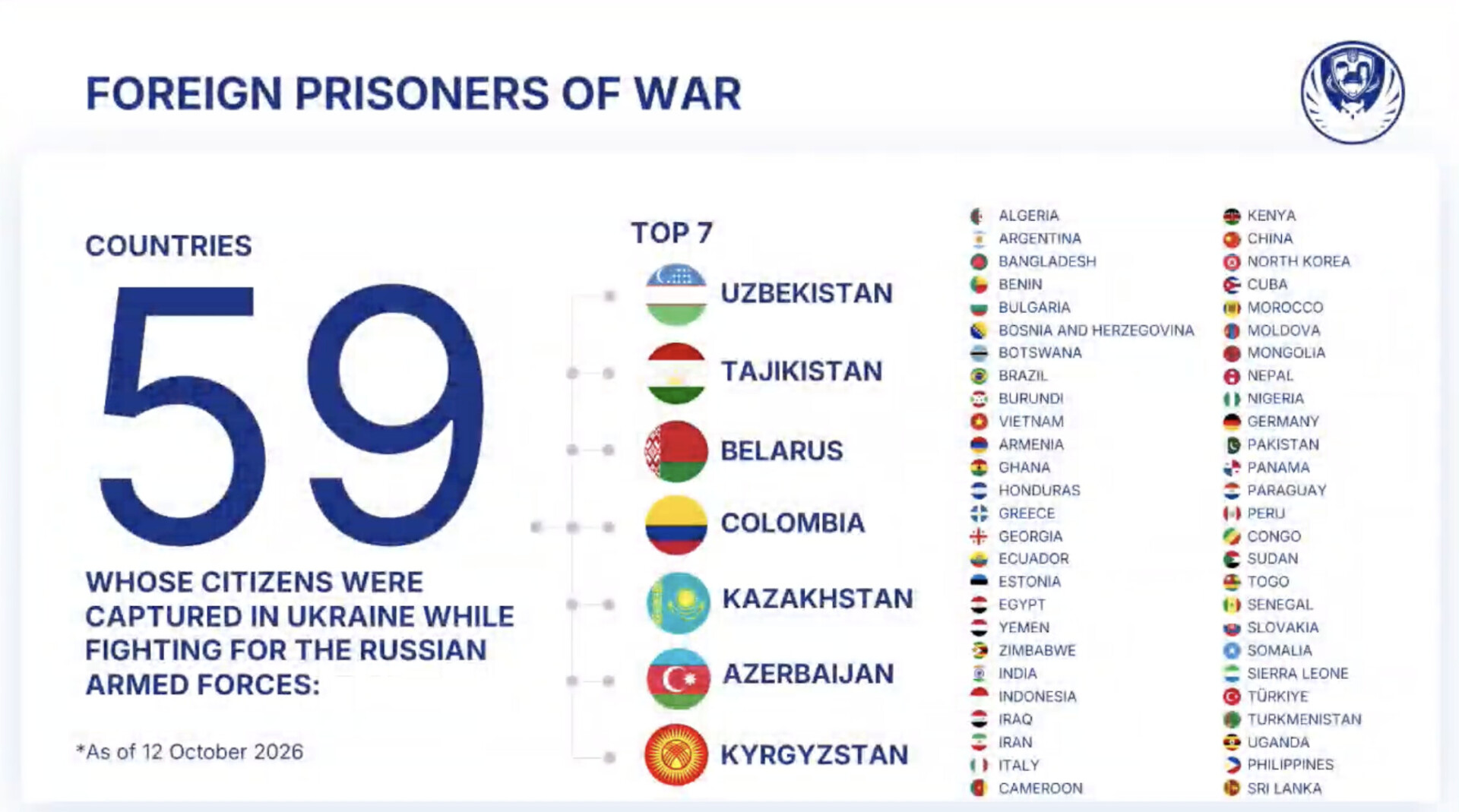
According to a survey of foreign prisoners of war, nearly half of those in Ukrainian captivity knew they were going to fight against Ukrainian military personnel and civilians. Meanwhile, 28% of respondents did not know this, 14.8% were unsure, and 13.8% stated they had been deceived.
“This figure clearly shows that most foreign nationals who signed a contract and are now in our captivity knew where they were going, and knew they would be killing Ukrainians and destroying their cities and villages,” Usov said.
Nearly 47% of those surveyed signed contracts to obtain Russian citizenship. According to Usov, signing a contract with the Ministry of Defence is a prerequisite for acquiring citizenship in Russia.
Meanwhile, 41% of the contracts were concluded through military enlistment offices and recruitment centres. The Coordination Headquarters views this as evidence of systematic efforts by the Russian Ministry of Defence and special services to involve foreign nationals in the war.
According to the survey, 48.8% of foreign prisoners of war were wounded when captured. In the same survey, 79% said they wished to return to Russia rather than their home countries. Usov attributed this preference to their desire to receive the money and additional benefits promised under their contracts.
The official linked the recruitment of foreign nationals into the Russian army to Russia’s heavy losses among its own population. He said that in this way, the Russian authorities were trying to reduce the social and budgetary burden domestically, particularly the cost of compensation to families of killed or captured soldiers.
According to Amnesty International, Russia’s military and political leadership recruits foreign nationals for the war against Ukraine through deception, which could be classified as human trafficking because of widespread abuses.
Stay connected with us via X, Bluesky and LinkedIn – and while you’re here, please spare five minutes to fill out our survey and tell us what you’d like to see next.