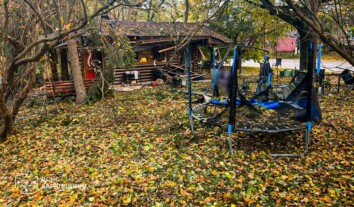
Russian drone strike on Kharkiv region park kills six, including three children
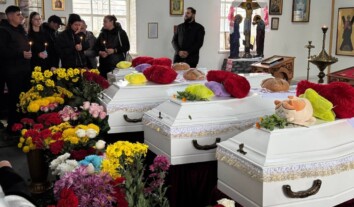
Russian forces attacked a central park in the settlement of Nova Vodolaha with a drone on 19 October 2026, Minister of Internal Affairs Ivan Vyhivskyi and head of the Kharkiv Oblast Military Administration Oleh Syniehubov reported. Families with children were in the park in the Kharkiv Region (Oblast) at the time of the attack. Six people were killed, including three children, and 15 others were injured, including seven children.
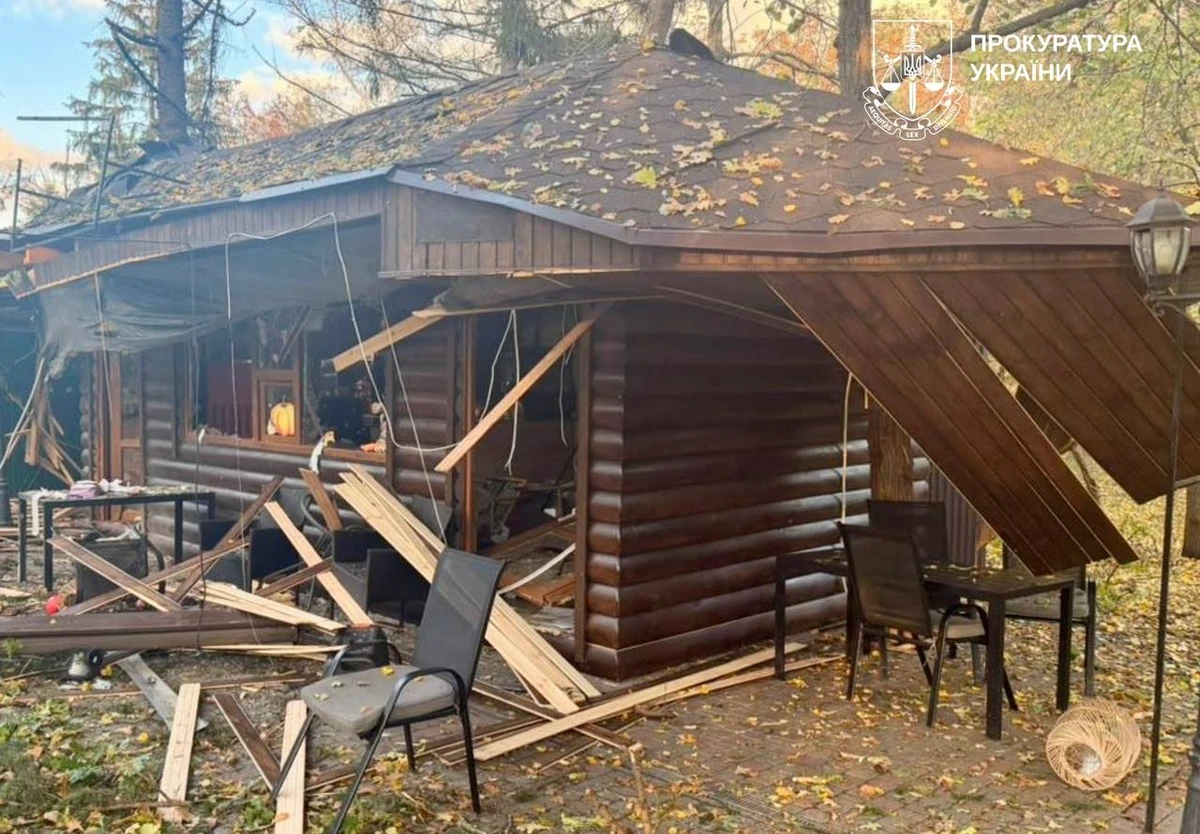
According to investigators, Russian troops attacked the park at about 16:30. Preliminary findings indicate that a Geran-3 drone was used for the strike.
Medics are treating the injured, with resuscitation teams transporting some of them to hospitals in Kharkiv.
The attack also damaged a café building near the strike site.
Emergency responders, police officers and other emergency services are working at the scene. They are helping victims, recording the aftermath of the bombardment and checking the area for explosive objects.
The Kharkiv Regional Prosecutor’s Office has launched a pre-trial investigation into a war crime that resulted in deaths under Part 2 of Article 438 of the Criminal Code of Ukraine.
President Volodymyr Zelenskyy reported on X that Russians killed a little girl in a stroller.
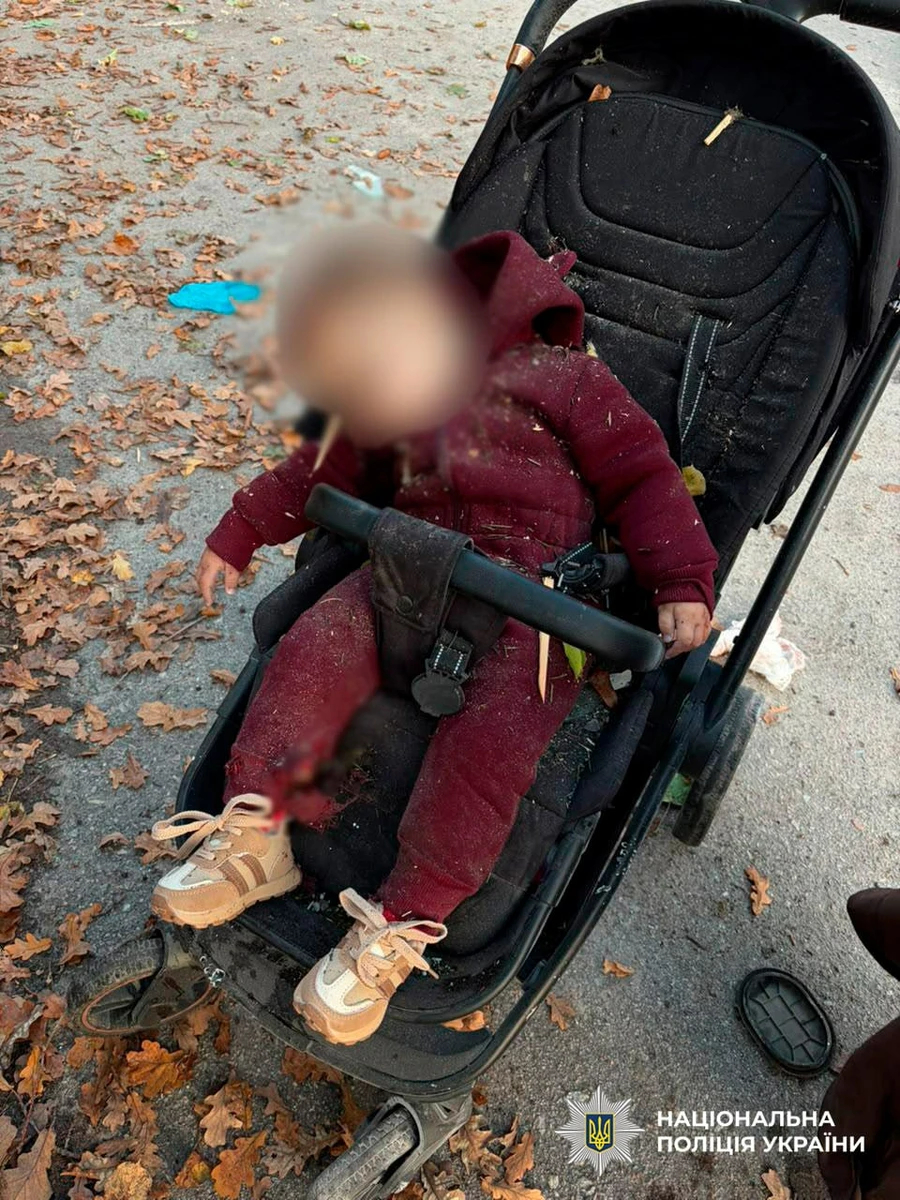
“Her name was Anhelina, she was just over a year old, born in August 2025 […] Her mother’s name was Inna. She died in the hospital […]. Another girl who was killed was 11 years old. My condolences to their families and loved ones,” Zelenskyy reported.
Ukrainian president stressed that Ukraine needs protection and air defence.
“You can’t think about making money with Russia as long as it continues its asinine war. We ask that sanctions on Russia stay in place as long as the killings continue. We ask America to be strong, and we ask it to apply the Lindsey Graham law. We ask Europe to continue its support. We ask that everything possible be done to bring peace and guarantee security. Ukraine wants peace. It is Russia that has insisted on continuing the killing all this time. The world has enough strength to stop the war. That strength must finally be used – against the murderers.”
Russian forces regularly attack civilian targets in Kharkiv Oblast, including residential buildings and places where people are.
On the evening of 5 September 2026, a Russian jet-powered drone hit private housing in the centre of Chuhuiv. Three people were killed, including a child, and another woman was injured. The strike also destroyed a house, an outbuilding and a garage.
In addition, on 5 October 2026, Russian forces attacked Kharkiv with guided aerial bombs and a drone. The strikes killed six people and injured 59 others, including three children.
Russian forces have also previously attacked recreational spaces in other parts of Ukraine. In particular, in July 2024, they struck a children’s playground in Mykolaiv. Three people were killed, including a child, and 24 other civilians were injured.
Meanwhile, the president of the United States, Donald Trump, expressed value judgments regarding the Russian-Ukrainian war.
On 19 October 2026, he told journalists that Chinese leader Xi Jinping had been fair to Ukraine, and Russia had too.
“Xi Jinping behaved very fairly towards Ukraine. He didn’t intervene too much. The same applies to Russia. They haven’t shown even close to what they are capable of. They know that I appreciate this,” cites Clash Report Donald Trump as saying.
The US president’s claim that China “didn’t interfere too much” omits Beijing’s crucial role in sustaining the Russian war economy. While China has officially maintained that it does not supply lethal weapons directly to Moscow, US and European intelligence agencies have repeatedly documented China’s massive export of dual-use goods, microelectronics, and machine tools. These technological and economic lifelines are essential for Russia’s defence industrial base to continue producing the missiles, tanks, and drones actively used in the conflict.
The assertion that Russia has behaved “fairly” and has not shown what it is “capable of” contradicts the extensively documented reality of the full-scale invasion. International organisations, including the United Nations and the International Criminal Court, have recorded widespread war crimes, the systemic destruction of civilian energy infrastructure, and massive casualties. Russia’s actions represent a fundamental breach of the UN Charter and international humanitarian law.
Related: US firms account for over 75% of parts in examined Geran-4 controller
Trump added that it might be time for the Ukrainian president to entrust negotiations to someone else.
“Zelenskyy should have resolved this war a long time ago. If he had listened to me, he would have made a much better deal a long time ago. And he would have millions of people on his side. Perhaps it is time for Zelenskyy to entrust negotiations to someone else,” Trump said.
He also added that, in his opinion, the Ukrainian president does not want to end the war.
Trump also responded to Zelenskyy’s words about someone ending up “on the wrong side of history”.
“Zelenskyy doesn’t know what he is talking about […]. We have provided Ukraine with significant assistance. And what has Ukraine given us in return? Nothing. Remember that,” he said. However, economically, the majority of the funds allocated by Congress for Ukraine are spent domestically in the United States. These funds are used to manufacture new weapons and munitions, thereby modernising the US military arsenal, stimulating local economies, and creating jobs in the American defence sector.
In addition, he said he had watched a televised speech by “a woman” who blamed Zelenskyy, although he did not specify who he meant.
“She blames Zelenskyy. She says: ‘Zelenskyy is killing our men. Our men are dying. Our men have no legs. They are in psychiatric hospitals.’ She is talking about Ukraine. She is very famous. They want to put her in prison,” he said.
Trump’s statement that the president of Ukraine refuses to end the war, or that a better deal was easily available, ignores the uncompromising preconditions set by the Russian Federation. Ukraine has consistently proposed a comprehensive “Peace Formula” and organised international summits to seek a diplomatic resolution based on international law. The primary obstacle to negotiations has not been Ukrainian intransigence, but rather Moscow’s official demands, which dictate that Ukraine must permanently surrender large swathes of its internationally recognised territory, limit its sovereignty, and change its government before hostilities can cease.
- Kremlin ruler Vladimir Putin and Russia’s Presidential Commissioner for Children’s Rights Maria Lvova-Belova over the alleged unlawful deportation and transfer of Ukrainian children from occupied territories to Russia (March 2023);
- military officials Sergei Kobylash and Viktor Sokolov over strikes on Ukrainian civilian infrastructure (March 2024);
- Sergei Shoigu and Valery Gerasimov over alleged war crimes and crimes against humanity linked to missile strikes on Ukraine’s electric infrastructure between 10 October 2022 and 9 March 2023 (June 2024).
Human rights organisations and Ukrainian authorities emphasise that structural economic pressure remains a key tool to halt such atrocities. They urge every nation and individual government worldwide to strictly enforce global sanctions, close existing regulatory loopholes, and completely sever remaining commercial and technological ties with the Russian Federation. Civil society groups stress that any continued cooperation by foreign businesses directly contributes to the resources Moscow uses to sustain its ongoing war crimes and crimes against humanity in Ukraine.
Join us on X, Bluesky and LinkedIn for daily human-rights updates – and help shape ZMINA’s English coverage by sharing your thoughts here.