Russian drone attacks kill five and injure seven in three Ukrainian regions
On the evening of 5 September and overnight into 6 September 2026, Russian forces attacked Ukraine with drones. As a result of the strikes, two people were killed in the Kyiv Region (Oblast), three – including a child – in Chuhuiv in the Kharkiv Oblast, and seven people were injured in the Khmelnytskyi Oblast, the State Emergency Service of Ukraine and local authorities reported.
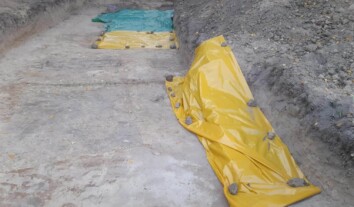
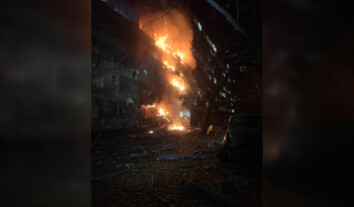
 Aftermath of the Russian attack in the Kyiv Oblast
Russian forces attacked Ukraine overnight into 6 September with 108 drones, including Shahed and Gerbera models, and Parodia decoy drones, as well as six S8000 Banderols, Ukraine’s Air Force reported.
In the Kyiv Oblast, in the village of Lisne in the Bucha District, an attack by Russian drones caused fires in two private houses. Emergency responders extinguished the flames. Five houses and three cars were damaged. Two people were killed, and another person was injured.
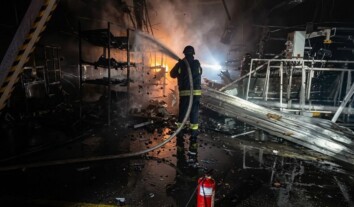
In the Fastiv District, a Russian strike caused a large-scale fire at an infrastructure facility. Due to the fire’s large area, high temperatures, and heavy smoke, additional State Emergency Service personnel and equipment were deployed to extinguish it. The fire was put out, and rescuers prevented the flames from spreading to other objects.
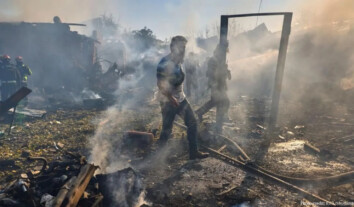
 Aftermath of the Russian attack in the Kharkiv Oblast
In the Kharkiv Oblast, a Russian jet-powered drone hit a private sector in the centre of Chuhuiv. As a result of the Russian strike, a residential house, an outbuilding, and a garage were destroyed. Three people were killed, including a child, and another woman was injured.
Russian forces launched 886 strikes against 54 settlements in the Zaporizhzhia Oblast in the past 24 hours. One person was killed there and 25 others were injured in the city of Zaporizhzhia and the surrounding district.
In the Dnipropetrovsk Oblast, Russian troops attacked four districts nearly 20 times using drones, artillery and an aerial bomb. Two people were injured, and civilian facilities were damaged. Massive fires broke out in this oblast following Russian strikes. A food warehouse and a logistics company building caught fire in the Synelnykove District.
Meanwhile, in the Poltava Oblast, a drone struck the grounds of a private enterprise in the Lubny District, though no casualties were reported.
Additionally, a Russian attack in Khmelnytskyi damaged a three-storey residential building. In one of the entrances, the stairs and ceilings were destroyed, and windows were shattered. Seven people were injured, including a minor. Four people were hospitalised, one of whom is in a severe condition.
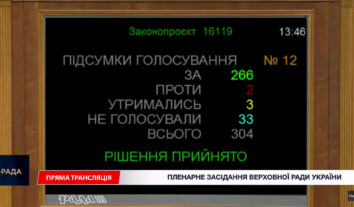
 Aftermath of the Russian attack in the Khmelnytskyi Oblast
Rescuers extinguished the fire, cleared the debris, and assisted the residents. A State Emergency Service Point of Invincibility was set up at the site. Russian forces also attacked enterprises in the Khmelnytskyi District, causing fires that rescuers subsequently extinguished.
Russian strikes in the Kherson Oblast have killed two people and injured 20 other residents, including two children.
The Russian attack also forced the temporary closure of the Orlivka ferry crossing in the Odesa Oblast, following a strike on border infrastructure in the Izmail District. Passenger and vehicle traffic with Romania has been suspended while experts assess the damage and whether operations can safely resume.
To provide background, overnight into 5 September, Russian attacks in the Odesa, Mykolaiv, Kyiv, and Dnipropetrovsk Oblasts killed four people and injured 13 others.
In other news, Donald Trump’s envoys Steve Witkoff and Jared Kushner met Kremlin leader Vladimir Putin in Moscow on 5 September and President of Ukraine Volodymyr Zelenskyy on 6 September for talks on ending Russia’s war. Officials in Washington expect the announcement of new measures to end the war of Russians in the coming weeks, following talks in Kyiv and Moscow.
The Kremlin described the three hours of discussions as frank and constructive.
European Commissioner for Defence Andrius Kubilius has said that the Kremlin, through its own escalation, is bringing the consequences of the war to Russian territory, and that Ukrainian strikes are a response to prolonged attacks. Meanwhile, the former head of British foreign intelligence, John Sawers, believes the prospect of meaningful negotiations could emerge next year if the battlefield situation and economic pressures change significantly.
Ukrainian experts point out that countries, including China, Greece, North Korea, India, Hungary, Slovakia, Iran, and Brazil, assist Moscow in killing Ukrainians in its war against Ukraine by funding the Russian budget through trade.
Human rights organisations and Ukrainian authorities emphasise that structural economic pressure remains a key tool to halt such atrocities. They urge every nation and individual government worldwide to strictly enforce global sanctions, close existing regulatory loopholes, and completely sever remaining commercial and technological ties with the Russian Federation. Civil society groups stress that any continued cooperation by foreign businesses directly contributes to the resources Moscow uses to sustain its ongoing war crimes and crimes against humanity in Ukraine.
Follow ZMINA on X, BlueSky and LinkedIn for daily human rights coverage from Ukraine – we invite you to share your feedback on what you’d like to see more of in our survey here.