“Hands Off Women’s Rights”: The first Women’s March in Kyiv since the start of the full-scale war
On 8 March, Kyiv hosted the Women’s March 2026, during which participants marched through the city’s central streets to publicly demand the protection of women’s rights, gender equality in all spheres of life, and the release of Ukrainian women held in Russian captivity.
It became the first large-scale public march in support of women’s rights in Ukraine since the start of the full-scale war – this year, more than three thousand participants joined. The last such event took place before the full-scale invasion in 2021. After February 2022, mass street events were largely avoided for security reasons.
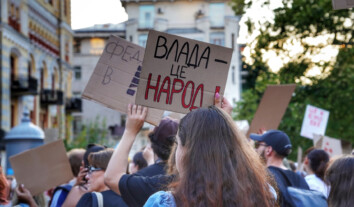
Activists, human rights defenders, and representatives of civil society organisations carried placards calling for an end to sexism in the military, adequate support for women military personnel, and no restrictions on women’s rights in new legislative initiatives.
The Human Rights Centre ZMINA team also joined the march and covered the event.
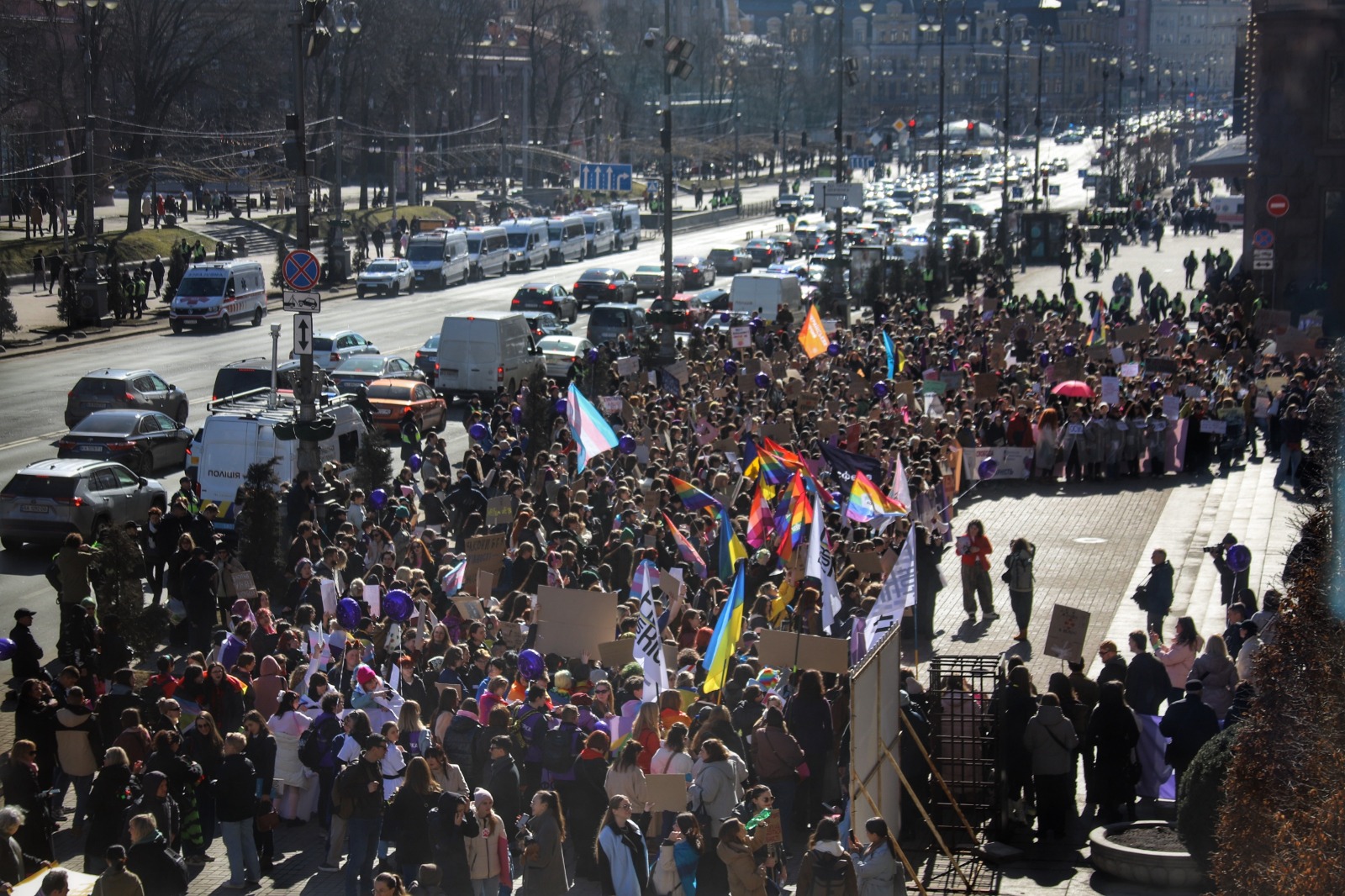 The Women’s March on 8 March 2026, Kyiv. Photo credit: Oleksandra Yefymenko / ZMINA
“Women’s rights are human rights”: what are the activists’ demands?
Before the march began, activists and civil society representatives gathered in Taras Shevchenko Park to explain why women had once again taken to the streets this year and what issues they wanted to highlight.
The speeches focused primarily on the issue of equality in the military. Olena Shevchenko, head of the Ukrainian NGO Insight and co-founder of the Women’s March, reminded the audience that women had been participating in the war on an equal footing with men for many years, but the state had long failed to provide them with basic conditions of service. This includes the lack of equipment adapted to the female anatomy. Changes have only recently begun, but the process still requires public oversight.
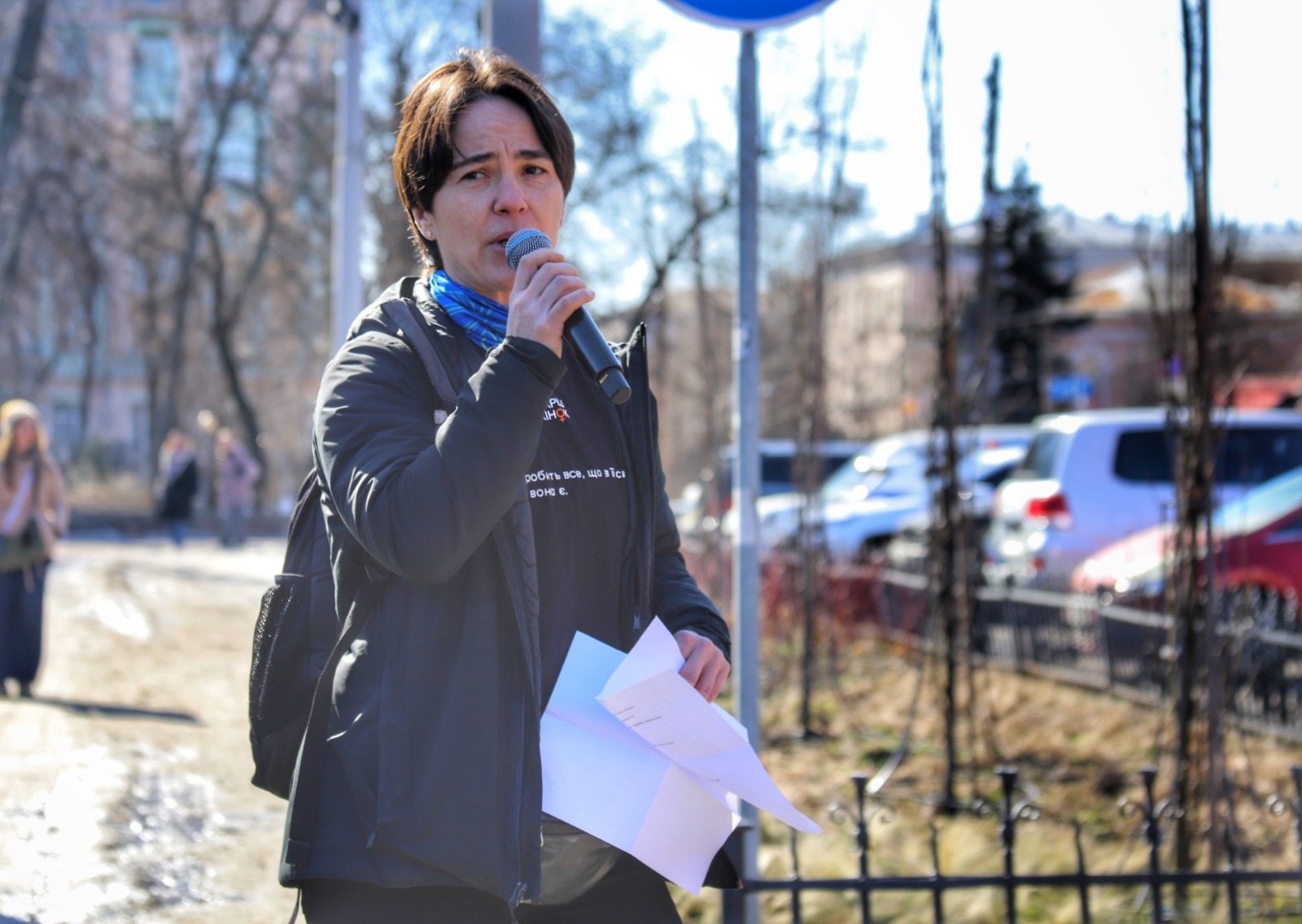 Olena Shevchenko. Photo credit: Oleksandra Yefymenko / ZMINA
The human rights defender also emphasised the need to create a safe environment for women who choose to serve in the army. She stressed that every woman who voluntarily joins the defence of the country must be protected from discrimination, humiliation, and sexual harassment.
Another speaker, Olena Stryzhak, head of the Board of the charity organisation Positive Women, drew attention to the problem of discrimination against women living with HIV. She noted that there are more than 75,000 such women in Ukraine, and they regularly face stigmatisation in medical institutions. According to Stryzhak, these violations are not isolated incidents but systemic. That is why the members of this community marched under the slogan: “Medicine treats, not stigmatises.”
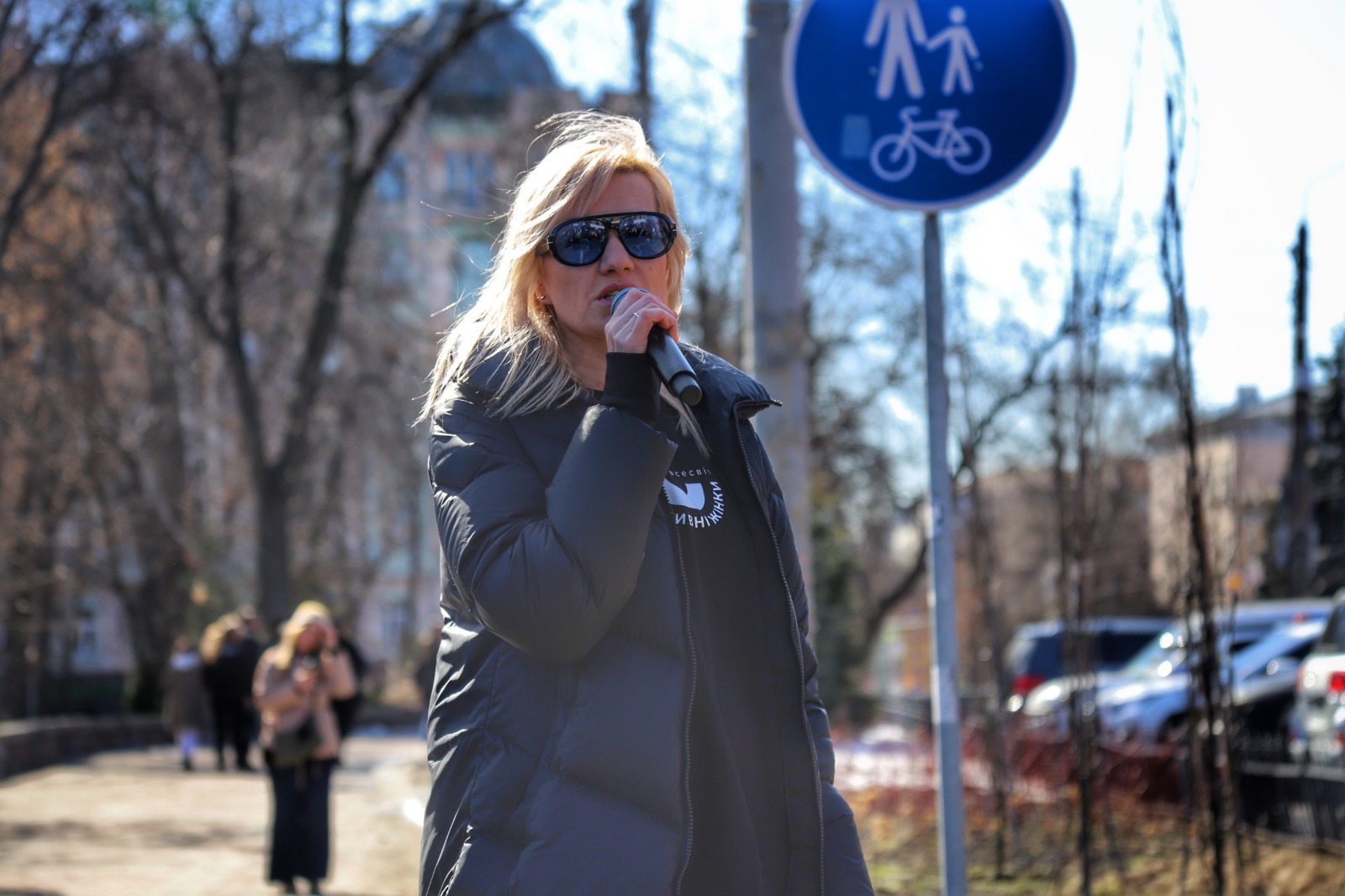 Olena Stryzhak. Photo credit: Oleksandra Yefymenko / ZMINA
Representatives of international organisations also addressed the participants. They emphasised that women in Ukraine support their communities every day, fight on the front lines and help the army, but their work often goes unnoticed. International partners stressed that gender equality is not a privilege but a fundamental right, and expressed their solidarity with Ukrainian women.
Speakers strongly criticised the new version of the Civil Code, which activists consider a threat to women’s rights. The adoption of such a document without broad public discussion could harm European integration processes and narrow the guarantees of gender equality. Participants in the march called for the withdrawal of the draft law and its comprehensive revision.
Leniie Umerova, a Crimean Tatar activist and former Kremlin political prisoner, also gave a speech, reminding everyone about the Ukrainian women who remain illegally held in Russian captivity. She noted that Russian troops have abducted thousands of people in the temporarily occupied territories, including more than two thousand women. She called on people not to forget their names and to demand the release of all Ukrainian civilian hostages.
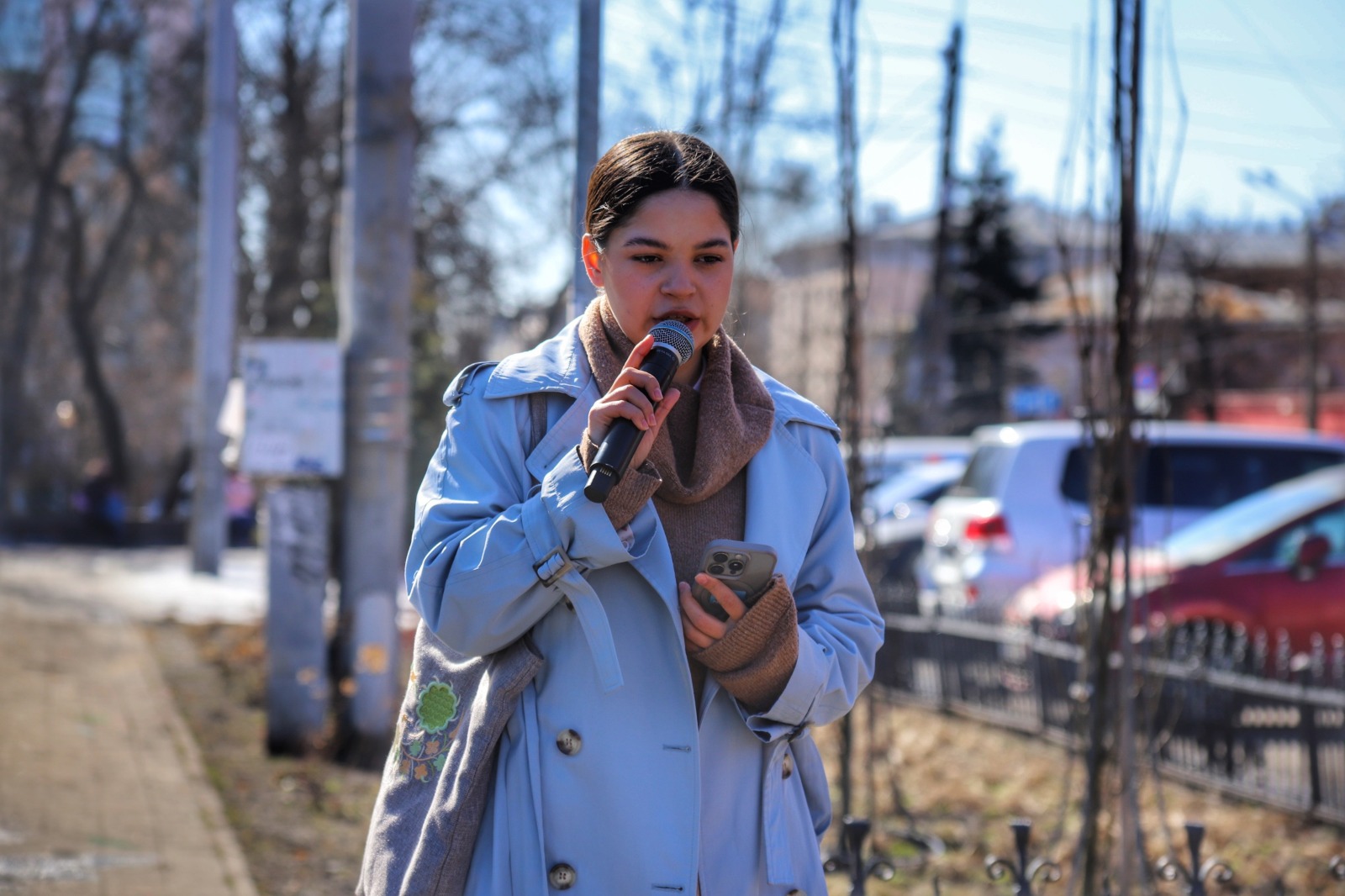 Leniie Umerova. Photo credit: Oleksandra Yefymenko / ZMINA
After the speeches, the organisers thanked those present and stressed that the state should not adopt decisions that affect women’s lives without the participation of women themselves. After that, the march began.
Hundreds of voices joined as one: what messages were voiced during the march?
The march proceeded through the central streets of Kyiv – from Taras Shevchenko Park along Shevchenko Boulevard and Bessarabska Square to Khreshchatyk, where it finished near the Kyiv City State Administration building.
Some of the placards carried by participants demanded respect and protection for women in the Ukrainian Armed Forces, an end to sexism in the military, and adequate provisions for women in the military. Others called for the release of Ukrainian women held in Russian captivity, with slogans such as “Bring every woman back” and “Free every woman”.
Despite the diversity of messages, all participants were united by a common idea – the protection of women’s rights as an inseparable part of human rights and Ukraine’s democratic development.
Criticism of the new draft Civil Code was also a prominent theme of the event: activists chanted: “The Civil Code is a step back – we won’t accept that”, “Civil Code rollback – MP, take it back”, and “Civil Code and all its clones – leave our rights alone”. These slogans reflected concerns that certain legislative initiatives could narrow guarantees of equality and affect Ukraine’s European course.
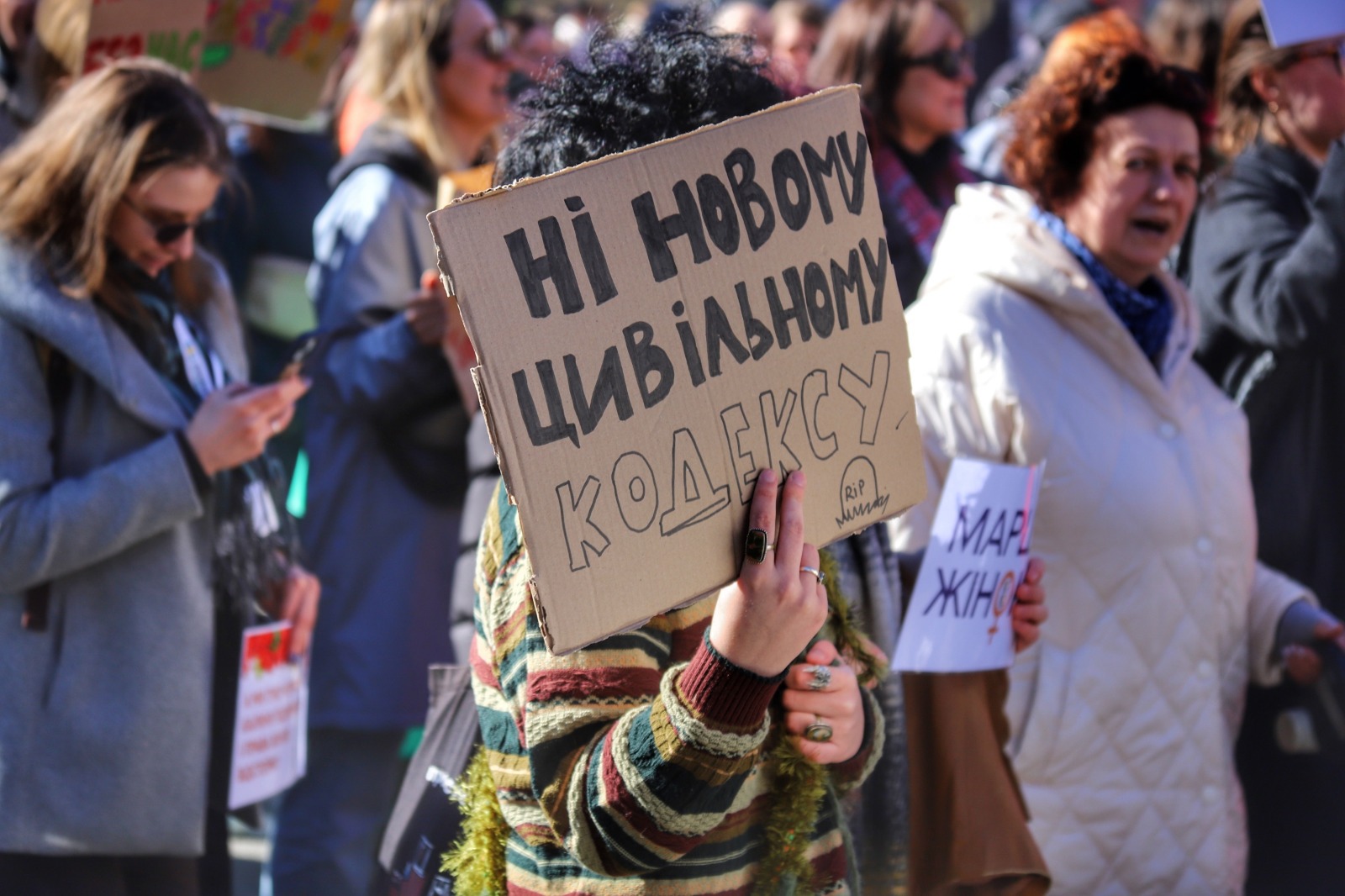 The Women’s March on 8 March 2026, Kyiv. Photo credit: Oleksandra Yefymenko / ZMINA
Among other chants were: “Respect and protection for women in the Armed Forces of Ukraine”, “No sexism in the army”, “Progress or stagnation? European integration”, and “We cannot remain silent – truth will prevail.” Some of the chants were shouted back and forth between participants, spreading in waves throughout the march.
The placards combined political demands and personal stories. They featured calls for equality, demands for the release of Ukrainian women prisoners, and messages of solidarity between different women’s communities.
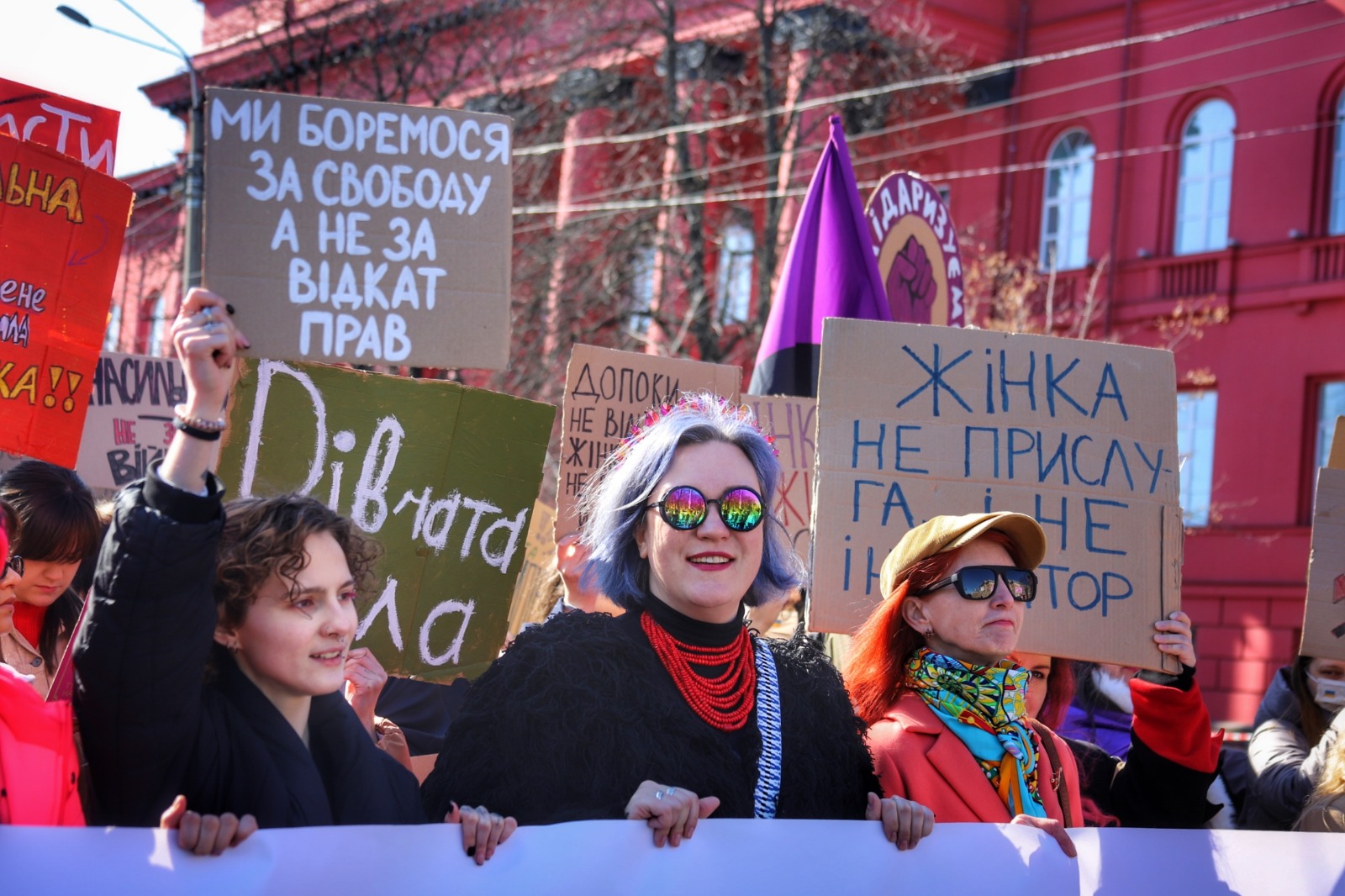 The Women’s March on 8 March 2026, Kyiv. Photo credit: Oleksandra Yefymenko / ZMINA
Volunteers, recognizable by their special vests and balloons, ensured safety during the march. They accompanied the participants, helped people find their way along the route, and coordinated the movement. An ambulance team was also on duty in case of emergencies during the event.
The organisers emphasised that the march remains one of the few instruments of public pressure through which civil society can directly express its position. Such events allow activists not only to voice their demands but also to demonstrate that an active community in Ukraine is ready to defend women’s rights even during wartime. Human rights defenders emphasised that when the public remains silent, decisions are made without its participation, which is why the public visibility of these demands remains fundamentally important.
What was discussed during the “open microphone” session?
After the march concluded, participants gathered for the final part of the event, an “open microphone” session. Activists, human rights defenders, and participants from different groups could take the floor to publicly voice their demands and support one another.
The first speeches addressed the issue of the Civil Code of Ukraine. Speakers argued that attempts to adopt the document without broad public discussion appear to take advantage of the war to restrict women’s rights. In response, participants chanted that they would not allow the Ukrainian authorities to “tighten the screws” and return the country to practices that contradict the principles of equality and democracy.
Among other things, they mentioned provisions that, according to activists, could worsen women’s position in marriage and limit their ability to independently decide on divorce. These include, in particular, permission to marry from the age of 14, a ban on divorce in certain discriminatory circumstances, and the possibility of exemption from paying alimony.
During the speeches, a broader thesis about the role of civil society was also raised. Activists reminded the audience that street protests have repeatedly served as a mechanism for controlling the authorities, from the Orange Revolution to the present day. According to the protest leaders, Ukrainian society will not allow decisions that violate human rights to be made, even during a full-scale war.
You may also want to read: Silent suffering: Crimean human rights defenders and a humanitarian volunteer from Kherson deprived of adequate medical care in Russian captivity
Another part of the speeches focused on Ukrainian women held in Russian captivity. Tetiana Pechonchyk, head of the Board of the Human Rights Centre ZMINA, recalled the story of Iryna Danylovych, a Crimean activist and nurse from temporarily occupied Feodosia, who was abducted by Russian occupiers in 2022.
According to Pechonchyk, after her abduction, Danylovych was held in isolation for a long time and later convicted on fabricated charges. The human rights defender stressed that Ukrainian society must continue to speak out about all civilian prisoners of the Kremlin until each of them returns home. After that, the march participants chanted together: “Free every woman!”
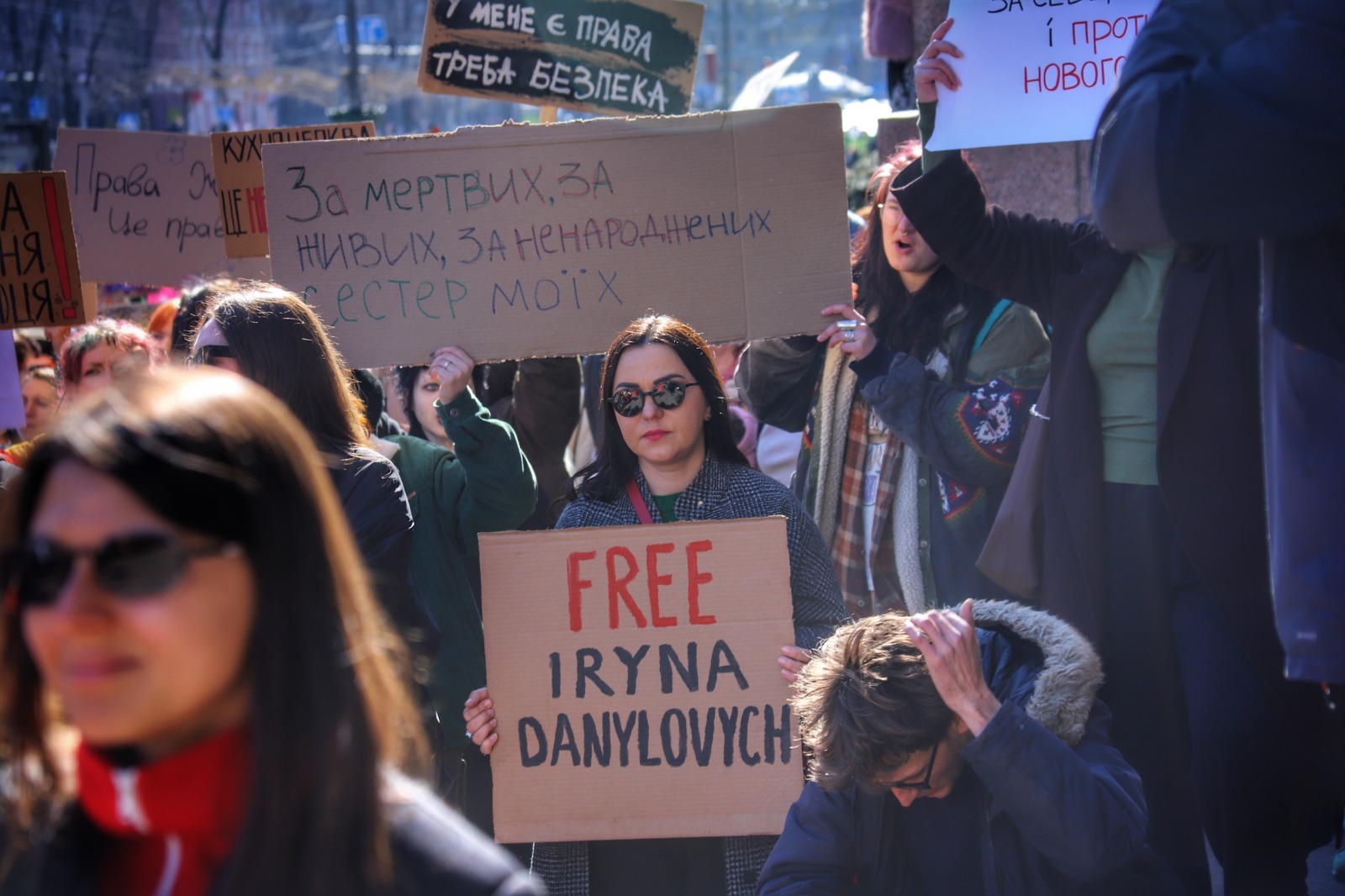 The Women’s March on 8 March 2026, Kyiv. Photo credit: Oleksandra Yefymenko / ZMINA
Activists from regional organisations also took the floor. Anna Sharyhina, president of the Kharkiv Women’s Association Sphere, spoke about sexism in military units and thanked the women who serve in the Armed Forces of Ukraine. She mentioned that many women military personnel continue to defend the principles of equality even in combat conditions, and called on society to support their fight.
Maryna Lehenka, president of the NGO La Strada Ukraine, emphasised in her speech that women’s rights are a matter of justice, dignity, and freedom. She stressed that Ukrainian women are holding both the front line and the home front, but even today, they are forced to prove their right to equality. She also drew attention to the need for a systematic fight against gender-based violence and sexual harassment.
Other topics were also raised during the “open microphone” session:
- support for mothers;
- countering discrimination against women with disabilities;
- the rights of queer women;
- solidarity among different women’s communities.
Participants stressed that none of these issues can remain “secondary” even during wartime, as respect for human rights is what determines the country’s democratic future.
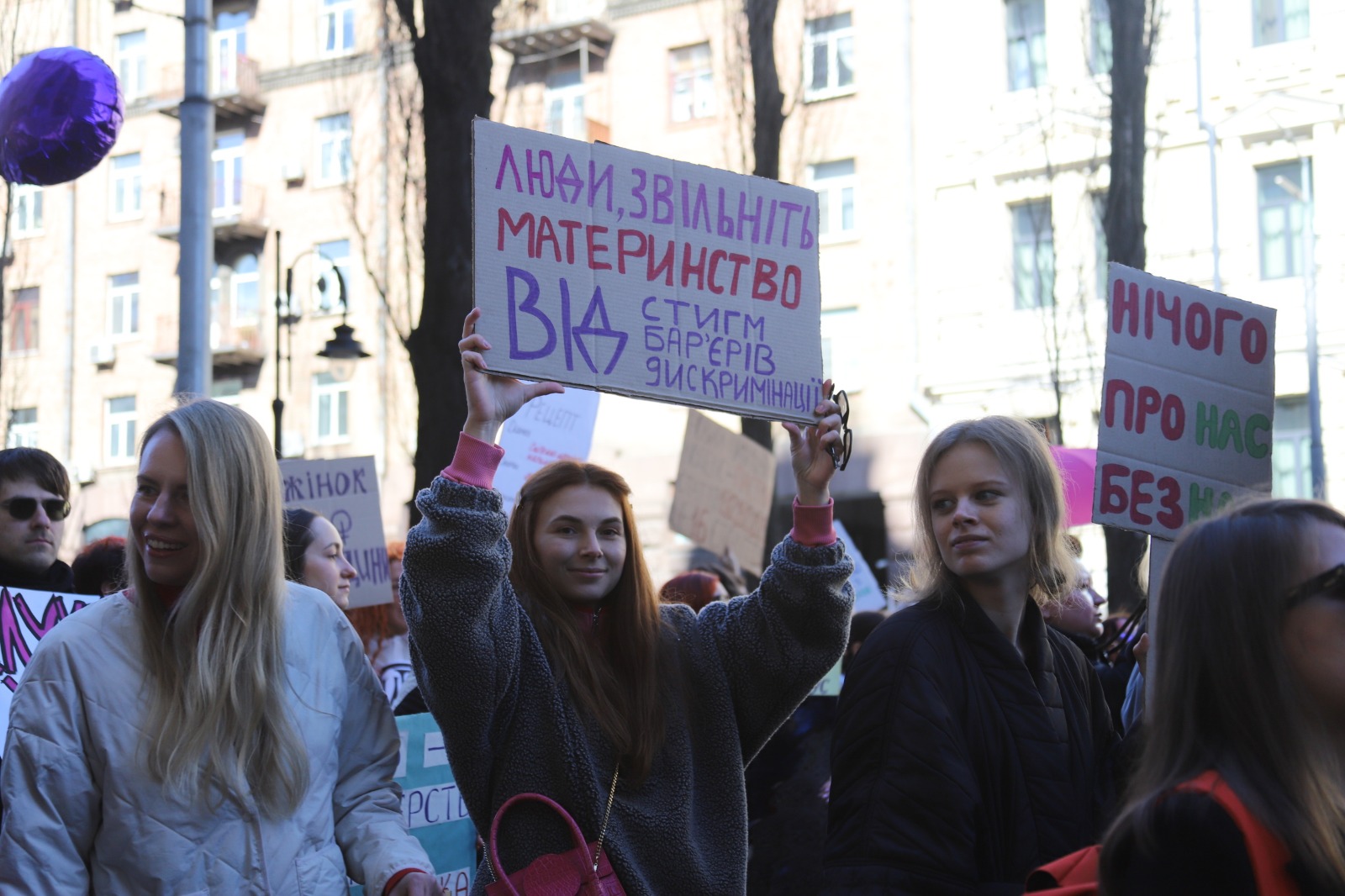 The Women’s March on 8 March 2026, Kyiv. Photo credit: Oleksandra Yefymenko / ZMINA
The final part of the event turned into a collective chanting of the slogans “Women’s rights are human rights” and “Hands off women’s rights”. In conclusion, the organisers thanked the participants for their solidarity and stressed that they are ready to take to the streets again if the authorities attempt to adopt decisions that restrict women’s rights.
Language support: ZMINA volunteer Lisa DeHaven
Liked this article? Follow ZMINA on X and LinkedIn, and help shape our editorial focus by filling out our feedback form here.