Human rights activists have identified 25 individuals involved in the persecution of citizen journalist Remzi Bekirov
At least 25 Russian judges, security officials, and prosecutors have been linked to the persecution of citizen journalist and activist of the human rights grassroots initiative “Crimean Solidarity” Remzi Bekirov, who was sentenced in Russia to 19 years in prison in a politically motivated case following years of pressure in occupied Crimea.
The Crimean Human Rights Group reported these findings, citing its “Crimean Cases” database.
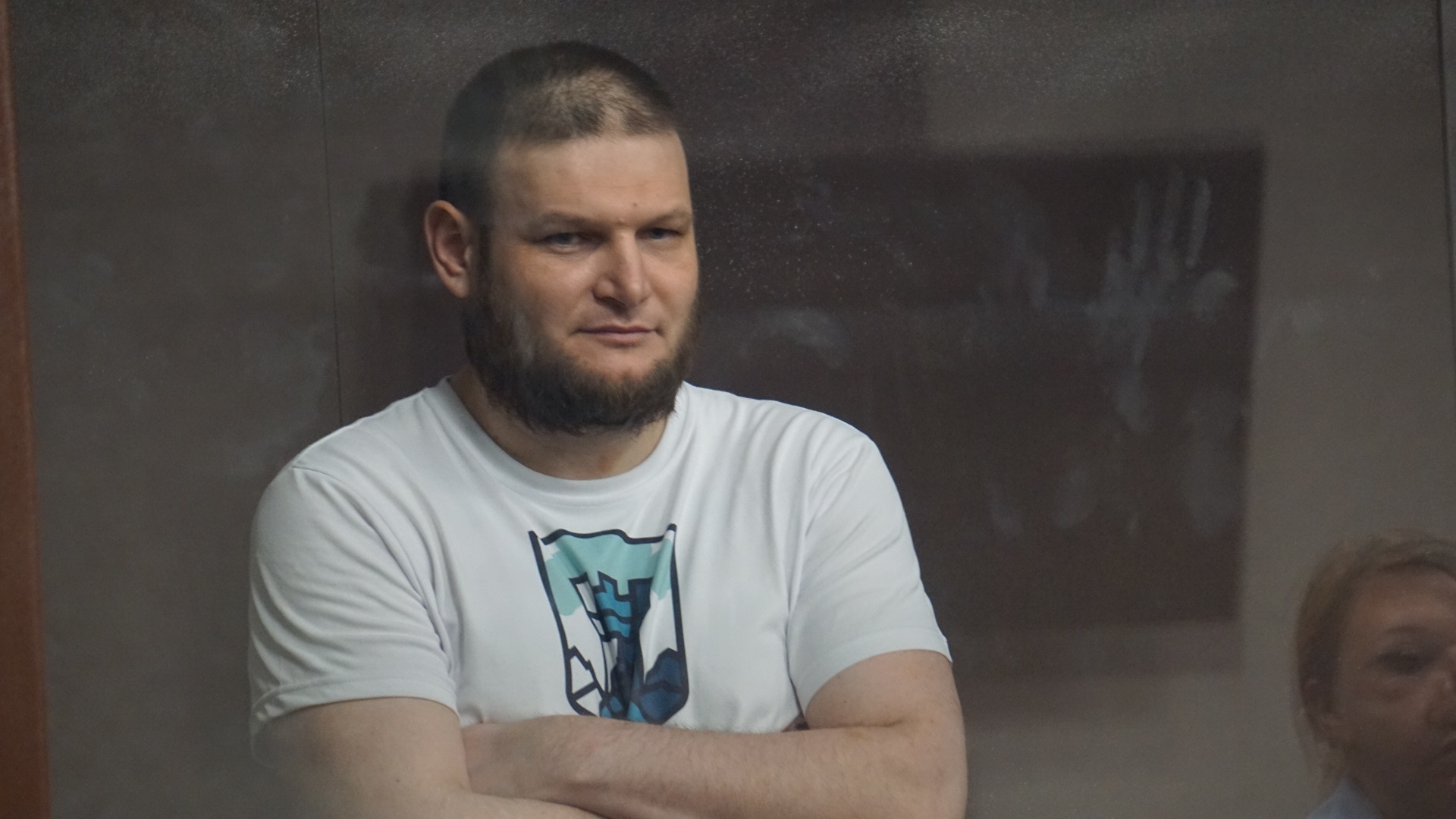 Remzi Bekirov. Photo: Crimean Solidarity
Human rights activists have identified at least 25 individuals involved in the persecution of citizen journalist Remzi Bekirov, who was detained in occupied Crimea and sentenced in Russia in 2022 to 19 years in prison on fabricated charges.
Those implicated in Bekirov’s persecution include Russian judges, prosecutors, and Federal Security Service (FSB) officers. A journalist and activist with the “Crimean Solidarity” movement, Bekirov has faced harassment since 2017. Following his arrest in 2019, he was held in Russian pretrial detention centers and penal colonies under inhumane conditions, subjected to forced transfers and psychiatric evaluations, and denied the full right to a legal defense.
Since his sentencing, Bekirov has been moved frequently between facilities. In a penal colony in Khakassia, authorities have punished him with solitary confinement for his religious practices, specifically for performing namaz, the Islamic ritual prayer performed five times daily by Muslims. His family and legal counsel report that he is under systemic pressure, has lost a significant amount of weight, and is not receiving adequate medical care.
The Crimean Human Rights Group has provided the full list of suspects in the persecution of the journalist throughout the years of occupation:
- Ausheva Viktoriia Iurievna, born Oct. 31, 1973, judge of the Supreme Court of the Republic of Khakassia, Russian Federation (as of June 2025);
- Belousov Mikhail Nikolaevich, born Nov. 26, 1964, “judge” of the illegitimate “Kyivskyi District Court” of temporarily occupied Simferopol (as of June 2022);
- Barvin Vladimir Aleksandrovich, born May 4, 1980, judge of the Leninskii District Court of Rostov-on-Don (since Nov. 7, 2017);
- Belik Svetlana Viktorovna, illegitimate “judge” of the so-called “Simferopol District Court” (as of March 2017);
- Vinnik Sergei Viacheslavovich, born July 16, 1983, judge of the Appellate Military Court of the Russian Federation since June 19, 2019;
- Volkov Oleg Valerievich, judge of the Southern District Military Court (since Dec. 13, 2011);
- Didenko Denis Aleksandrovich, born June 14, 1978, illegitimate “judge” of the “Kyivskyi District Court” of Simferopol (as of Feb. 6, 2025);
- Dolgopolov Andrei Nikolaevich, illegitimate “judge” of the “Kyivskyi District Court” of Simferopol (as of March 2020);
- Egorov Oleg Aleksandrovich, born Aug. 28, 1967, judge of the Appellate Military Court of the Russian Federation (since Nov. 21, 2019, and as of January 2022);
- Zinkov Viktor Ivanovich, born April 9, 1970, illegitimate “judge” of the “Supreme Court” of Crimea (as of December 2020);
- Kaporina Elena Evgenievna, born Nov. 25, 1970, judge of the Third Appellate Court of General Jurisdiction (since June 19, 2019);
- Kolpikov Evgenii Sergeevich, born May 6, 1974, prosecutor of the Military Prosecutor’s Office of the Southern Military District of the Russian Federation in Rostov-on-Don (as of November 2022);
- Krivtsov Kirill Nikolaevich, born June 29, 1980, judge of the Southern District Military Court (as of October 2024);
- Lavrov Aleksandr N., “senior investigator-criminalist of the investigative department of the FSB Directorate of Russia for the Republic of Crimea and the city of Sevastopol,” captain of justice (as of February 2025);
- Lebed Oleg Dmitrievich, born Feb. 13, 1966, illegitimate “judge” of so-called “Supreme Court of the Republic of Crimea” (as of March 2024);
- Makhnov Sergei Vladimirovich, “senior investigator for especially important cases of the investigative department of the FSB Directorate of Russia for the Republic of Crimea and the city of Sevastopol,” colonel of justice (as of March 2019 and through 2021 inclusive). As of August 2025, works as a lawyer in Moscow, Russian Federation;
- Mikitiuk Olga Andreevna, illegitimate “judge” of the “Kirovskyi District Court of Crimea” (as of December 2025);
- Mozhelianskii Viktor Anatolievich, born May 10, 1964, illegitimate “judge” of the “Kyivskyi District Court” of Simferopol (as of March 2019), later deputy head of the so-called “Tsentralnyi District Court” of temporarily occupied Simferopol;
- Mostovenko Natalia Rudolfovna, illegitimate “judge” of the so-called “Supreme Court” of Crimea (as of May 2017);
- Peresada Aleksandr Nikolaevich, judge of the Appellate Military Court of the Russian Federation (as of October 2024);
- Redko Galina Vladimirovna, illegitimate “judge” of the “Supreme Court” of Crimea (as of September 2023);
- Solin Anatolii Valentinovich, born Jan. 10, 1968, judge of the Appellate Military Court of the Russian Federation (since June 19, 2019, and as of March 2024);
- Tkachev Igor Viktorovich, born June 25, 1987, judge of the Leninskii District Court of Rostov-on-Don (since April 11, 2016), judge of the Rostov Regional Court (Aug. 9, 2020);
- Tsikurenko Anton Sergeevich, born Nov. 12, 1972, “judge” of the “Kyivskyi District Court” of Simferopol (as of August 2025);
- Shambazov Ruslan Rinatovich, born May 19, 1984, “senior operative officer of the Department of Internal Affairs of the Central District of the Ministry of Internal Affairs of Russia in the Republic of Crimea,” police major (as of May 2017).
The ZMINA news outlet previously reported that Remzi Bekirov claimed constant pressure from the administration of Penal Colony No. 33 in Khakassia, inhumane detention conditions, and a sharp deterioration in his health. During his imprisonment, he has lost approximately 30 kilograms and receives almost no proper medical care.
To provide background, the religious party Hizb ut-Tahrir has been banned in Russia since 2003; however, it operates legally in all territories of Ukraine, including the Autonomous Republic of Crimea, as well as in many other countries. Russia, in violation of the Geneva Convention, applies its own criminal legislation to the temporarily occupied territories of Ukraine.
Earlier, Freedom House pointed out that following the Russian annexation of Crimea in 2014, allegations of membership in Hizb ut-Tahrir have become a common pretext for criminal prosecutions there, and are one of many abuses of anti-extremism legislation against civic activists and others.
You may also want to read: List of imprisoned Ukrainian journalists 2025 in temporarily occupied Crimea
Crimea is internationally recognized as Ukrainian territory under temporary Russian occupation since 2014.
UN General Assembly Resolution 68/262 affirmed Ukraine’s territorial integrity within its internationally recognized borders, including the Crimean Peninsula. The annexation violated the UN Charter, the Budapest Memorandum, and international law. The EU, the U.S., and most countries refuse to recognize Russian sovereignty over Crimea.
“Judges”, representatives of the “police”, “FSB” operating on Ukrainian soil illegally, temporarily occupied by Russia, are illegitimate.
Since the occupation of Crimea began, Russian authorities have forced independent Ukrainian media off the peninsula and built a propaganda media ecosystem. Consequently, the phenomenon of citizen journalism has emerged on the peninsula.
Citizen journalists in occupied Crimea are individuals who document and report on human rights violations, repressions, and the situation on the peninsula under Russian occupation, often working independently or as part of grassroots initiatives rather than traditional media outlets. The term encompasses people who publish information on social media, cover protests and human rights abuses, and document the realities of life under occupation. Ordinary Ukrainian citizens who publish information or opinions unfavorable to the occupiers on social media can be targeted under Russia’s terrorist and extremism laws.
Earlier, Ukraine called on the world not to ease sanctions against Russia until all of Ukraine’s territories are liberated.