UN coalition seeks to prosecute Russia’s militarisation of Ukrainian children as a crime against humanity
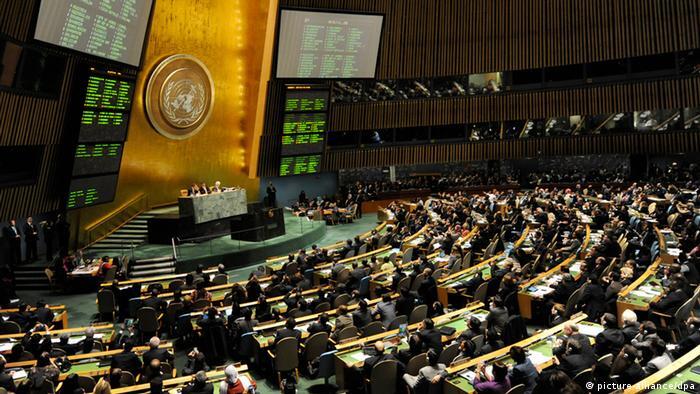
At a high-level event during the United Nations General Assembly, a cross-regional coalition of governments on 24 September 2026 called for Russia’s indoctrination and militarisation of Ukrainian children to be prosecuted as a crime against humanity, through a formal accountability framework.
The initiative of the president of Ukraine, Bring Kids Back UA, reported ZMINA.
While existing International Criminal Court arrest warrants address unlawful deportation, no comparable international legal framework currently exists to prosecute the systematic militarisation and identity suppression of abducted minors as state policy.
The Atrocity Crimes Advisory Group (ACA), working through Georgetown University’s International Criminal Justice Initiative (ICJI), presented a newly commissioned report detailing the scale of Russia’s policy.
The report found that, as well as the over 20,000 children verified as deported and forcibly transferred by Russia, approximately 1.6 million Ukrainian children in occupied territories are exposed to state-directed indoctrination and militarisation. They include at least 582,600 school-aged children subjected to curricula designed to erase Ukrainian identity and create pathways toward Russian military conscription.
Guided by the legal analysis presented, co-sponsors moved to prosecute state-directed indoctrination as persecution on national grounds, an underlying offence of crimes against humanity. This mechanism would define Russia’s actions not only as unlawful border transfers but as a deliberate, state-sponsored system to permanently erase Ukrainian identity and forcibly assimilate children.
Clint Williamson, lead coordinator of the ACA and senior director of the ICJI, said that the report’s overarching conclusion is that the documented campaign of indoctrination and militarisation of Ukrainian children, implemented by Russian authorities, is in violation of various aspects of international humanitarian law, international human rights law, and international criminal law.
“It requires sustained investigation, documentation, accountability for the perpetrators, and perhaps most importantly, support for the affected children and their families,” he stated.
“The unlawful deportation and forcible transfer of Ukrainian children by the Russian Federation is a grave violation of international law, and also an attempt to deprive Ukraine of its future. Ukrainian children who live under Russian control today are subjected to militarisation and indoctrination by Russia, including the forced imposition of Russian citizenship, followed by indoctrination at school, military camps, military academies and conscription into the Russian army. Russia’s violations against Ukrainian children are systematic and may entail responsibility for crimes against humanity,” Deputy Foreign Minister of Ukraine Mariana Betsa commented.
“This is “the arc of Russia’s design: isolate, reprogramme, deploy. Each step reinforces the one before. The circle closes. A child who was taught to forget Ukraine is now ready to fight it. This is why deportations cannot be the whole story. Deportation, forcible transfer, indoctrination, and militarisation form one system that must be investigated as one state policy. It should be judged by the logic that holds it together, not only by its most visible part. Otherwise, most of the affected children will remain invisible. And those responsible will escape justice,” Maksym Maksymov, head of Bring Kids Back UA, said during the event.
Meanwhile, representatives of the U.S. State Department announced a decision to support a $12 million program for the reintegration of children returned from the temporarily occupied territories of Ukraine and from Russia, and an additional $15 million to trace, return and reintegrate Ukrainian children has been submitted for consideration.
As of September 2026, Ukraine has officially confirmed 20,651 cases of deportation and forced transfer of Ukrainian children to Russia. However, the ACA report demonstrates that physical deportation is only one component of a broader, comprehensive state policy aimed at demographic engineering.
By defining forced assimilation and child militarisation as actionable atrocity crimes, the coalition aims to shape a shared international approach that prevents state actors globally from exploiting minors as demographic and military resources in armed conflict.
The legal framework and evidence presented in New York will feed directly into Pathways to Peace: The Second International Conference on Returning Ukrainian Children, Detained Civilians and Prisoners of War, co-hosted by Canada, Ukraine, and Norway in Toronto on 28–29 September. The conference will address legal baseline-setting, operational execution, formalising third-party mediation protocols, tracing mechanisms, and cross-border partnerships to accelerate the return and reintegration of Ukrainian children who have been forcibly deported by Russia or live in occupied territories.
The event, Ensuring Accountability for Ukraine, was co-hosted by the Group of Friends of Accountability, led by the governments of Albania, Denmark, the Kingdom of the Netherlands, and the Marshall Islands and in cooperation with Ukraine, the European Union, Canada, Estonia, and Lithuania.
To provide background, in international law, ‘persecution on national grounds’ is a crime against humanity. It occurs when a government systematically strips a group of people of their fundamental human rights simply because of their nationality. In this context, it provides the international legal framework to prosecute the industrial-scale identity erasure, forced re-education, and militarisation of Ukrainian youth in occupied territories.
Join us on X, Bluesky and LinkedIn for daily human-rights updates – and help shape ZMINA’s English coverage by sharing your thoughts here.