Russia has opened criminal cases against 1,500 Ukrainian prisoners of war, rights group head says
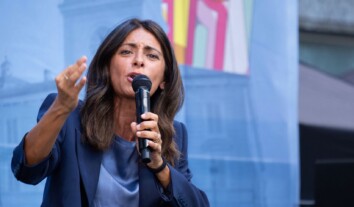
Ukrainian prisoners of war (POWs) are held in at least 196 custodial settings in Russia and the temporarily occupied territories, Tetiana Katrychenko, head of the Media Initiative for Human Rights (MIHR), said. She reported that more than 10,000 Ukrainian military personnel are in Russian captivity, most with no contact with the outside world, and that Russia has opened criminal cases against 1,500 Ukrainian service personnel.
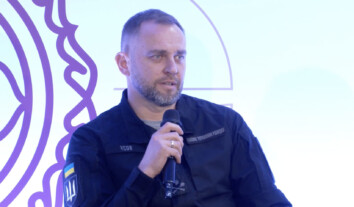
 Tetiana Katrychenko. Photo credit: MIHR
The second Pathways to Peace conference on returning Ukrainian children, detained civilians and prisoners of war took place in Toronto. It was organised by Canada, Ukraine and Norway, and representatives of dozens of states, international organisations and experts took part.
During the conference, Katrychenko spoke about the conditions in which Ukrainian POWs are held in Russia, which she described as inhumane, and called on international partners to take concrete action.
“We study the map of Russia in search of new places where Ukrainian prisoners of war are held. And we find them in places like Yamal, Irkutsk and Karelia,” Katrychenko said.
According to the MIHR head, Russia is also opening criminal cases against Ukrainian prisoners of war. Currently, this involves 1,500 Ukrainian military personnel. The MIHR states that the prisoners are tortured to obtain the “confessions” needed by Russian investigators.
Related: Russian forces widely use sexual violence and torture against detainees, UN reports
She also said international organisations, including the International Committee of the Red Cross, do not have regular access to places of detention, so no one can check regularly on conditions or whether prisoners’ rights are respected.
The head of MIHR listed her first steps:
- giving international organisations access to places of detention;
- stopping torture;
- returning severely ill and wounded prisoners of war;
- refusing to recognise Russian court verdicts against Ukrainian service personnel.
Among the priority steps, the head of the MIHR named ensuring access for international organisations to places of detention, stopping torture, returning severely ill and wounded prisoners of war, and non-recognition of Russian court verdicts against Ukrainian service personnel.
“Peace and security are not just Ukraine’s responsibility. It is a global responsibility,” Katrychenko emphasised.
She stressed that compliance with international law is in the interests of the whole world.
To provide background, Ukrainian prisoners of war who were held in Pre-Trial Detention Centre No. 2 in Kamyshin in Russia’s Volgograd Oblast did not get enough to eat, according to five released soldiers who were held there at different times. Russians used food shortages as a means of punishment.
Despite systematic torture, the soldiers did not receive adequate medical care. They have been held there since at least the autumn of 2022.
One of the former prisoners said that due to constant hunger, some military personnel ate cockroaches, spiders and bones. According to him, the prisoners also consumed toothpaste to somehow dull the feeling of hunger. In particular, one of the men mixed it with soap and ate this mixture.
On July 24, 2025, the OSCE invoked the Moscow Mechanism after 41 participating states, in consultation with Ukraine, requested that the Office for Democratic Institutions and Human Rights examine the treatment of Ukrainian prisoners of war by Russia. Ukraine established a mission of three experts on August 15 to investigate possible violations of OSCE commitments, international humanitarian law, and international human rights law.
You may also want to read: Russian general Roman Demurchiev brags to wife about torturing and executing Ukrainian POWs
The OSCE mission found that Russia systematically denies prisoner of war status to Ukrainian combatants, subjects them to widespread torture and ill-treatment, including severe beatings, electric shocks, sexual violence, and mock executions, and conducts arbitrary killings and executions both on the battlefield and in detention.
Russian officials’ public statements declaring “no quarter will be given” encourage summary executions. Detention conditions fall below international standards, with overcrowding, inadequate food and medical care, and forced labor. POWs are denied fair trial guarantees through coerced confessions and unfair proceedings, while family communication and International Committee of the Red Cross access remain severely restricted. The mission concluded these violations constitute war crimes and, in some cases, arguably crimes against humanity.
Photo: Kostiantyn and Vlada Liberov