Russia detains four Crimean Tatar women after mass raids in occupied Crimea
Russian security forces raided the homes of Crimean Tatars and detained four women in temporarily occupied Crimea on the morning of October 15, 2025, Refat Chubarov, chair of the Mejlis of the Crimean Tatar People, stated.
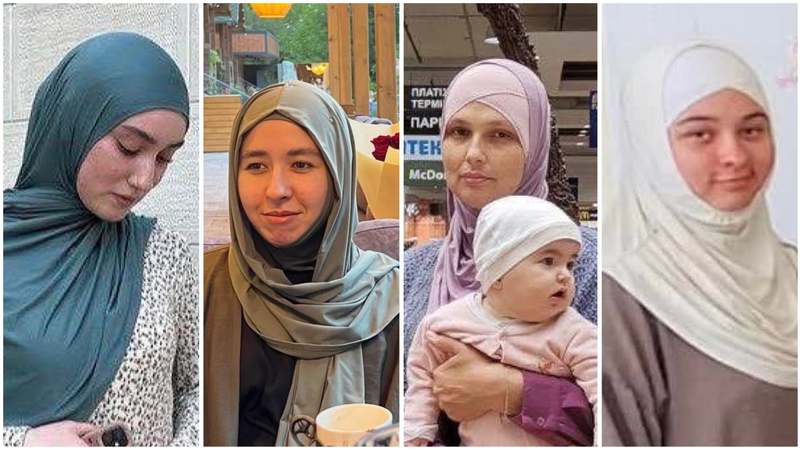 Nasyba Saidova, Fevziye Osmanova, Esma Nimetullayeva, Elviza Aliyeva
The detainees included Esma Nimetulaieva, a confectioner, a mother of five minor children, and the wife of Crimean Tatar political prisoner Remzi Nimetulaiev, 40, who was sentenced to prison on fabricated charges of organizing the activities of religious party Hizb ut-Tahrir under Part 1, Article 205.5 of the Russian Criminal Code. His case, along with five other Crimean Tatar activists, is being reviewed by the Southern District Military Court.
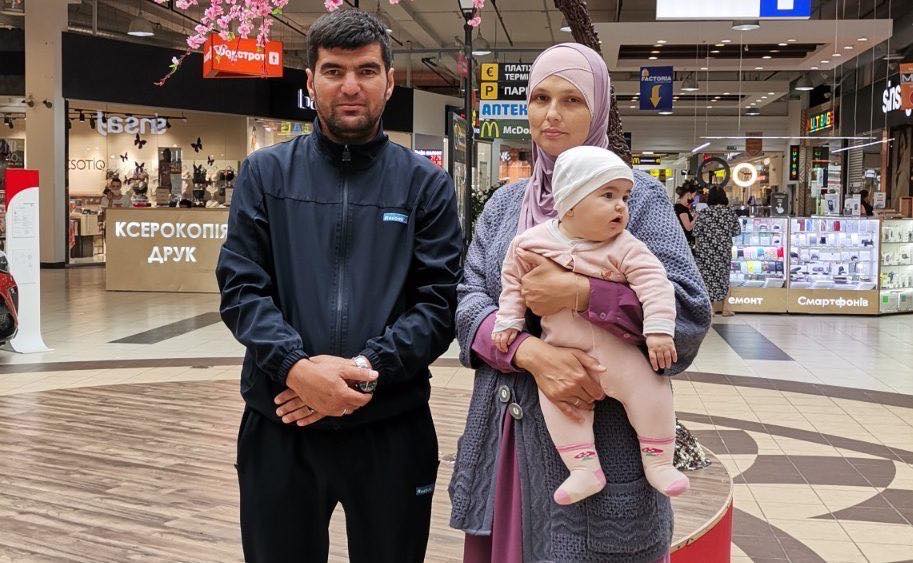 The family of Remzi and Esma Nimetullayev (archival photo). Source: Crimean Solidarity
According to the Crimean Solidarity human rights grassroots initiative, searches also took place:
- At the home of Nasyba Saidova in the village of Kholmivka, in the Bakhchysarai District;
- At the home of Elviza Aliieva in the village of Dolynne;
- At the home of Elianora Osmanova in the village of Orlivka.
 Elviza Aliyeva. Source: Crimean Solidarity
Aliia Bekirova, the 73-year-old mother of detainee Esma Nimetulaieva, told Crimean Solidarity that Russian security forces came to their home with a search warrant at 4 a.m. Esma saw the police through the window, warned her family not to worry, and opened the door so that they would not break in. Bekirova recalled that her daughter was taken to another room while she was ordered to sit with her grandchildren. The security officers did not show the family a search warrant.
The FSB operatives even searched the children’s room and then went down to the basement. They confiscated two phones, including those of the children, but later returned them after inspection.
“While Esma was getting ready, they followed her one by one, not leaving her unattended. She was taken to the FSB headquarters at about 7 a.m. – three hours after the search began,” Bekirova said.
She added that during the search, the security officers told her that the children could “be taken into state custody” if there was no legal guardian.
“They told me: ‘You’ll stay with your grandchildren, you can apply for guardianship. If not, the state will take the children.’ … I asked: ‘Why are you doing this? When the parents are alive, you are making the children orphans. What have they done wrong? They are practicing their religion – what right do you have to treat us this way?'”
Khatidzhe Nimetullayeva, the 68-year-old mother of the political prisoner, Remzi Nimetullayev, said that the security forces found nothing.
“We will live with faith and hope. We know that our children, everyone who is sitting in prisons (my son is sitting in Rostov-on-Don), are not terrorists. The Crimean Tatar People have never had terrorists. There is not a single case, not a single complaint, that our children committed an act inappropriate for a Muslim. They are simply believing people, respected members of our society,” the woman said
“Yes, we are guilty in that we are observant, we are respectable, honest, we do not lie, we do not steal. We simply see everything truthfully and justly. I think that’s what displeases our authorities. But we will proudly and honestly go through the labyrinths of the trials set by our Almighty,” Khatidzhe Nimetullayeva added.
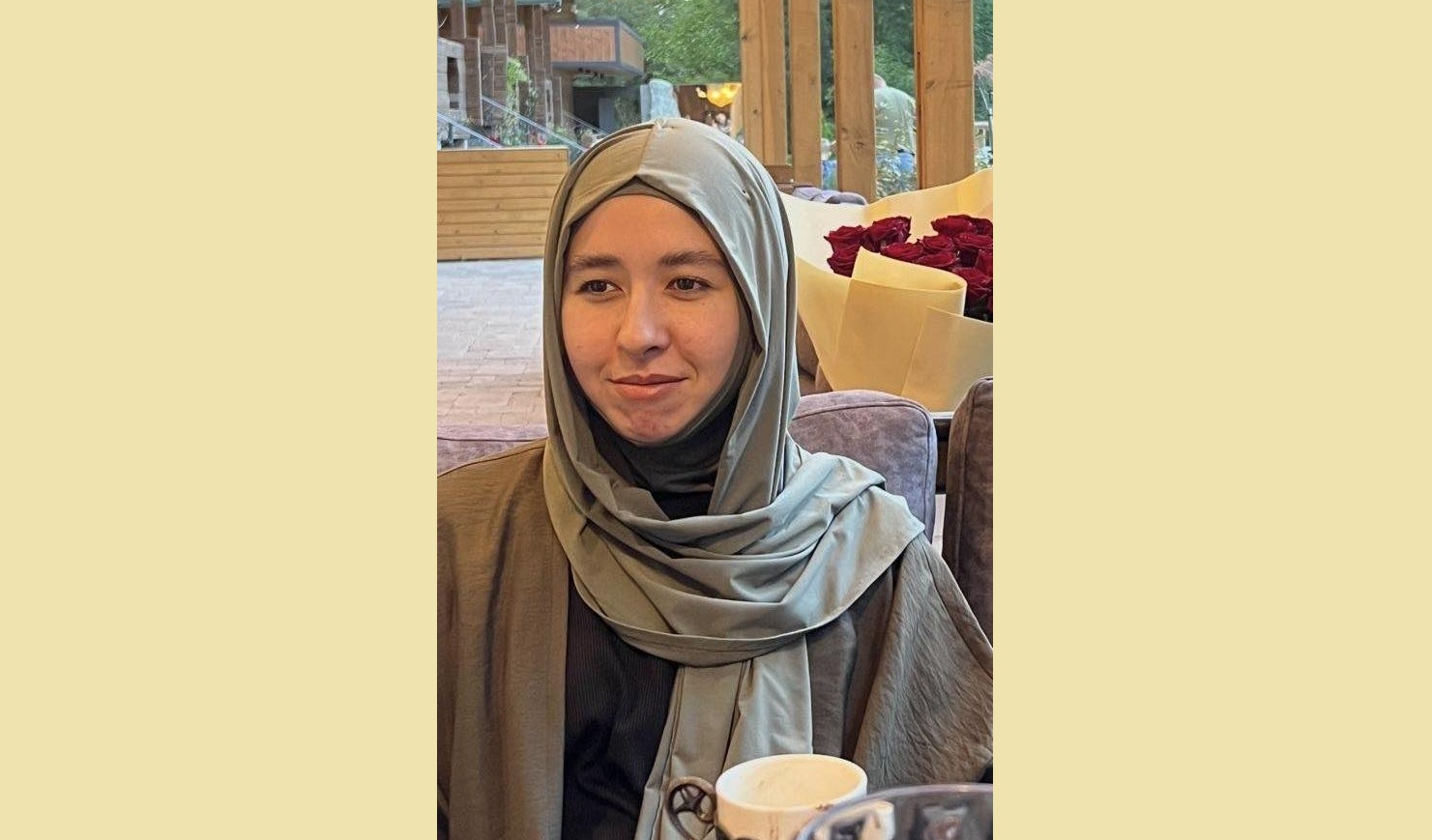 Fevziye Osmanova. Source: Crimean Solidarity
One of the other detainees, Nasyba Saidova, was studying at a pedagogical college and had started working in a nursery group at a kindergarten before she was detained.
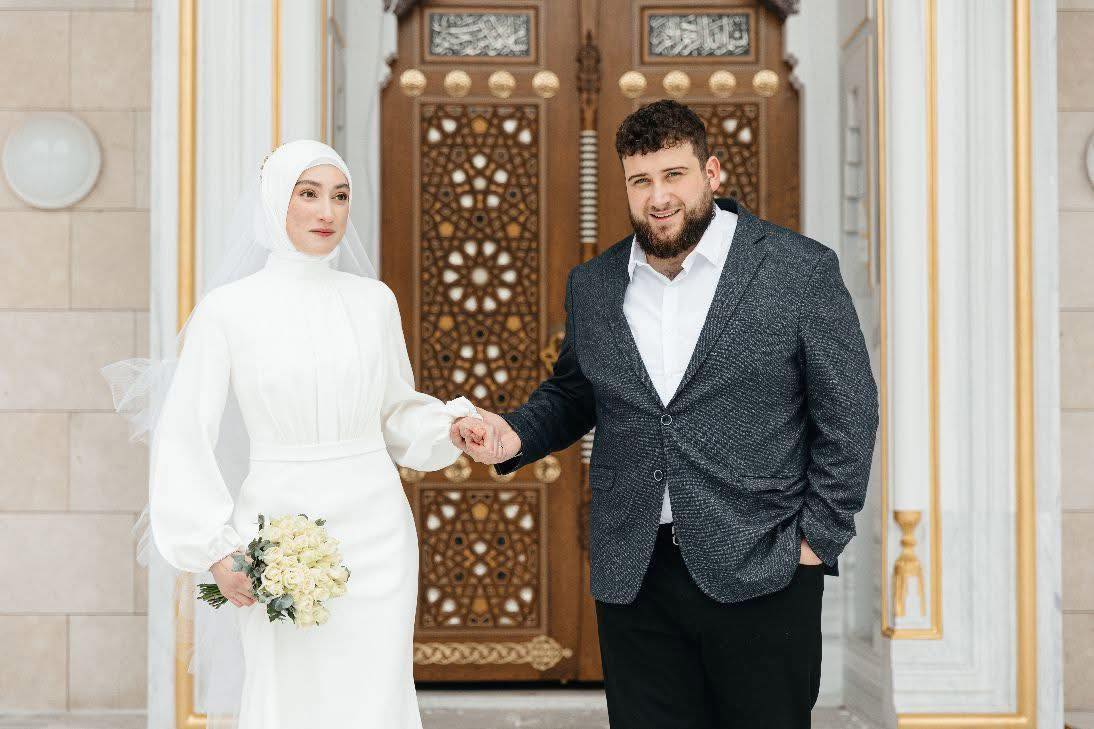 Nasyba Saidova. Source: Crimean Solidarity
Crimean lawyer Emil Kurbedinov commented on the detention of his client, Esma Nimetullayeva: she is accused under Part 1, Article 205.5 of the Criminal Code of the Russian Federation (“Organization of the activities of a terrorist organization and participation in the activities of such an organization”). The three other detainees face the same charge.
The illegitimate “Kyiv District Court” in occupied Simferopol has scheduled a hearing on October 16 to select pretrial measures for the women.
“As I understand, the FSB will petition specifically for their detention in a pretrial isolation facility,” Kurbedinov added.
The Mission of the President of Ukraine in the Autonomous Republic of Crimea resolutely condemned the latest searches and detentions, calling them a continuation of a systematic policy of intimidation and suppression of any signs of dissent. The Mission emphasized that these actions severely violate the norms of international humanitarian law, the Geneva Conventions, and fundamental human rights.
Moreover, the Mission emphasized that these repressions are consistent and part of a deliberate strategy by the occupying authorities aimed at forcing out, isolating, and destroying the identity of the temporarily occupied peninsula.
It called on Ukrainian and international media, human rights organizations, and the public to spread the truth about the persecution in Crimea so that no crime committed by the occupiers goes unnoticed.
The religious party Hizb ut-Tahrir has been banned in Russia since 2003; however, it operates legally in all territories of Ukraine, including the Autonomous Republic of Crimea, as well as in many other countries. Russia, in violation of the Geneva Conventions, applies its own criminal legislation to the temporarily occupied territories of Ukraine.
Earlier, Freedom House pointed out that following the Russian annexation of Crimea in 2014, allegations of membership in Hizb ut-Tahrir have become a common pretext for criminal prosecutions there, and are one of many abuses of anti-extremism legislation against civic activists and others.
Also, take a look at this photo project: “I will always wait for you, my child!”
By way of background, in April 2023, Dunja Mijatović, the Council of Europe Commissioner for Human Rights, released report, “Crimean Tatars’ struggle for human rights.” Mijatović confirmed numerous serious human rights violations, namely persecution, discrimination, and stigmatization, by Russian occupying forces of representatives of the Crimean Tatar community and those who oppose the illegal occupation of Crimea.