On February 12, Russian shelling killed eight adults and child in Ukraine
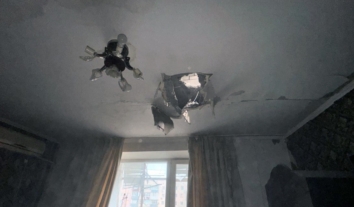
As a result of Russian shelling during the 24-hour period of February 12, 2026, nine civilians were killed in the Zaporizhzhia, Donetsk, Kharkiv, and Kherson regions, and more than two dozen others were injured, including in Kyiv and the Dnipropetrovsk and Odesa regions, according to the National Police of Ukraine.
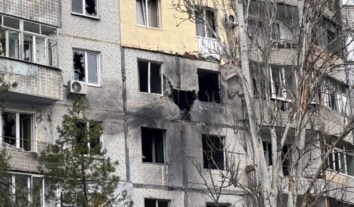
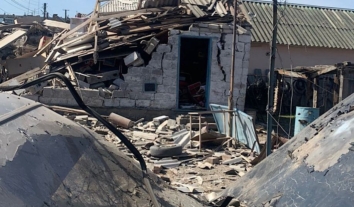
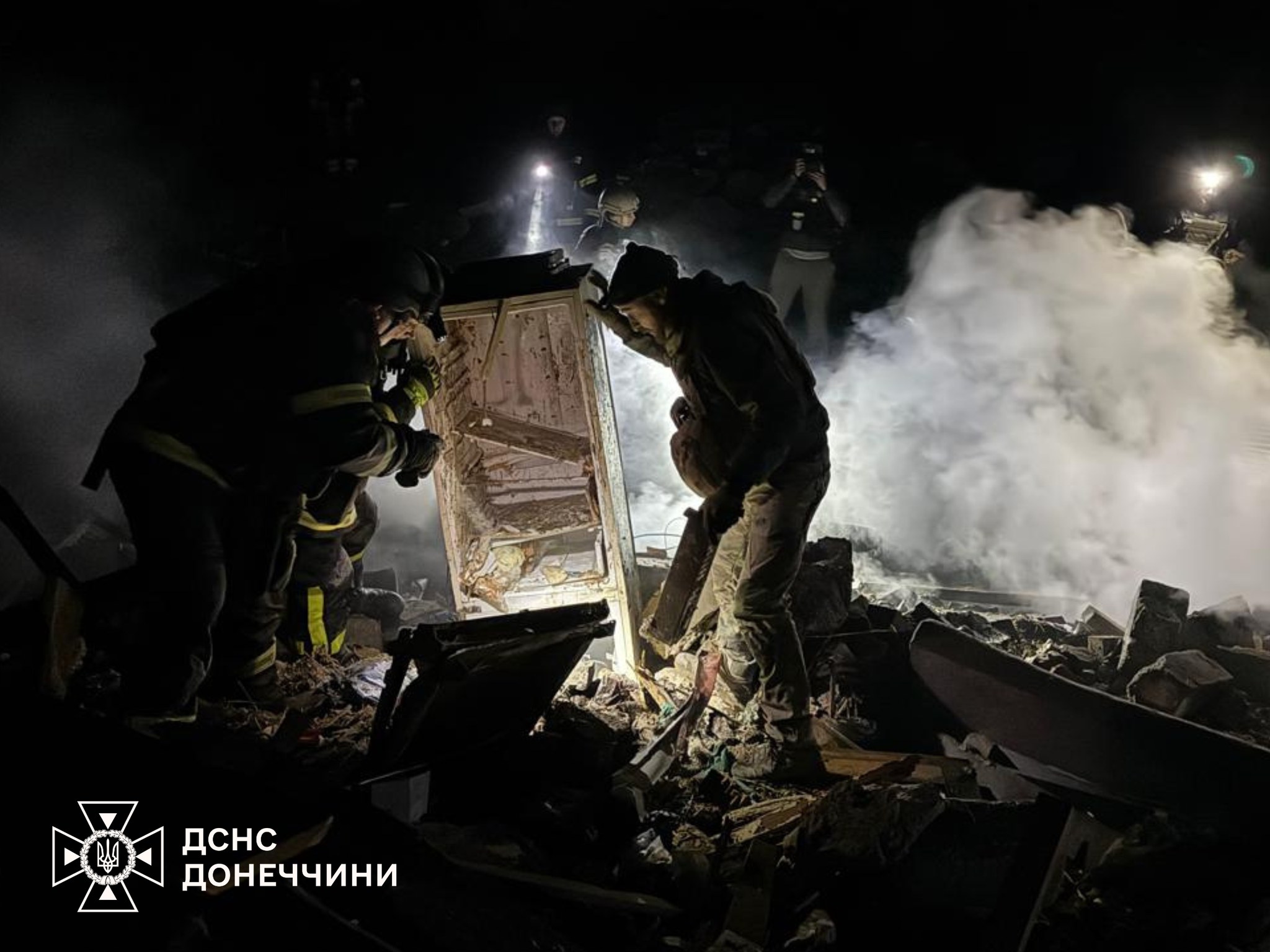 Rescuers are searching for the bodies of an 8-year-old boy, his twin brothers, and an elderly neighbor under the rubble of a building targeted and struck by the Russian military in Kramatorsk, the Donetsk Oblast
The victims of Russian shelling on February 12 were:
- An 8-year-old boy, his two 19-year-old twin brothers, and a 63-year-old neighbor from a house in Kramatorsk, which was targeted and struck by a Russian drone;
- A 48-year-old man from Osavulske;
- A 56-year-old woman from Orikhiv, who was traveling in a car and hit by a Russian drone;
- A 67-year-old woman from the village of Rozsokhuvate, located near the administrative border with the Luhansk Oblast;
- A 52-year-old resident of Antonivka, who died after an enemy artillery strike.
Dozens more people were injured due to Russian strikes on February 12, with the highest number — 12 — in the Donetsk Oblast. Among the victims are the mother and grandmother of the children killed in Kramatorsk, three locals each in Druzhkivka and Malotaranivka, and two in Cherkaske, where the Russian Federation killed a civilian.
Four people each were injured in the Kharkiv and Kherson regions.
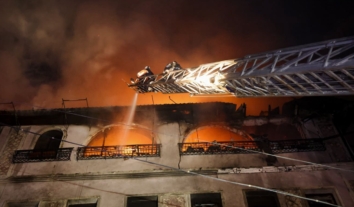
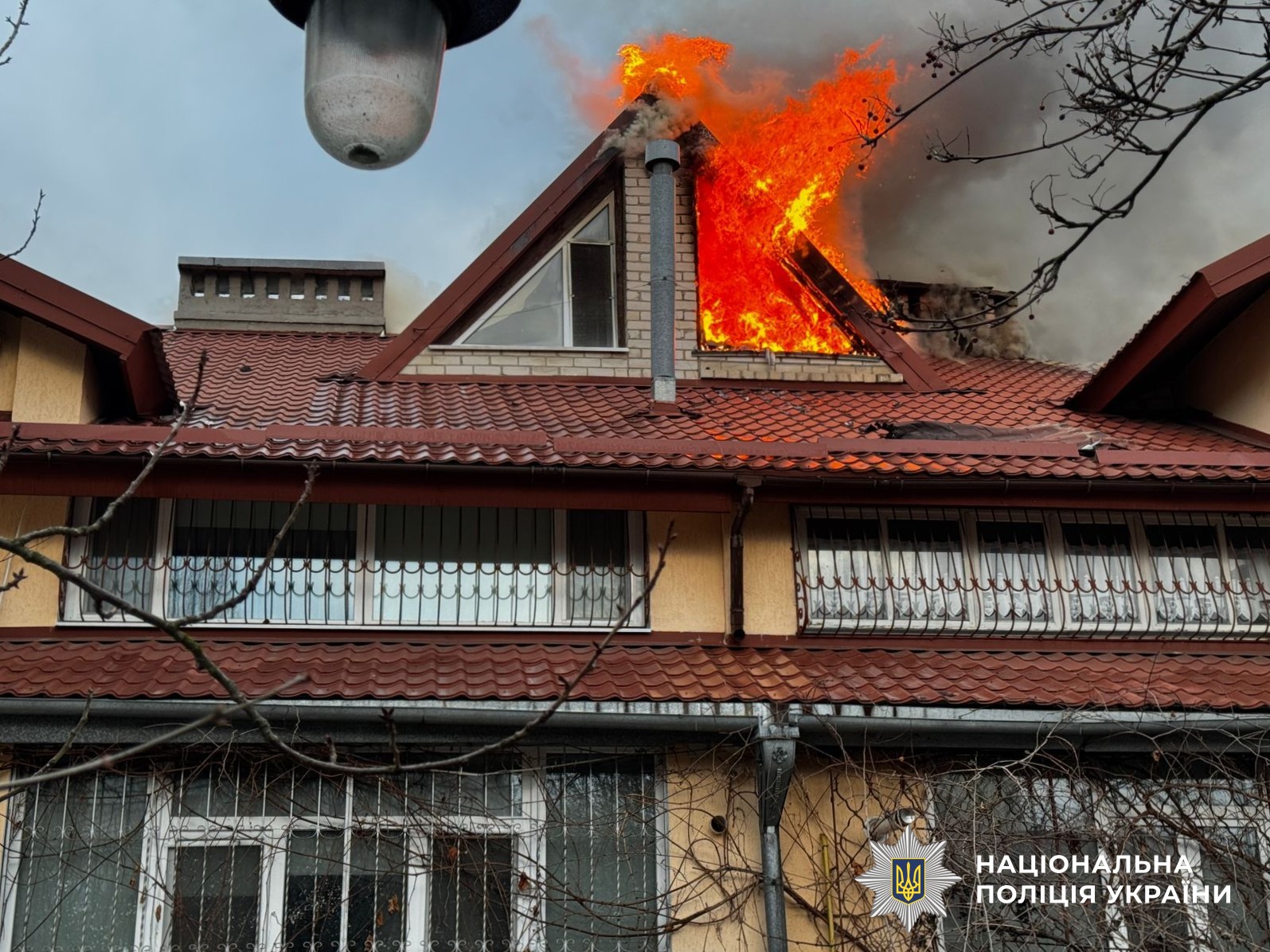 A two-story house in Kherson is on fire after a Russian artillery strike on the city
In the first region, the injured include a 9-year-old girl and elderly people, while in the second, a married couple of medics from Kherson, whose two-story house was struck by Russian artillery.
Three more civilians were injured on February 12 in the Zaporizhzhia region, specifically a man from a car in Orikhiv, in which a female passenger was killed, a 76-year-old pensioner, and a community officer from Tavriiske. All casualties in the region were the result of the Russian army’s use of various types of drones.
Also, as a result of shelling by the Russian military on the night of February 12, four people were injured in the Dnipropetrovsk region, two in Kyiv, and one more in Odesa.
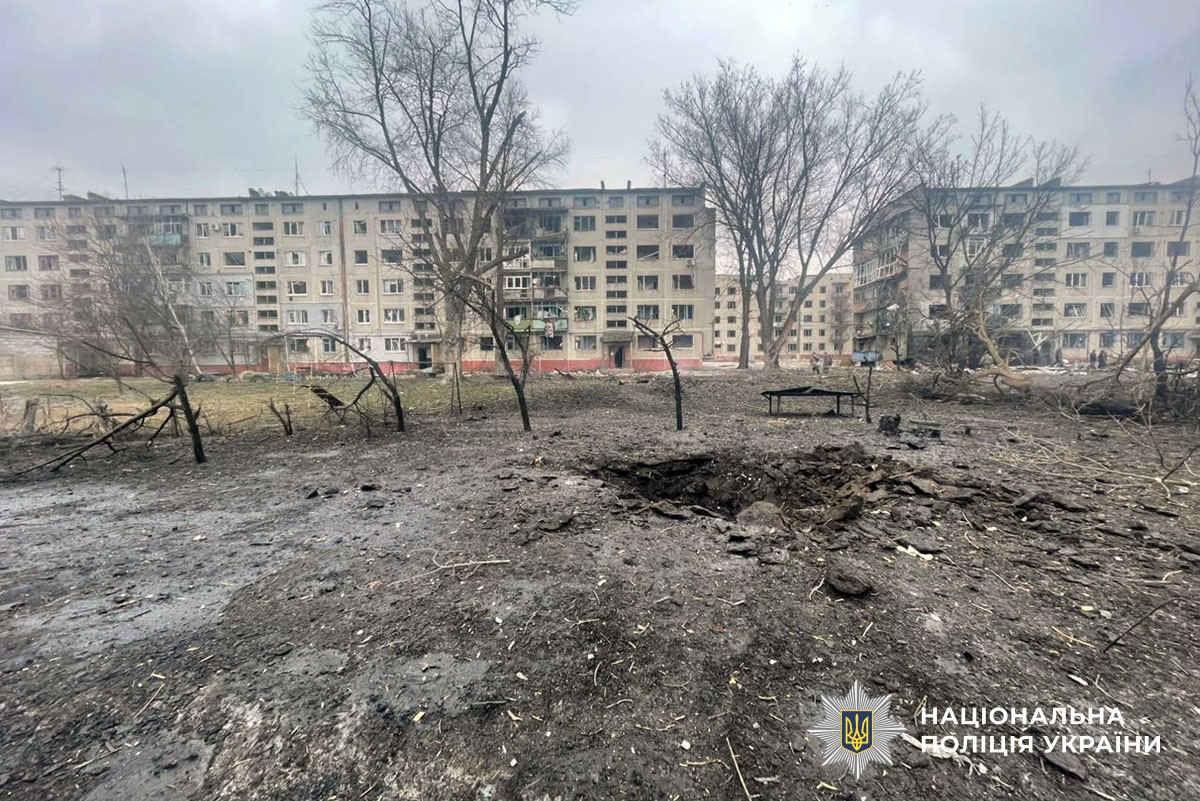 The mark of a Russian shell impact near residential buildings in the Donetsk region
To provide background, on February 11, Russian military shelling killed six adults and three children in Ukraine.
To provide background, U.S. President Donald Trump has not secured an end to Russia’s war within 24 hours of taking office, as he had promised. Furthermore, numerous Ukrainian and international experts point out that the U.S., as a guarantor state under the Budapest Memorandum, is pressuring Kyiv into capitulation. Throughout these talks, Russia and the U.S. have not declared that Russia will withdraw its troops from temporarily occupied Crimea or parts of the Kherson, Luhansk, Donetsk, Dnipropetrovsk, Kharkiv, and Sumy regions.
Meanwhile, Ukrainian human rights lawyer and Nobel Peace Prize laureate Oleksandra Matviichuk has criticized U.S. President Donald Trump over a rise in civilian war casualties in Ukraine since he took office in 2025.
Matviichuk pointed out that the number of Ukrainian civilians killed or injured because of the war rose by 31% compared to the previous year. She asked why Trump’s year of negotiations was the deadliest for Ukraine’s civilian population since the start of Russia’s full-scale invasion.
“Why did Putin not allow himself such brutal strikes on civilian infrastructure under Biden, whom Trump calls ‘weak,’ but totally destroys peaceful cities and disregards the ‘strong Trump’?” she asekd on her Facebook page.
Earlier, Bohdan Bernatskyy, a member of the Sanctions Policy Working Group of the Crimean Platform Expert Network, revealed at the Third Parliamentary Summit in Latvia that over 1,300 Russian military companies and 2 million industrial workers continue to operate, many without international restrictions.
On February 12, President Volodymyr Zelenskyy enacted the decision of the National Security and Defense Council regarding the application of sanctions against 91 marine vessels that are part of Russia’s shadow fleet. Moscow used these vessels to transport oil and petroleum products from Russian ports, specifically in Novorossiysk, Ust-Luga, and Primorsk, to third countries. This occurred in circumvention of sanctions by the European Union, the G7, and other states.
The sanctioned vessels sailed under the flags of about 20 countries. Among them, only one was Russian, while the rest were flags of Panama, Liberia, Cameroon, Barbados, the Marshall Islands, Hong Kong, Sierra Leone, Tonga, Palau, Guinea, the Comoros, the Bahamas, Indonesia, Malawi, Guinea-Bissau, Djibouti, Guyana, and Eswatini.
Ukraine will transfer the relevant information to these states and will also work with partners to further synchronize sanctions within their jurisdictions.
Twenty-seven vessels from this list are already under sanctions from partners: the United States, Great Britain, Switzerland, and the European Union.
Follow ZMINA on X and LinkedIn for daily human rights coverage from Ukraine – we invite you to share your feedback on what you’d like to see more of in our survey here.
Cover photo: SES in the Donetsk region