New project in Ukraine to counter disinformation and support reforms in line with EU law
Detector Media has launched a project focusing on countering disinformation, European data protection standards and media literacy among Ukrainians, the non-governmental organisation’s director Halyna Petrenko said at a news conference on 23 October 2026.
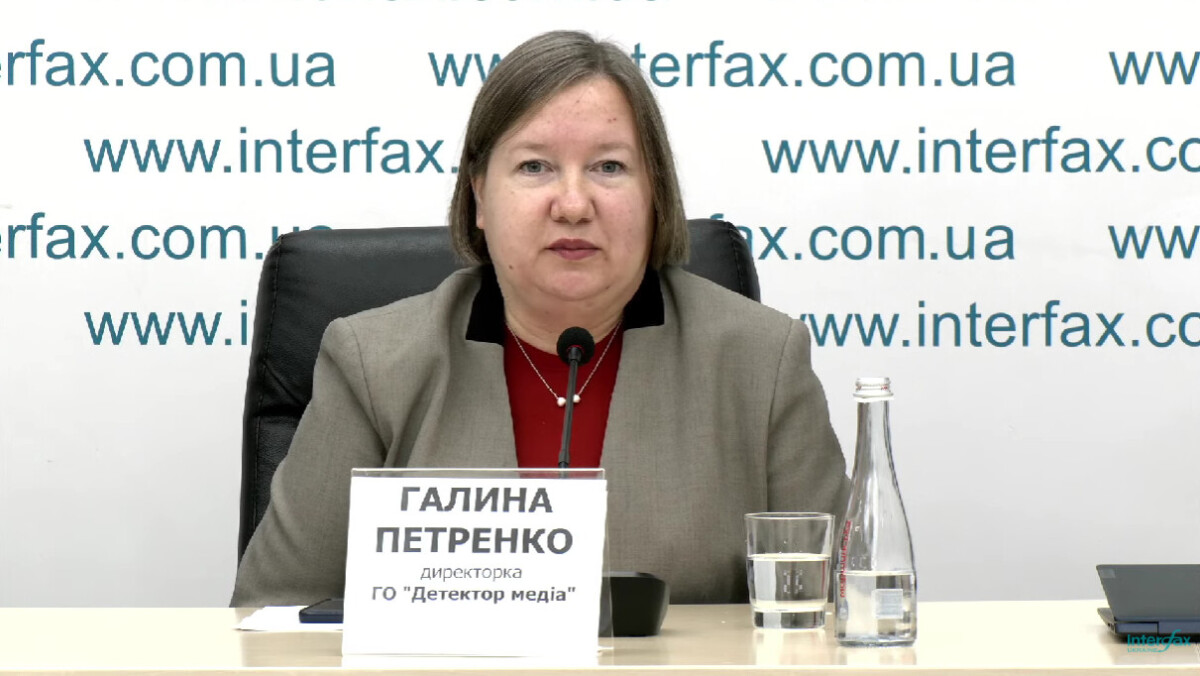
Recently, expert circles have increasingly discussed the importance of resilience among Ukrainian citizens. One of its components is digital resilience, Petrenko said:
“This is the extent to which people are capable of countering all the threats that may come from the digital environment.”
She said that Ukraine faces a number of digital security challenges on its path towards European Union membership:
- combating disinformation and foreign information interference;
- adapting to European digital standards and harmonising Ukrainian legislation with EU rules;
- developing media literacy and critical thinking;
- overcoming inequality in citizens’ digital skills.
“There are new threats linked to artificial intelligence that amplify all the other threats that have existed until now. There is also one challenge – insufficient interaction within society between education, science, the public and the state,” Petrenko said.
Detector Media said that the project aims to strengthen the role of civil society in supporting digital transformation and media reforms in line with EU law. It will involve civil society organisations, media outlets, universities, digital transformation experts and representatives of state and local authorities.
Earlier, ZMINA reported that Ukraine had moved into a lower-performing cluster in the Media Literacy Index 2026.
The findings of the annual quantitative survey Media Literacy Index of Ukrainians 2020–2024, conducted by Detector Media together with the Filter National Media Literacy Project of the Ministry of Culture and Strategic Communications of Ukraine, indicate that following the start of the full-scale war, the level of media literacy among Ukrainians rose significantly, but the share of Ukrainians with a high level of media literacy was lower in 2024 than in 2022, primarily because of changes to the calculation methodology.
Follow ZMINA on X, Bluesky and LinkedIn for daily human rights coverage from Ukraine – we invite you to share your feedback on what you’d like to see more of in our survey here.