For first time, UNESCO body declares capture of journalists in war unacceptable
The Intergovernmental Council of UNESCO’s International Programme for the Development of Communication (IPDC) has backed amendments proposed by Ukraine recognising the taking of journalists captive during armed conflicts as unacceptable. For the first time, such wording has been incorporated into the organisation’s official decisions following a meeting in Paris, the National Council of Television and Radio Broadcasting of Ukraine reported.
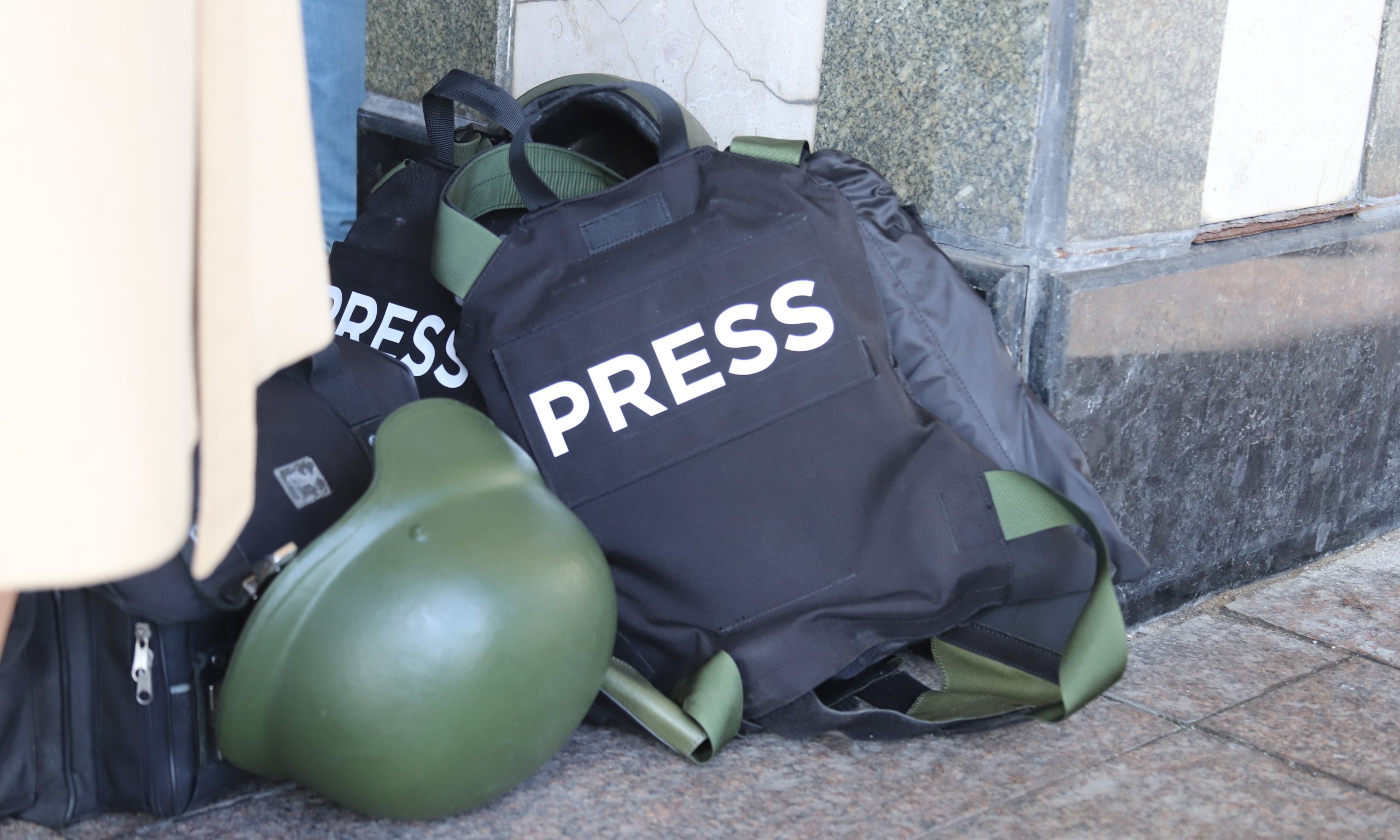 Illustrative photo. Source: Oleksandra Yefymenko
The 35th session of the IPDC Intergovernmental Council took place in Paris on 19–20 November 2026. During the review of a report by UNESCO Director-General Khaled El-Enany, Ukraine proposed adding wording to the document recognising that taking journalists captive during armed conflicts is unacceptable. The participating countries supported the amendment. The council’s decision also calls for the immediate release of journalists held in captivity.
In particular, paragraph 4 of the decision states:
“The Intergovernmental Council of UNESCO’s International Programme for the Development of Communication condemns targeted attacks against journalists, their enforced disappearances and capture in the context of armed conflicts, and demands the immediate release of journalists unlawfully held in captivity.”
The National Council emphasised that journalists are civilians and that the capture and detention of civilian media workers constitute a war crime under international humanitarian law.
UNESCO’s 2026 Director-General’s Report on the Safety of Journalists and the Danger of Impunity states:
“From 2024 to 2025, international civil society organisations recorded that between 98 and 160 journalists had gone missing or were forcibly disappeared, with the wide variation explained by the different methodologies of these organisations. For 2024–2025, Reporters Without Borders recorded at least 938 journalists as ‘detained’, while the Committee to Protect Journalists recorded at least 466 cases of ‘imprisoned’ journalists.”
The chair of the National Council, Olha Herasymiuk, who also heads Ukraine’s National Committee for Cooperation with the IPDC, noted in a Facebook post that international documents concerning journalists had previously used the vague term “disappearance”. Ukraine had insisted on using the term “captivity” – not only in relation to Ukrainian media workers but also to journalists worldwide.
“Ukraine has secured the recognition of the term ‘captivity’! And it has done so for all journalists worldwide, not just its own,” Herasymiuk wrote.
According to the National Council, 27 Ukrainian civilian media workers and one media worker called up to serve in the Armed Forces of Ukraine are currently held in Russian captivity.
The UNESCO Director-General’s report also provides figures on journalist killings: over the past 20 years, 1,641 media workers have been killed worldwide, yet only 14% of these cases have been resolved.
ZMINA previously reported that Reporters Without Borders (RSF) published a report in 2025 stating that the Russian authorities had imprisoned more than 110 journalists and media workers since 2012, 48 of whom remained behind bars, including Ukrainian media workers.
To mark the International Day to End Impunity for Crimes against Journalists, observed on 2 November, RSF published its updated list of 33 “press freedom predators” for 2026. Among them is Kremlin leader Vladimir Putin.
Stay connected with us via X, Bluesky and LinkedIn – and while you’re here, please spare five minutes to fill out our survey and tell us what you’d like to see next.